Los Angeles Orthopedic

Shockwave vs Cortisone for chronic tendinopathy.

Tennis elbow, Achilles, patellar tendon, plantar fascia — chronic tendinopathy is a tissue problem, not just an inflammation problem. Here's how LAOSS specialists choose between extracorporeal shockwave therapy and a cortisone shot when conservative care has stalled past three months.

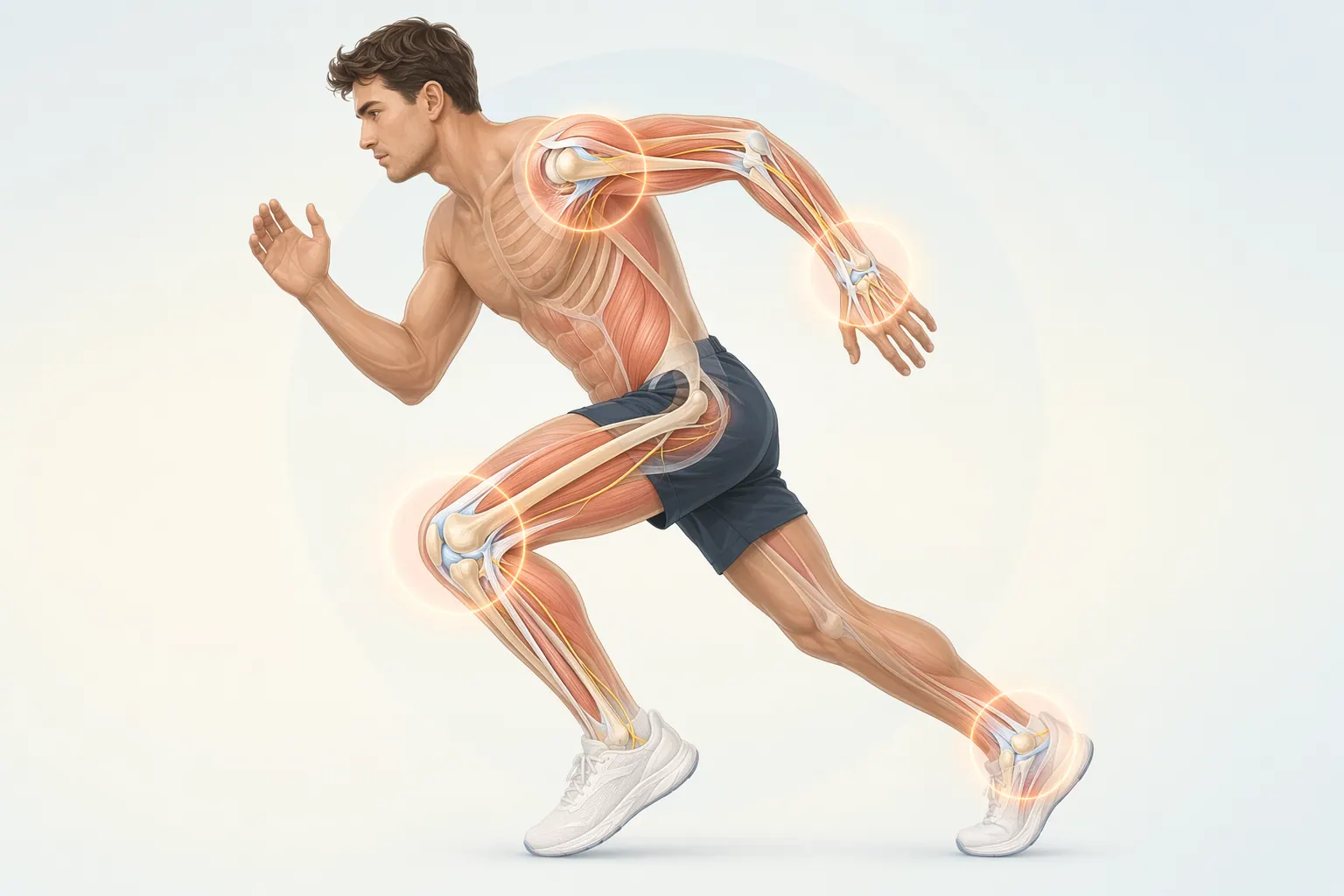
Extracorporeal shockwave therapy vs cortisone for chronic tendinopathy at LAOSS — board-certified Los Angeles orthopedic specialists across eight offices
Live · Now Accepting

Two tools, two timelines.

Cortisone calms the alarm. Shockwave rebuilds the tendon.

15+
Years caring
Same-day appointments
Often available
★★★★★
4.9 · 7,500+ reviews

What patients ask us most

  • I've had tennis elbow for six months — why isn't it healing?
  • Does shockwave actually work, or is it hype?
  • Why won't you just give me a cortisone shot like last time?
  • How many shockwave sessions will I actually need?
  • Why isn't ESWT covered by my insurance?

What sets LAOSS apart

  • Honest framing — no overselling shockwave, no dismissing cortisone
  • Ultrasound-guided technique on every tendon injection
  • Same- or next-day appointments at eight LA-area offices
  • Board-certified specialists who treat tendinopathy every week, not generalists
Key takeaways
  • Cortisone is fast, cheap, and insurance-covered — best for breaking a severe pain cycle. It does NOT heal the tendon and can weaken it with repeated use (especially Achilles and patellar — both can rupture).
  • Extracorporeal shockwave therapy (ESWT) is the strongest non-injection option for chronic tendinopathy past 3 months — 60–80% improvement at 3–6 months in published trials for tennis elbow, Achilles, patellar, and plantar fascia.
  • ESWT is self-pay — roughly $200–$400 per session, with most courses running 3–5 sessions spaced 1–2 weeks apart ($600–$2,000 total).
  • For chronic tendinopathy past 3 months, the LAOSS sequence is usually: confirm with ultrasound, one cortisone shot only if pain is collapsing function, then shockwave to address the underlying tissue.
  • Never inject cortisone directly into the Achilles or patellar tendon body — the rupture risk is real. ESWT is the safer long-term move.
Overview

Shockwave vs cortisone: same diagnosis, different physics.

Chronic tendinopathy — tennis elbow, Achilles, patellar tendon, plantar fascia — is one of the most frustrating diagnoses in orthopedics. It hurts like an inflammatory problem but, after the first few weeks, it isn't really inflammation anymore. It's a degenerative tissue change: disorganized collagen, poor blood supply, and a tendon that has lost the ability to repair itself between bouts of load.

Cortisone (corticosteroid) injection delivers a potent anti-inflammatory steroid that suppresses the pain signal at the tendon. Relief is fast — often within 48 hours — and that can be lifesaving when pain has collapsed your ability to work, sleep, or function. The problem is that cortisone does not heal the underlying tendon. Worse, repeated steroid exposure in or near a tendon is associated with tissue weakening and, in the Achilles and patellar tendons, frank rupture.

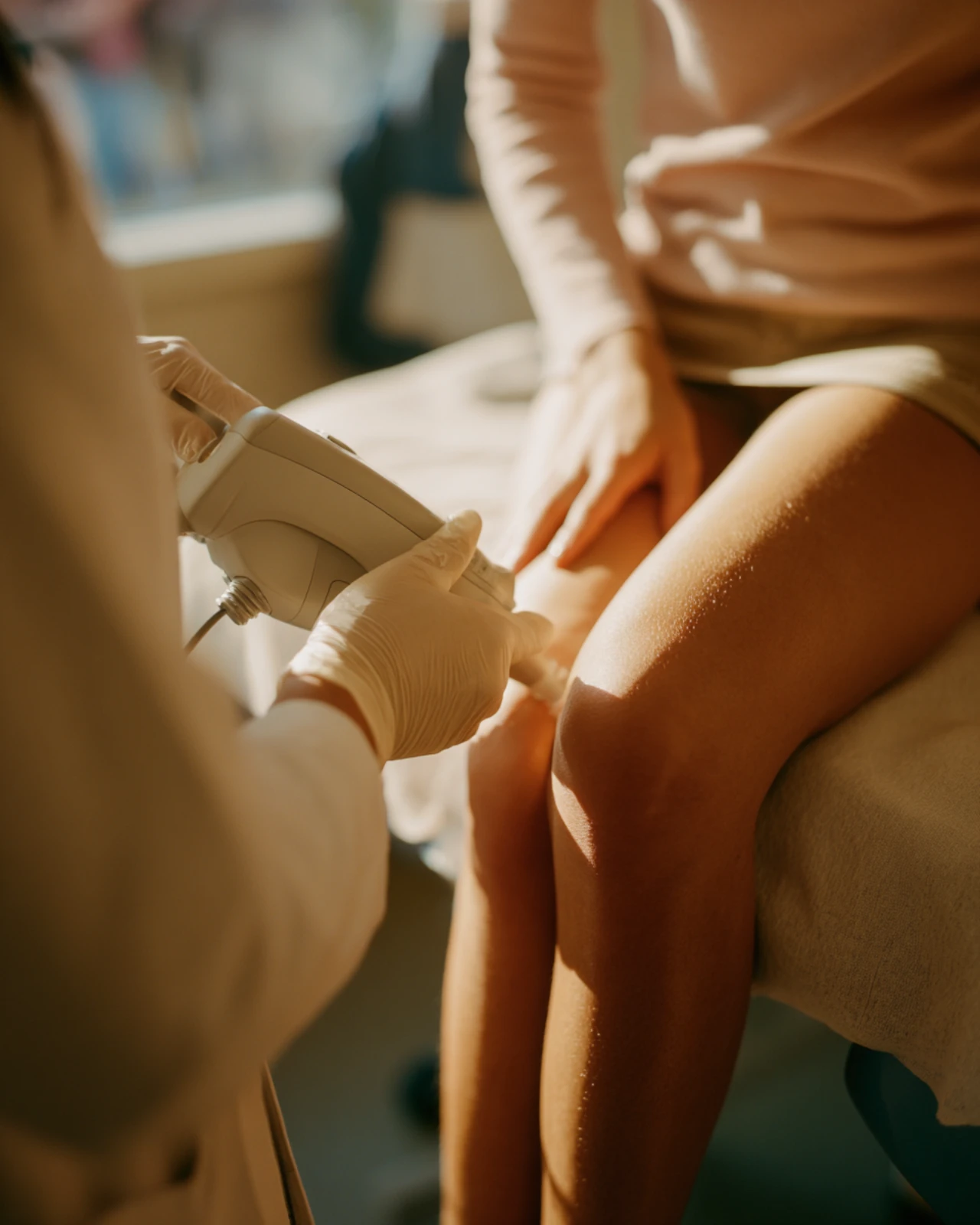
Extracorporeal shockwave therapy (ESWT) is a non-invasive in-office treatment that delivers focused or radial acoustic pulses into the tendon over 10–20 minutes. The pulses are thought to stimulate angiogenesis (new blood vessel growth), recruit healing cells, and trigger collagen remodeling. There's no needle, no anesthesia, no medication. You feel sore for a day or two and gradually improve over the following 6–12 weeks.

At LAOSS we use both. The question we answer at every chronic tendinopathy visit isn't "shockwave or cortisone" in the abstract — it's which one fits your tendon, your timeline, your budget, and how many steroid shots you've already had.

Patient education

Watch: How chronic tendon problems are treated

Tendinopathy isn't a simple inflammation problem after the first few weeks — it's a tissue problem. This short video walks through how modern non-surgical care targets the underlying tendon.

Animations licensed from ViewMedica · Swarm Interactive

Cross-section of a chronic tendinopathy showing disorganized collagen, poor blood supply, and the target site for shockwave or cortisone
Cortisone silences the pain signal in the tissue around the tendon. Shockwave aims at the disorganized collagen inside it.
Mechanism

What's actually happening inside your tendon.

In a healthy tendon, parallel collagen fibers transmit load like a tightly wound rope. In chronic tendinopathy — lateral epicondylitis, Achilles, patellar, or plantar fascia — the collagen becomes disorganized, neurovascular ingrowth proliferates, and the tendon loses both strength and the ability to remodel itself between training sessions. Cortisone doesn't fix any of that; it suppresses the inflammatory signal in the surrounding tissue, which can give you weeks of relief but leaves the tendon structurally unchanged (or weaker, with repeat exposure). Shockwave delivers acoustic energy directly into the degenerative tissue, disrupting the abnormal neurovascular ingrowth and triggering the local healing response that the tendon had stopped mounting on its own.

When each option makes sense

Picking the right tool for the tendon.

Symptoms

Common symptoms

  • Chronic lateral epicondylitis (tennis elbow) past 3 months — ESWT outperforms cortisone at 6 months
  • Chronic Achilles tendinopathy (mid-portion or insertional) — ESWT first, cortisone only peritendinous
  • Patellar tendinopathy (jumper's knee) — ESWT, never steroid into the tendon
  • Chronic plantar fasciitis past 6 months — ESWT is the strongest non-surgical option
  • Severe pain that's collapsed function and you need relief in 48 hours — cortisone (one shot, then pivot)
  • Athlete or laborer who cannot accept tendon weakening — ESWT, no cortisone in the tendon
  • Already had 2+ cortisone shots in the past year without lasting relief — stop steroid, switch to ESWT
  • Diabetic patient where steroid blood-sugar spikes are a problem — ESWT (no metabolic effect)
Causes

Common causes

  • Degenerative tendon tissue is the dominant driver — ESWT is the leverage point
  • Inflammation around the tendon is the dominant driver — cortisone gives the fastest break
  • You need to function in 48 hours (work, wedding, travel) — cortisone, one shot
  • You're trying to actually heal the tendon and not just silence it — ESWT
  • Cost and insurance are the constraint — cortisone wins on price every time
Decision framework

How we choose at LAOSS.

There's no universal answer — but the decision usually breaks down along four axes: which tendon, how long, how many steroid shots, and what comes next.

Which tendon. The Achilles and patellar tendons are load-bearing tendons that can rupture catastrophically. We almost never inject cortisone directly into the body of these tendons; the literature on steroid-induced tendon rupture is too consistent to ignore. For lateral epicondylitis and plantar fascia, cortisone is more defensible short-term — but ESWT is the better long-term call past 3 months.

How long. Acute tendinopathy in the first 4–6 weeks often responds to rest, eccentric loading, and time alone. The conversation about ESWT vs cortisone really starts at the 3-month mark, when conservative care has plateaued. By 6 months, the tendon is squarely in the chronic, degenerative phase — and that's where ESWT has its strongest evidence.

How many steroid shots. If you've already had two or three cortisone injections in the past year without lasting relief, more steroid is unlikely to help and increasingly likely to harm. That's the moment to stop and switch to ESWT.

What comes next. If you're an athlete or laborer who needs the tendon to remodel and tolerate load again, ESWT is the strategic move. If you're trying to get to a planned vacation, surgery, or major life event with a few months of pain relief, cortisone is the right short-term tool — used once, with a real plan for what follows.

Treatment paths

Cortisone-first vs ESWT-first.

Most patients don't have to pick one and never touch the other. Here's how we sequence them based on which path fits your tendon and your situation.

Conservative care
Step 1

Cortisone-first path

When pain is acute, function is collapsing, or cost is a hard constraint — cortisone moves first. One shot, with a real plan for what follows.

  • Severe lateral epicondylitis pain that has collapsed grip and work function
  • Need to function for work, travel, or family event in days, not weeks
  • Plantar fasciitis with an acute pain spike on top of chronic symptoms
  • Insurance-only budget — cortisone $30–$100 copay, ESWT not covered
  • Diagnostic value: confirm where the pain is actually coming from
  • Used once, then pivot to PT or ESWT — never as a serial monthly fix
Surgical care
When needed

ESWT-first path

When tissue healing matters more than fast symptom suppression — ESWT moves first. The default for athletes, laborers, and anyone past 3 months.

  • Chronic tennis elbow, Achilles, patellar, or plantar fascia past 3 months
  • Already used 2–3 steroid shots in the past year without lasting relief
  • Athletes who cannot accept steroid-induced tendon weakening
  • Achilles or patellar tendinopathy — steroid into the tendon is contraindicated
  • Diabetic patients where steroid blood-sugar spikes are a problem
  • Long-game orientation — willing to wait 6–12 weeks for durable benefit
Cost & coverage

What each one actually costs.

Cost is often the deciding factor — and unlike a lot of clinics, we quote the exact ESWT number before you commit.

Covered

Cortisone — insurance-covered

Cortisone injection is a covered orthopedic service under virtually every commercial plan and Medicare. Your cost is typically just the copay for a specialist visit and a small injection fee.

  • Typical out-of-pocket: $30–$100 copay (varies by plan)
  • Covered by commercial insurance, Medicare, and most Medi-Cal plans
  • Same-day in-office procedure, no separate scheduling
  • Usually limited to 3 injections per site per year — and we recommend far fewer
  • Ultrasound guidance often covered when medically necessary
Self-pay

ESWT — self-pay

Most insurance plans classify ESWT as investigational for orthopedic tendinopathies, despite strong published evidence. We tell you the exact number before you book — no surprise billing.

  • Typical out-of-pocket: $200–$400 per session
  • Standard course: 3–5 sessions spaced 1–2 weeks apart
  • Total course cost typically $600–$2,000 depending on indication
  • HSA/FSA generally eligible — bring documentation
  • We quote the exact number at evaluation, before you commit
Timeline

How fast — and how long.

Onset and durability diverge sharply between these two. Knowing the curve helps you plan around real life.

Fast

Cortisone — fast on, fast off

The local anesthetic in the mix gives you a few hours of immediate relief. The steroid effect kicks in over 24–48 hours and runs its course over weeks to a few months.

  • Immediate (hours): anesthetic effect, then it wears off
  • Day 1–2: steroid effect begins, inflammation drops
  • Weeks 2–6: peak benefit for most patients
  • Months 2–4: benefit typically fading, original pain often returns
  • Repeat: not more often than every 3 months in non-Achilles/non-patellar tendons; we recommend far fewer than the maximum
Durable

ESWT — slow on, durable

Shockwave works on tendon biology, not pharmacology. The timeline is measured in weeks of remodeling, not hours of pain relief.

  • Days 0–2: soreness at the treatment site (expected, not a complication)
  • Weeks 2–4: first meaningful improvement for most responders
  • Weeks 6–12: full benefit for most who respond
  • Months 6–12: peak benefit, often persists a year or more
  • Repeat: a second course can be considered if response is partial
Evidence

What the data actually says.

We won't oversell ESWT, and we won't dismiss cortisone. Here's the honest read on the tendinopathy literature, by site.

Short-term

Cortisone — strong short-term, weak long-term

Cortisone consistently outperforms placebo in the first 6 weeks for most tendinopathies. The catch is that benefit fades quickly and repeat exposure carries real tissue cost.

  • Tennis elbow: cortisone wins at 6 weeks, underperforms at 6–12 months
  • Plantar fasciitis: similar pattern — strong short-term, fades by 3–6 months
  • Achilles & patellar: do NOT inject into the tendon body (rupture risk)
  • Repeated injections (>2–3/year) linked to tendon weakening and rupture
  • Diabetics: transient blood-sugar elevation is real and clinically relevant
Durable

ESWT — strong durable data

ESWT has accumulated strong randomized-trial evidence for chronic tendinopathy at multiple sites, with sustained benefit at 6–12 months that cortisone does not match.

  • Lateral epicondylitis (tennis elbow): 60–80% improvement at 3–6 months
  • Chronic Achilles tendinopathy: strong evidence, mid-portion and insertional
  • Patellar tendinopathy (jumper's knee): strong evidence, especially with eccentric loading
  • Chronic plantar fasciitis past 6 months: strongest non-surgical option
  • Even for well-supported uses, ~20–30% of patients see limited benefit
Candidacy

Which one fits me?

These checklists are a starting point — the final call comes at your evaluation, with ultrasound imaging and exam findings in front of us.

Cortisone

You're a cortisone candidate if

Cortisone is most often the right move when pain has collapsed function and you need a fast, short-term break — used once, with a real plan for what follows.

  • Severe lateral epicondylitis or plantar fasciitis flare collapsing function
  • You need fast functional relief — 48 hours, not 6 weeks
  • Cost or insurance is a constraint and ESWT isn't realistic
  • Diagnostic confirmation needed — anesthetic component localizes the pain
  • You have NOT already had 2+ steroid shots at this site this year
  • The target is NOT the Achilles or patellar tendon body
ESWT

You're an ESWT candidate if

ESWT is the better call when tissue healing matters more than fast symptom suppression — and when steroid would be the wrong tool for the tendon.

  • Chronic tendinopathy past 3 months that hasn't responded to PT
  • Achilles or patellar tendinopathy (steroid in the tendon is off the table)
  • Already used 2–3 steroid shots without durable relief
  • Athlete or laborer who cannot accept tendon weakening
  • Diabetic patient where steroid blood-sugar spikes are a real concern
  • You can budget self-pay and commit to a 3–5 session course
ImportantDo NOT inject cortisone directly into the body of the Achilles or patellar tendon — the rupture risk is documented and not worth it. Peritendinous injection in selected cases only, by experienced hands, under ultrasound guidance. ESWT is generally the safer long-term tool for these tendons. Avoid ESWT in active infection, over a tumor, in pregnancy, with a pacemaker over the treatment field, or with active anticoagulation issues — we screen for all of this at evaluation.
Recovery

What each recovery looks like.

Recovery timelines diverge sharply — cortisone is measured in hours and days, ESWT in weeks and months.

01Cortisone · Days 0–14

Fast onset, normal activity

Cortisone is an in-and-out office procedure. Most patients walk out and resume normal activity the same day — though we recommend relative rest from the inciting activity for 2 weeks.

  • Mild soreness for 24–48 hours at the injection site (normal)
  • Resume normal walking and daily activity the same day
  • Pain relief typically starts within 24–48 hours
  • Relative rest from the inciting activity (sport, racquet, climbing) for 2 weeks
02ESWT · Days 0–14

Expected soreness, no downtime

Shockwave triggers a controlled healing response. You'll feel sore for 1–2 days — that's the response working, not a complication. No anesthesia, no downtime, drive yourself home.

  • Soreness at the treatment site for 24–48 hours (expected)
  • Relative rest from the inciting activity for 48–72 hours
  • Avoid NSAIDs for 2 weeks — they blunt the healing signal
  • Acetaminophen is fine; normal walking and work from day 1
03Weeks 2 to Months 6+

Coordinated PT either way

PT pairs with both treatments. With cortisone, PT happens while the steroid is calming pain. With ESWT, PT — especially eccentric loading — is what locks in the tendon remodeling.

  • Cortisone: PT to capitalize on the pain-free window (weeks 1–6)
  • ESWT: progressive eccentric loading (weeks 2–12)
  • Coordinated through your in-network provider
  • Re-evaluation at 6–12 weeks to decide on repeat or pivot
When to use both

The combined approach.

It's not unusual to use both — just not on the same day and not in the same tendon body.

A common LAOSS pattern for chronic lateral epicondylitis or plantar fasciitis where pain has collapsed function: one cortisone injection now to break the pain cycle, then a shockwave series to address the underlying tendon. The steroid buys you 4–6 weeks of functional relief; ESWT then does the structural work. We typically wait at least 4–6 weeks between a cortisone injection and starting ESWT in the same area, because we want the inflammatory signal that ESWT relies on to be active when treatment starts.

For Achilles and patellar tendinopathies, we generally do not combine them in the tendon body itself — repeat steroid exposure weakens these load-bearing tendons, and the rupture risk is documented. ESWT is almost always the long-term move for these two.

And there are situations where the answer is neither yet — for tendinopathy in the first 4–6 weeks, structured eccentric loading, activity modification, and time often outperform either intervention. We'll tell you that too.

Risks & considerations

Side-by-side risk profile.

Both options are well-tolerated when delivered by experienced specialists — but the risk profiles are different in kind, not just degree.

Cortisone

Cortisone considerations

Cortisone is one of the most-studied orthopedic interventions. Short-term risks are well-characterized; long-term tendon effects are where the real concern lives.

  • Post-injection flare for 24–48 hours in a small percentage of patients
  • Skin discoloration or subcutaneous fat thinning at the injection site
  • Transient blood sugar elevation (notable for diabetics)
  • Tendon weakening with repeated injections in or near the tendon
  • Frank rupture risk if injected into the Achilles or patellar tendon body
  • Local infection (rare with sterile technique)
ESWT

ESWT considerations

ESWT has no needle, no medication, and no systemic effect. The real risks are small — the bigger consideration is cost and response variability.

  • Soreness or bruising at the treatment site for 24–48 hours
  • Transient skin redness or petechiae (small surface bruising)
  • Temporary tingling or numbness in the treatment area
  • ~20–30% of patients see limited benefit even for well-supported uses
  • Not appropriate over a tumor, active infection, pacemaker field, or in pregnancy
  • Stop NSAIDs 5–7 days before, avoid for 2 weeks after
Your care team

Meet the tendinopathy specialists at LAOSS.

Both cortisone and ESWT at LAOSS are performed by board-certified specialists with deep training in ultrasound-guided injection technique and tendinopathy management. The same physician who does your diagnostic ultrasound performs the treatment — no hand-offs to ancillary staff, no marketing-driven "shockwave packages" sold by a front desk. The person diagnosing is the person treating.

Specialists

Meet your tendinopathy specialists.

4 providers
Patient reviews

What patients say about us.

★★★★★4.97,500+ Google reviews
Dr. Acosta saved me from spine surgery. I came in convinced I was going to need an operation. He laid out a non-surgical plan that's been working. So thankful.
Karina Petrosyan
Tarzana, CA · 5 December 2024
Explore related care

Find care by body area.

Chronic tendinopathy hits a few specific places — jump to the one that's bothering you.

FAQ

Shockwave vs cortisone — common questions

  • For short-term pain relief in the first 6 weeks, cortisone works faster — that's well-established in the literature. But for chronic lateral epicondylitis past 3 months, ESWT has stronger evidence at 6–12 months, with most studies reporting 60–80% improvement at 3–6 months. The pattern is consistent: cortisone wins early, shockwave wins late. If your tennis elbow has been hanging on past 3 months despite PT and a brace, ESWT is the better strategic choice. If you need to function for a tournament or work obligation in 48 hours, a single cortisone shot can be the right short-term bridge.
  • No — and the third or fourth steroid shot in a tendinopathy is where the real harm starts to show up. Repeat steroid exposure in or near a tendon weakens the tissue, and for the Achilles and patellar tendons it can lead to outright rupture. Even for tennis elbow and plantar fasciitis, where rupture risk is lower, we see fat pad atrophy, skin changes, and progressively diminishing benefit with each repeat shot. If two cortisone injections haven't given lasting relief, more cortisone isn't the answer. That's the moment to switch to ESWT, PRP, or a structured eccentric loading program.
  • It works for the right indications — and it doesn't work for everything. ESWT has strong randomized-trial evidence for chronic lateral epicondylitis, chronic Achilles tendinopathy (mid-portion and insertional), patellar tendinopathy, and chronic plantar fasciitis past 6 months. In those conditions, most published trials report 60–80% meaningful improvement at 3–6 months. ESWT does NOT have strong evidence for acute soft-tissue injuries, full-thickness tears, or bone-on-bone arthritis, and we won't recommend it for those. About 20–30% of patients in the well-supported indications don't get the benefit they hoped for — that's an honest number and we tell you up front.
  • Most LAOSS protocols are 3–5 sessions spaced 5–10 days apart. Tennis elbow and plantar fasciitis typically respond in 3 sessions; Achilles and patellar tendinopathy more often need 4–5. We re-evaluate after the 3rd session — if you're tracking toward improvement, we finish the course; if there's been no movement at all by session 3, we pause and reconsider the diagnosis (or whether ESWT is the wrong tool for your specific tendon). The full benefit of the course doesn't peak until 6–12 weeks after the LAST session, so we don't judge final outcome until the 3-month mark.
  • Most commercial insurance plans and Medicare classify ESWT as investigational for orthopedic tendinopathies, despite strong randomized-trial evidence for several specific indications. Insurers point to variability in device protocols (focused vs radial, energy levels, number of pulses) and the fact that ESWT is not a procedure code with deep historical precedent. The practical result: cortisone is a $30–$100 copay; ESWT is $200–$400 per session out-of-pocket, $600–$2,000 for a typical course. We quote the exact cost before you commit — HSA/FSA dollars are generally eligible, and we provide the documentation.
  • It's uncomfortable but not unbearable, and there's no needle and no anesthesia. Radial ESWT (the more common type for tendinopathy) feels like a series of rapid taps or thumps over the treatment area for about 10–15 minutes. Most patients describe it as 3–5 out of 10 in intensity, peaking when the probe is directly over the most tender spot. We can adjust the energy level mid-session if it's too much. You'll feel sore for 24–48 hours afterward — that's the controlled healing response and a good sign — but no downtime, no driving restriction, and you can go back to work the same day.
  • Cortisone has essentially no recovery — most patients resume normal activity the same day with mild injection-site soreness for 24–48 hours. We recommend relative rest from the inciting activity (racquet sport, climbing, running) for 2 weeks so you don't burn through the pain-free window. ESWT is similar in downtime — drive yourself home, work the next day — but the soreness for 1–2 days afterward is more pronounced. The bigger requirement with ESWT is the 6–12 week PT runway that follows, especially eccentric loading work, which is what converts the biological response into durable function.
  • Sequentially, sometimes — same day, no. A common LAOSS pattern for severe chronic plantar fasciitis or tennis elbow is one cortisone shot to break a debilitating pain cycle, then start ESWT 4–6 weeks later once function has recovered enough to tolerate the treatment course. We don't typically do cortisone INTO the Achilles or patellar tendon body even as a bridge — the rupture risk isn't worth it for those two — but peritendinous cortisone in selected cases under ultrasound is occasionally reasonable. The order matters: cortisone first (if needed at all), ESWT second.
  • At your LAOSS visit we work through four things: (1) which tendon — Achilles and patellar are almost always ESWT, never steroid into the tendon body; (2) how long you've had symptoms — past 3 months pushes us toward ESWT, recent severe flare leans cortisone; (3) how many steroid shots you've already had — two without lasting benefit means stop and pivot; and (4) cost and timeline — covered cortisone vs $600–$2,000 self-pay ESWT, fast relief vs durable healing. We don't sell shockwave packages and we won't push a procedure we don't believe fits your case.
Ready when you are

Get an honest answer on which one fits.

Book a visit at any of our eight Los Angeles-area offices. We'll examine the tendon, image it on-site with ultrasound, and tell you straight whether cortisone, shockwave, both in sequence, or neither is the right next step.

Booking now
21 specialists · 8 offices
Greater Los Angeles
On-site X-raySame visit
Most insurers acceptedIn-network
Call usBook online