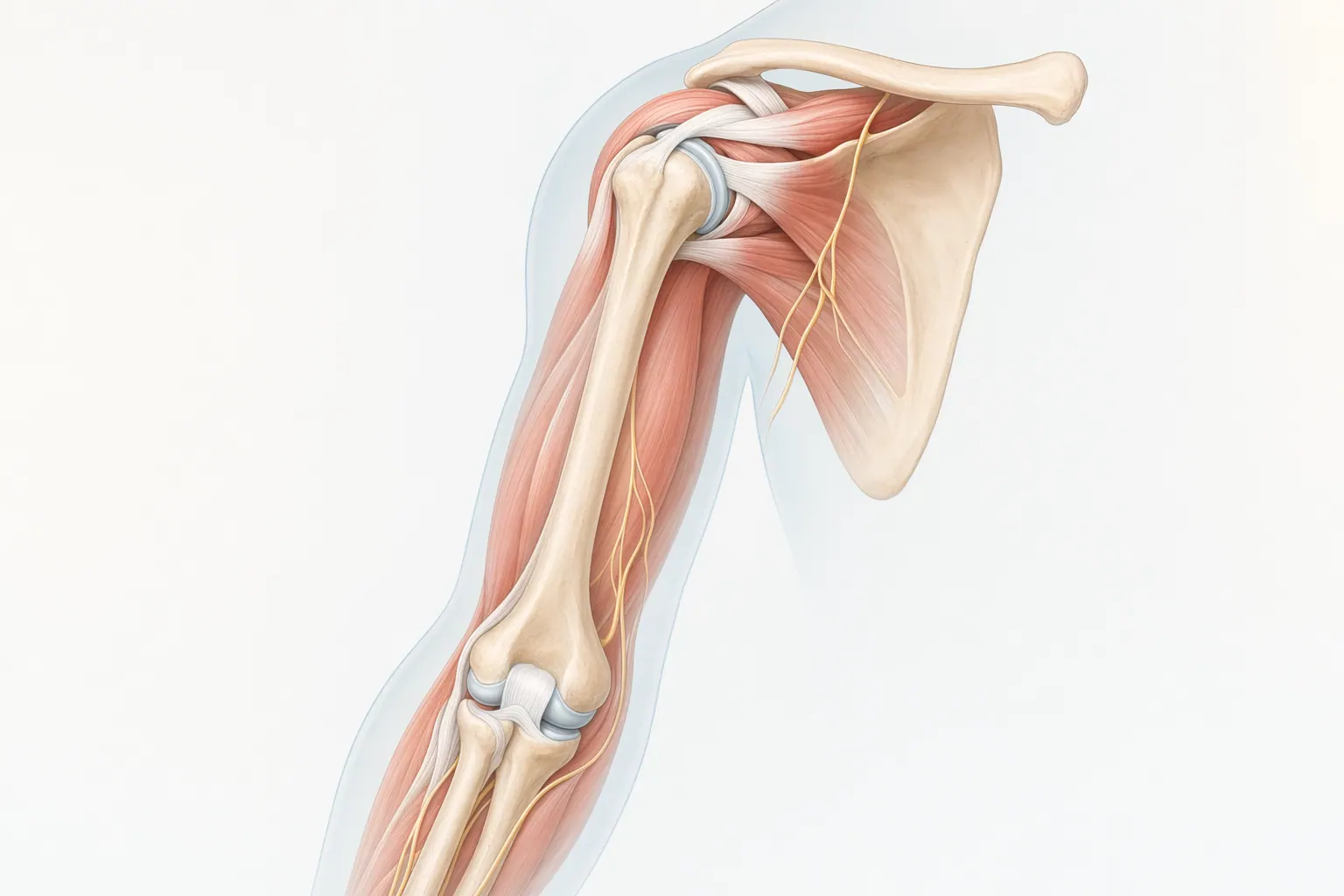
A rotator cuff tear can look a lot like several other shoulder problems — impingement, biceps tendinitis, frozen shoulder, AC joint arthritis, even a cervical nerve issue. Getting the diagnosis right matters because the treatment paths are very different. At LAOSS, most patients leave their first visit with a working diagnosis and a plan in hand.
Your evaluation starts with a focused history: when it started, whether there was a specific injury, what activities or positions reproduce the pain, and how it's affecting your sleep and your work. From there we do a hands-on exam — measuring active and passive range of motion, testing each rotator cuff tendon in isolation (the empty-can test for supraspinatus, external rotation strength for infraspinatus, the lift-off and belly-press for subscapularis), and ruling out impingement, labral, and AC joint causes.
We typically order an X-ray at the first visit — not because X-rays show tendons, but because they show bone spurs, AC joint arthritis, calcific deposits, and the position of the humeral head, all of which inform the picture. When the exam suggests a tear, we move to MRI (occasionally ultrasound), which shows the tendon directly: whether the tear is partial- or full-thickness, how big it is, how far the tendon has retracted, and whether the muscle has begun to atrophy. Those four MRI findings, more than anything else, drive the surgical-vs-conservative decision.