Los Angeles Orthopedic

Trusted Knee Surgeons in Los Angeles

Your knees are an important part of being mobile, stable, and independent. When pain, injury, or arthritis limits what you can do, the right care makes all the difference.
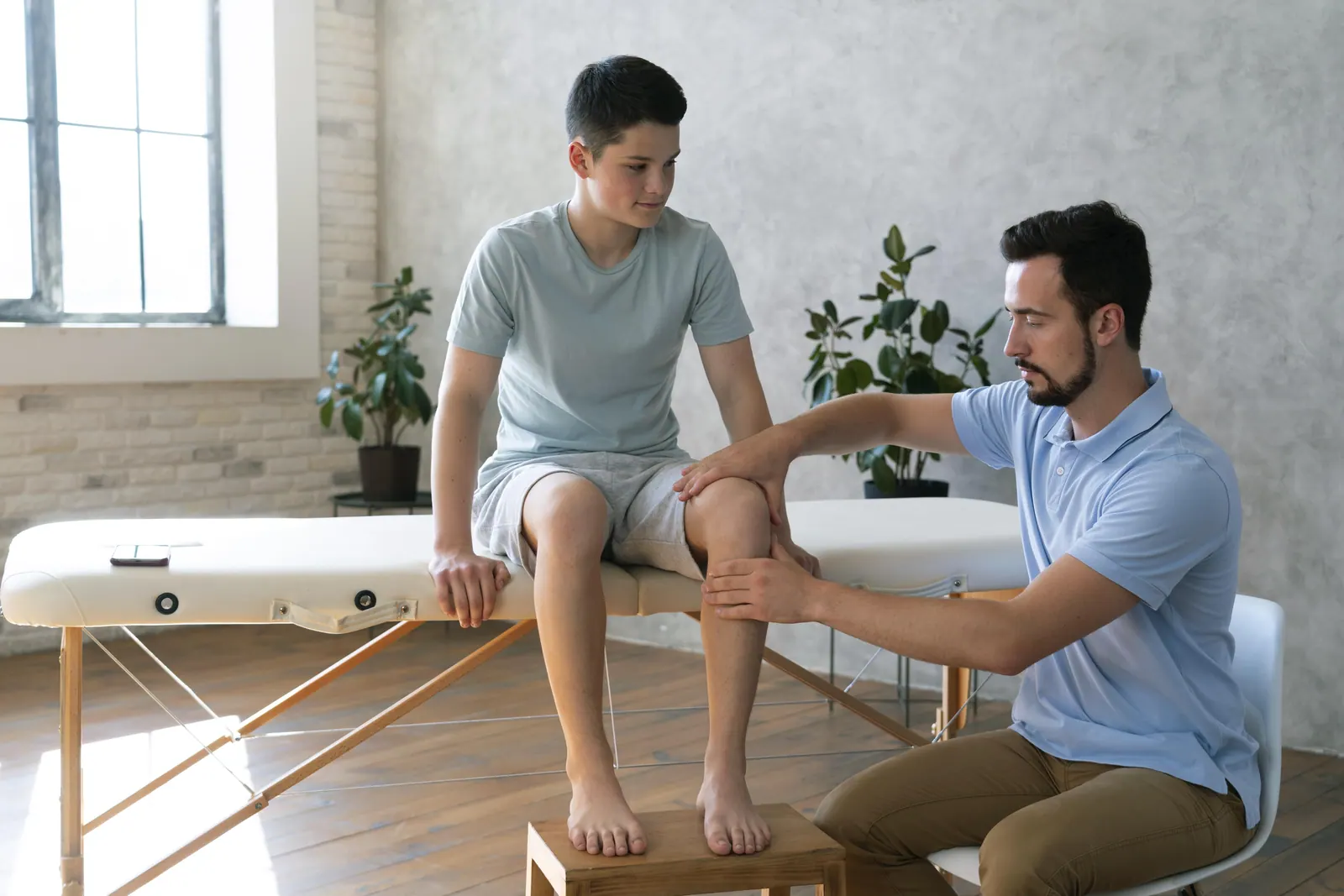
Los Angeles orthopedic specialist evaluating a patient for trusted knee surgeons — LAOSS board-certified care across eight LA offices
Live · Now Accepting

Experts in knee care.

Surgical and non-surgical options at LAOSS.

15+
Years caring
Same-day appointments
Often available
★★★★★
4.9 · 7,500+ reviews

Common knee concerns we treat

  • Pain that limits walking, lifting, or sleep
  • Stiffness, swelling, or reduced range of motion
  • Sports injuries — acute or overuse
  • Arthritis or post-traumatic joint changes
  • Conditions other doctors couldn't resolve

What sets LAOSS apart

  • Same- or next-day appointments at eight Los Angeles–area offices
  • On-site imaging; PT coordinated with your in-network provider
  • Conservative-first care, surgery only when needed
  • Board-certified specialists, not generalists
Key takeaways
  • Knee pain has many causes — meniscus, ACL, arthritis, patellar tendon — and the right treatment starts with the right diagnosis.
  • Most LAOSS knee patients improve with conservative care: targeted injections, bracing, activity modification, PT with your in-network provider.
  • When surgery is needed, our specialists offer arthroscopy, ligament reconstruction, cartilage repair, and total knee replacement.
  • Same-day or next-day appointments available for acute knee injuries at all eight LAOSS offices.
Overview

What is knee pain?

Knee pain is one of the most common reasons people see an orthopedist. The knee is a complex hinge that combines bone, cartilage, four major ligaments (ACL, PCL, MCL, LCL), and two menisci — and pain can come from any one of them.

The most common knee diagnoses we treat at LAOSS are meniscus tears, ligament sprains and tears, patellofemoral (kneecap) pain, articular cartilage damage, and osteoarthritis. The right treatment depends entirely on what's actually wrong — which is why we focus on accurate diagnosis (history, exam, on-site X-ray, MRI when warranted) before recommending anything else.

Most of our knee patients improve with conservative care: targeted injections, bracing, activity changes, and physical therapy with your in-network provider. When surgery is needed, our sports-medicine surgeons offer arthroscopy, ligament reconstruction (including ACL), cartilage repair, and partial or total knee replacement.

Patient education

Watch: Anatomy of the Knee

The knee is the body's largest joint. It's the place where three bones meet: the tibia, the femur and the patella. The knee is a "hinge" joint. It allows the leg to bend in one direction only. Let's take a closer look at the main parts of the knee's anatomy.

Animations licensed from ViewMedica · Swarm Interactive
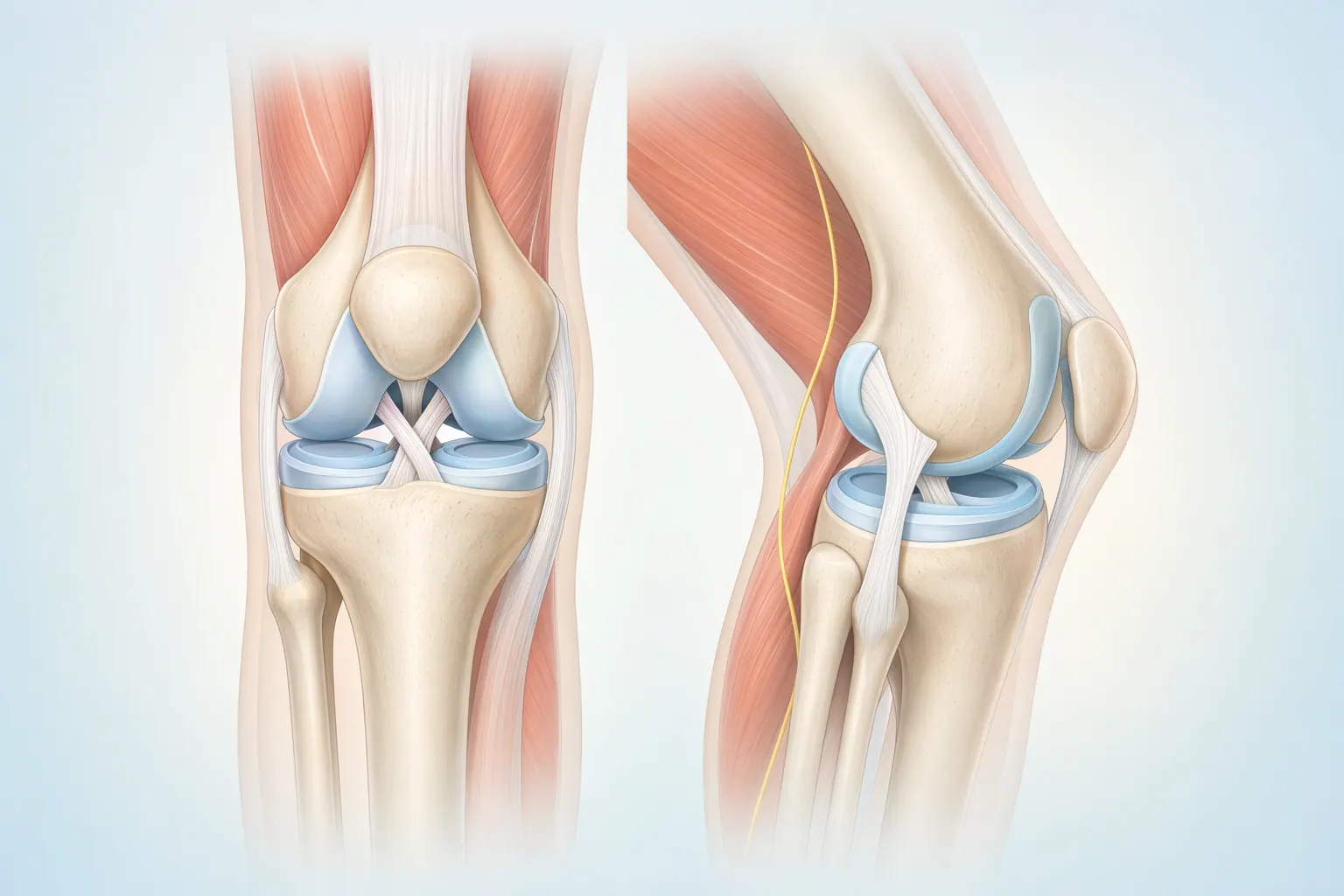
Anatomical illustration of the knee joint showing bones, ligaments, and meniscus
Anatomy of the knee — femur, tibia, patella, with the ACL, PCL, MCL, LCL, and meniscus.
Anatomy

Inside the knee.

The knee is the largest hinge joint in the body. Four ligaments stabilize it, two menisci cushion the load, and cartilage covers the bone surfaces — when any of these is injured or worn, you feel it as pain, stiffness, instability, or swelling.

Self-orient

When knee pain shows up.

Symptoms

Common symptoms

  • ACL (anterior cruciate ligament) tears
  • PCL (posterior cruciate ligament) tears
  • MCL and LCL sprains/tears
  • Chronic knee instability
  • Meniscal tears (acute and degenerative)
  • Chondromalacia patella (cartilage softening)
  • Articular cartilage injuries
  • Osteochondritis dissecans
Causes

Common causes

  • Sudden injuries from sports, falls, or twisting movements
  • Wear and tear over years of repetitive use
  • Age-related joint breakdown or post-traumatic arthritis
  • Overuse from running, jumping, or repetitive motion
  • High-impact trauma from accidents, falls, or contact sports
Diagnostics

How We Diagnose Knee Pain

Knee pain, swelling, or instability can disrupt your daily routine, whether it develops gradually from arthritis or comes suddenly after a sports injury. At LAOSS, our doctors are skilled in diagnosing complex problems involving the knees.

We know how important it is to get clear answers quickly. That’s why our diagnostic process is both thorough and efficient, with most patients leaving their first visit with a diagnosis and treatment plan in hand. Here’s what you can expect at your initial evaluation with us:

Your evaluation is the first step toward the right solution. Set up your evaluation today to start getting expert care with our team of specialists.

Treatment options

Knee Procedures Performed by Our Doctors

Knee pain or injury can make everyday activities like walking, climbing stairs, or playing sports feel like a challenge. At LAOSS, our knee procedures are designed to relieve pain, restore function, and stabilize or repair the joint. From conservative therapies to advanced surgical solutions, we tailor treatment to each patient’s unique needs. The following are non-surgical knee procedures we perform:

Conservative care
Step 1

Conservative care first

Non-surgical options designed to relieve pain, restore movement, and avoid the OR when possible.

  • Steroid Injections
  • Bracing & Splinting
  • Casting
  • Physical Therapy
  • PRP Injections
  • Cartilage Restoration Procedures
Surgical care
When needed

Surgical options when needed

Minimally invasive and reconstructive procedures performed by board-certified orthopedic surgeons.

  • Viscosupplementation (Gel Injections)
  • Knee Arthroscopy
  • ACL & PCL Reconstruction
  • Meniscus Repair or Removal (Meniscectomy)
  • Partial or Total Knee Replacement
  • Fracture Repair & Fixation
  • Shoulder Replacement (total or partial)
  • Realignment Procedures (Osteotomy)
Surgeon expertise

Why experience matters.

Why experience matters

Knee care is highly technique-dependent. Volume, training, and judgment together determine the outcome you actually feel six months later.

  • Precise diagnosis from imaging and exam
  • Conservative-first care that avoids unnecessary surgery
  • Surgical technique refined over thousands of cases
  • On-site imaging + coordinated PT through your in-network provider

The LAOSS approach

Our knee specialists move stepwise — start with the least-invasive option that fits your situation, escalate only when it doesn't.

  • Same-day imaging at most offices
  • PT coordinated in your insurance network
  • Board-certified surgeons performing the procedures themselves
  • Direct access to your specialist between visits
Candidacy

Am I a candidate?

If most of these match your situation, an evaluation with a knee specialist is the next step.

You may be

You may be a candidate if

These signs typically point toward an in-person evaluation with a knee specialist.

  • Pain or stiffness in the knee that lasts more than a few days
  • Swelling, instability, or noticeable change in function
  • Symptoms that limit walking, lifting, sleep, or work
  • Previous treatment that didn't fully resolve the problem
  • Imaging or exam findings that suggest an underlying issue
Evaluation

What evaluation includes

Your first visit is built to give you an answer the same day, not just another referral.

  • Detailed history — onset, mechanism, what makes it better or worse
  • Hands-on exam focused on the affected joint or region
  • On-site imaging at most offices (X-ray, ultrasound)
  • Clear plan with options ranging from conservative to surgical
  • Same-day or next-day scheduling for any follow-up tests
ImportantSeek urgent evaluation for sudden severe pain, numbness, progressive weakness, loss of bowel or bladder control, or any sign of infection (fever, increasing redness or swelling).
Recovery

Your knee recovery roadmap.

Recovery is rarely a straight line — but a clear plan with measurable milestones makes the path predictable.

01Days 0–14

Right after care

In the first two weeks we focus on protecting the knee, calming inflammation, and restoring basic motion.

  • Activity modification with clear do/don't guidance
  • Ice, elevation, and pain control as needed
  • Gentle range-of-motion within safe limits
  • Follow-up scheduled to track healing
02Weeks 2–8

Rehabilitation

Targeted physical therapy rebuilds strength, mobility, and confidence in the knee.

  • Progressive strengthening and neuromuscular work
  • Manual therapy and soft-tissue treatment
  • Sport- or job-specific movement re-training
  • Coordinated PT through your in-network provider
03Months 2+

Long-term care

Once function is restored, the focus shifts to keeping you there — and catching any recurrence early.

  • Return-to-activity plan with measured benchmarks
  • Home program tailored to your sport or job
  • Maintenance visits or imaging if symptoms change
  • Direct line back to your specialist if needed
Risks & considerations

What to weigh before you decide.

We talk through the risks and benefits with every patient — informed consent is a conversation, not a form.

General

General considerations

Every orthopedic intervention carries a small set of standard risks. We screen, prepare, and monitor for these on every patient.

  • Infection (rare with modern technique and prophylaxis)
  • Bleeding or bruising at the treatment site
  • Reaction to anesthesia or medications
  • Need for additional procedures in some cases
Specific

Knee-specific considerations

Some risks are tied to the structures we're treating in the knee. We discuss these in detail at your visit so you can weigh them against the benefits.

  • Temporary stiffness or weakness during recovery
  • Incomplete pain relief in a small percentage of cases
  • Nerve or vessel irritation near the treatment area
  • Need for follow-up therapy to fully restore function
Your care team

Meet the Knee Specialists at LAOSS

At LAOSS, you’ll find personalized, accessible knee care led by board-certified orthopedic surgeons with deep expertise in sports injury treatment, cartilage restoration, and arthritis management. From your first evaluation through treatment, our knee specialists will provide expert guidance to restore mobility, relieve pain, and help you feel your best.

Patient reviews

What patients say about us.

★★★★★4.97,500+ Google reviews
Dr. Pelton is the best. He listens, takes his time, and actually explains things in a way I can understand. Highly recommend.
Marisol Hernandez
East LA, CA · 12 March 2025
Explore related care

Find care by body area.

Jump to a nearby condition page and compare treatment paths across the body.

FAQ

Common knee questions

  • An orthopedic knee specialist has advanced training in diagnosing and treating conditions affecting the knee’s bones, ligaments, cartilage, and soft tissues. They provide both non-surgical and surgical treatments, including complex procedures like ligament reconstruction or joint replacement. A general doctor can evaluate symptoms but typically refers patients to a specialist for advanced or long-term knee care.
  • You should see a knee specialist if pain, swelling, or stiffness lasts more than a few days, worsens with activity, or limits your ability to walk, bend, or bear weight. Sudden injuries, locking, instability, or persistent discomfort may indicate a more serious issue that requires expert evaluation and treatment to prevent further damage.
  • You may need knee surgery if non-surgical treatments like physical therapy, bracing, or injections don’t help relieve pain or restore your full mobility. Other signs include severe arthritis, cartilage loss, ligament tears, or joint instability that limits daily activity. A knee specialist can evaluate your condition and determine whether surgery is the best option for long-term relief and mobility.
  • To help prevent knee injuries, focus on building strength in the muscles around the joint, maintaining flexibility through stretching, and practicing proper technique during sports or exercise. Wearing supportive footwear, using appropriate protective gear, and avoiding sudden increases in activity intensity can also help. Additionally, maintaining a healthy weight prevents added stress on the knees.
Ready when you are

Don't wait on pain.

Book a visit with a knee specialist at any of our eight Los Angeles–area offices.

Booking now
21 specialists · 8 offices
Greater Los Angeles
On-site X-raySame visit
Most insurers acceptedIn-network
Call usBook online