Los Angeles Orthopedic

Carpal Tunnel Specialists in Los Angeles

If you're waking up at night shaking out a numb, tingling hand — or dropping your phone, your coffee, your keys — that's the median nerve asking for help. We diagnose carpal tunnel the same day and build a plan that fits your hands, your work, and your life.

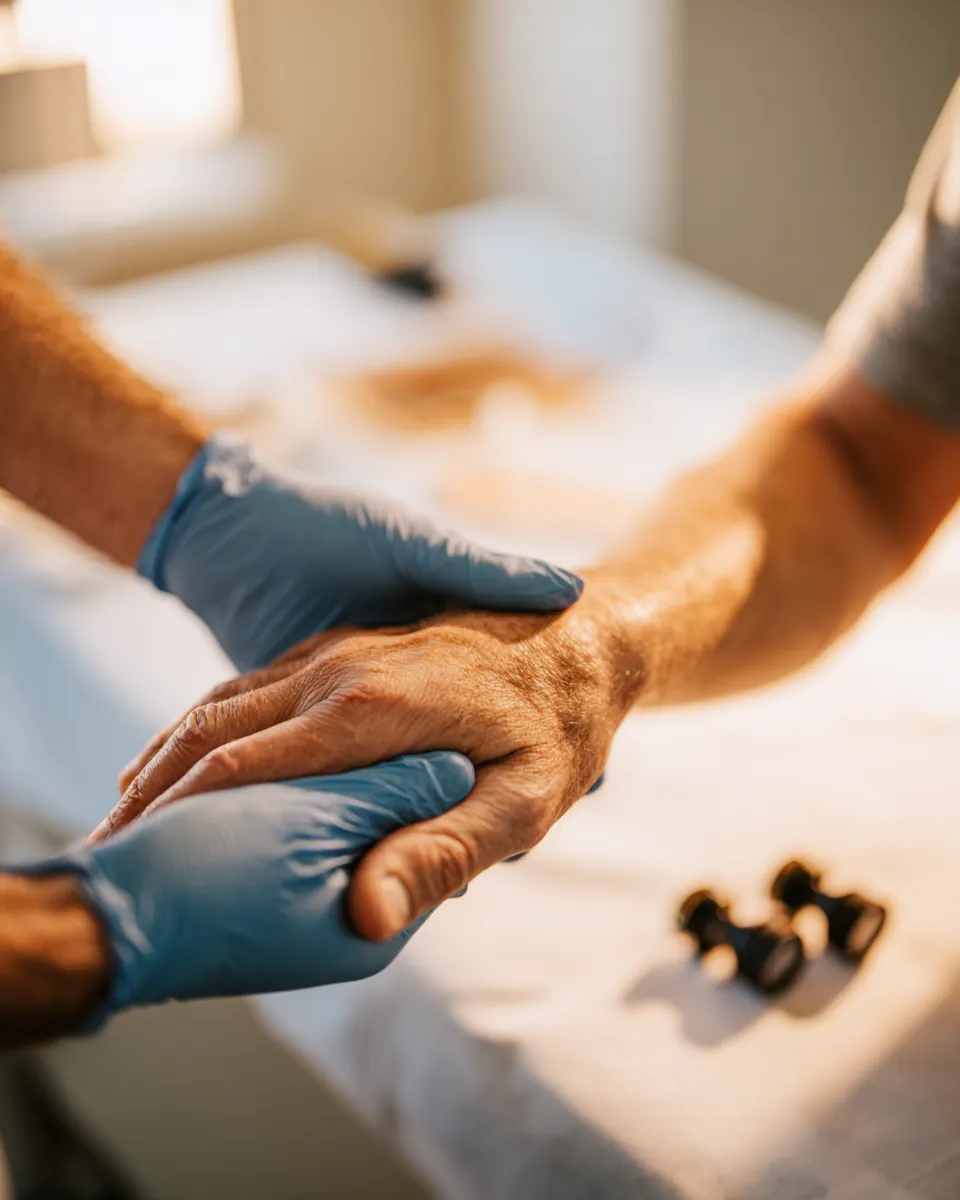
Los Angeles orthopedic hand specialist evaluating a patient for carpal tunnel syndrome — LAOSS board-certified care across eight LA offices
Live · Now Accepting

Quiet the nerve. Restore the grip.

Conservative care, injections, and endoscopic release at LAOSS.

15+
Years caring
Same-day appointments
Often available
★★★★★
4.9 · 7,500+ reviews

Common carpal tunnel signs we treat

  • Numbness or tingling in the thumb, index, and middle fingers
  • Night pain that wakes you up — relieved by shaking the hand
  • Dropping objects or a weakening grip
  • Burning, electric-shock sensations into the palm
  • Symptoms that flare with typing, driving, or holding a phone

What sets LAOSS apart

  • Same- or next-day appointments at eight Los Angeles–area offices
  • On-site nerve conduction studies and EMG coordination
  • Conservative-first care — splinting and injections before surgery
  • Fellowship-trained hand & wrist surgeons performing the release themselves
Key takeaways
  • Carpal tunnel syndrome is compression of the median nerve as it passes through a narrow channel at the wrist — not a problem with the hand itself.
  • Most LAOSS patients improve without surgery: night splinting, ergonomic changes, NSAIDs, and a corticosteroid injection resolve a large share of cases.
  • When symptoms persist, weakness sets in, or nerve testing shows progression, endoscopic or open carpal tunnel release is a fast, well-tolerated outpatient procedure.
  • Recovery from release surgery is measured in days, not months — most patients are back to typing within 1–2 weeks and to heavy gripping by 4–6 weeks.
Overview

What is carpal tunnel syndrome?

Carpal tunnel syndrome is one of the most common nerve problems in the body — and one of the most misunderstood. Patients often think it's a tendon problem or a wrist injury. It isn't. It's a nerve being squeezed in a tight space.

The carpal tunnel is a narrow passageway on the palm side of your wrist, about the width of your thumb. The floor and walls are made of small wrist bones; the roof is a tough band of tissue called the transverse carpal ligament. Through this tunnel run nine flexor tendons (the ones that bend your fingers) and the median nerve, which carries sensation to your thumb, index finger, middle finger, and half of your ring finger.

When the tissue inside the tunnel swells — from repetitive hand use, fluid shifts during pregnancy, inflammation from diabetes or thyroid disease, or just an anatomically tight tunnel — the median nerve gets pinched against the ligament above it. The nerve responds the way any nerve does under pressure: numbness, tingling, burning, and eventually weakness.

At LAOSS, the most common carpal tunnel patients we see are office workers in their 30s through 60s, pregnant women in their second and third trimesters, and manual laborers with high-repetition jobs. Most of them improve with conservative care: a properly fitted night splint, ergonomic changes, anti-inflammatories, and — when needed — a single corticosteroid injection. When those don't hold, endoscopic carpal tunnel release is one of the most reliable procedures in orthopedics, performed wide-awake through a small incision, with patients driving home an hour later.


Patient education

Watch: Carpal Tunnel Syndrome

Pain, numbness and tingling in your hand may be from carpal tunnel syndrome. It happens when the area around the main nerve to your hand is too tight. The nerve is called the median nerve. And the small space in your wrist where it passes is called the carpal tunnel.

Animations licensed from ViewMedica · Swarm Interactive

Anatomical illustration of the wrist showing the carpal tunnel, transverse carpal ligament, median nerve, and flexor tendons
Anatomy of the carpal tunnel — the median nerve travels alongside nine flexor tendons beneath the transverse carpal ligament.
Anatomy

Inside the carpal tunnel.

The carpal tunnel is roofed by the transverse carpal ligament and floored by the small carpal bones of the wrist. Any swelling inside this fixed space — from inflamed tendon sheaths, fluid retention, or anatomic crowding — compresses the median nerve, producing the classic thumb/index/middle-finger numbness that defines this condition.

Self-orient

When carpal tunnel shows up.

Symptoms

Common symptoms

  • Numbness or tingling in the thumb, index, and middle fingers (sparing the pinky)
  • Night-time symptoms that wake you up — relieved by shaking the hand
  • Burning or electric-shock sensations into the palm
  • Weakening grip — dropping cups, keys, or your phone
  • Difficulty buttoning shirts, opening jars, or pinching small objects
  • Pain that radiates from the wrist up into the forearm
  • Loss of dexterity or fine-motor control
  • Thumb-pad muscle wasting in long-standing, untreated cases
Causes

Common causes

  • Repetitive hand use — typing, assembly work, tool use, sustained gripping
  • Pregnancy-related fluid retention (often resolves after delivery)
  • Diabetes, thyroid disease, and rheumatoid arthritis
  • Anatomically narrow carpal tunnel (often runs in families)
  • Wrist fractures or dislocations that change tunnel geometry
  • Tenosynovitis — inflammation of the flexor tendon sheaths inside the tunnel
Diagnostics

How We Diagnose Carpal Tunnel

Carpal tunnel can usually be diagnosed in a single visit, but the goal isn't just to confirm it — it's to rule out the things that mimic it. Cervical (neck) nerve compression, ulnar nerve issues at the elbow, thoracic outlet syndrome, and early peripheral neuropathy can all feel similar. The wrong diagnosis means the wrong treatment.

Your LAOSS evaluation starts with a focused history: when symptoms began, which fingers are involved, what makes them worse, whether they wake you at night, and what you do for work or hobbies. Then a hands-on exam — Tinel's sign (tapping over the nerve), Phalen's test (holding the wrists in flexion), thumb-pad strength, and two-point sensory discrimination. Together these are over 85% accurate for classic carpal tunnel.

When the picture isn't clear-cut, or when surgery is on the table, we order nerve conduction studies (NCS) and electromyography (EMG). These measure how fast the median nerve transmits a signal across the wrist and whether the muscles it controls are getting their messages. Ultrasound of the wrist is also useful — it can show a swollen median nerve and rule out a mass inside the tunnel.

Most LAOSS patients leave the first visit with a clear diagnosis, a graded severity (mild, moderate, or severe), and a written plan. That's the point of the visit — not another referral.

Treatment options

Carpal Tunnel Treatments at LAOSS

Carpal tunnel doesn't have to mean surgery — and even when it does, the procedure is one of the fastest, most reliable in orthopedics. We start with the least-invasive option that fits your severity and escalate only when it doesn't hold. Here's the full menu.

Conservative care
Step 1

Conservative care first

For mild-to-moderate carpal tunnel, non-surgical care resolves symptoms in the majority of patients — especially when started early.

  • Night-time wrist splints (neutral position) — the single most effective non-surgical step
  • Ergonomic adjustments — keyboard, mouse, chair height, phone grip
  • Activity modification and micro-breaks during high-repetition tasks
  • NSAIDs (ibuprofen, naproxen) for inflammation
  • Corticosteroid injection into the carpal tunnel (ultrasound-guided)
  • Hand therapy — tendon and nerve glide exercises
  • Treating underlying contributors (thyroid, diabetes, RA)
Surgical care
When needed

Surgical release when needed

When numbness becomes constant, grip weakens, EMG shows nerve damage, or conservative care fails — carpal tunnel release is straightforward and highly effective.

  • Endoscopic carpal tunnel release (single small incision, faster recovery)
  • Open carpal tunnel release (when anatomy or revision dictates)
  • Wide-awake local anesthesia (WALANT) — no IV, no general anesthesia
  • Outpatient procedure — most patients drive home within an hour
  • Same-day return to light activity; typing in 1–2 weeks
  • Revision release for patients with recurrent or incomplete relief
Surgeon expertise

Why experience matters.

Why experience matters

Carpal tunnel release looks simple on paper, but the difference between a great outcome and an incomplete one comes down to identifying the right diagnosis, releasing the ligament completely, and protecting the nerve and its branches.

  • Fellowship-trained hand and upper-extremity surgeons
  • Same-visit nerve testing coordination when EMG is needed
  • Endoscopic technique refined over thousands of cases
  • Direct conservative-vs-surgical recommendation — no upselling

The LAOSS approach

Our hand specialists move stepwise — splint first, inject when appropriate, release when nothing else holds. Most patients never need the OR.

  • Same-day diagnosis with on-site exam and imaging
  • Hand therapy coordinated in your insurance network
  • Wide-awake release option — no general anesthesia required
  • Direct access to your specialist between visits
Candidacy

Am I a candidate?

If most of these match your situation, an evaluation with a hand specialist is the next step.

You may be

You may be a candidate if

These signs typically point toward an in-person evaluation with a hand and wrist specialist.

  • Numbness or tingling in the thumb, index, or middle finger for more than a few weeks
  • Symptoms that wake you up at night or appear with driving and phone use
  • Grip weakness or dropping things you used to hold easily
  • Symptoms that didn't fully resolve with over-the-counter splints
  • A prior diagnosis of carpal tunnel that has come back
  • Pregnancy-related symptoms that are not improving postpartum
Evaluation

What evaluation includes

Your first visit is built to give you an answer the same day, not another referral.

  • Detailed history — onset, hand dominance, work and hobby load
  • Hands-on exam including Tinel's, Phalen's, and strength testing
  • On-site imaging when anatomy or trauma is in question
  • Nerve conduction / EMG coordination when severity is unclear
  • Clear severity grade and a written plan you leave with
ImportantSeek urgent evaluation for sudden severe hand pain after trauma, complete loss of sensation, rapidly progressive weakness, visible thumb-muscle wasting, or any sign of infection (fever, increasing redness or swelling).
Recovery

Your carpal tunnel recovery roadmap.

Carpal tunnel release recovery is one of the fastest in orthopedics — but using the right milestones matters. Here's what most patients can expect after endoscopic release.

01Days 0–7

Right after surgery

In the first week the focus is protecting the small incision, keeping the hand elevated, and starting gentle finger motion immediately.

  • Soft dressing on for 3–5 days; no formal cast or splint needed
  • Full finger motion encouraged from day one to prevent stiffness
  • Keep the hand elevated above the heart when resting
  • Light typing and phone use usually possible within 3–5 days
  • Stitches removed (or dissolve) at 7–14 days
02Weeks 2–6

Return to function

Strength rebuilds quickly, but the palm can feel tender (pillar pain) for several weeks — this is normal and resolves.

  • Driving usually resumed within 1–2 weeks
  • Return to office and computer work in 1–2 weeks
  • Hand therapy if grip strength is slow to return
  • Avoid heavy gripping, push-ups, or carrying weight until cleared
  • Pillar tenderness fades gradually over 6–12 weeks
03Months 2+

Long-term outcome

Most patients regain full grip strength and lose night-time numbness completely. Long-standing nerve damage may improve more slowly.

  • Return to manual labor, gym, and sports by 6–8 weeks
  • Numbness resolves within days for most; over months for severe cases
  • Recurrence after complete release is uncommon (under 5%)
  • Ergonomic plan to protect the opposite wrist (often symptomatic too)
  • Direct line back to your specialist if symptoms change
Risks & considerations

What to weigh before you decide.

Carpal tunnel release has one of the highest patient-satisfaction rates in all of orthopedics — but it's still surgery. We talk through the risks and benefits with every patient.

General

General considerations

Every surgical intervention carries a small set of standard risks. We screen, prepare, and monitor for these on every patient.

  • Infection (rare with modern technique and prophylaxis)
  • Bleeding or bruising at the incision
  • Reaction to anesthesia or local medications
  • Temporary post-op pain managed with simple analgesics
Specific

Carpal-tunnel-specific considerations

Some risks are specific to working around the median nerve and the structures of the wrist. We discuss these in detail so you can weigh them against the benefits.

  • Pillar pain — palm tenderness lasting weeks (common, self-resolving)
  • Temporary weakness of grip during the early weeks
  • Incomplete relief in cases with long-standing nerve damage
  • Scar tenderness or sensitivity at the small incision
  • Rare injury to the median nerve or its motor branch
  • Recurrence is uncommon but possible — usually addressed with revision
Your care team

Meet the Hand & Wrist Specialists at LAOSS

Hand surgery is its own world. The anatomy is small, the nerves are unforgiving, and a millimeter of technique decides whether you can text again at week two or week six. At LAOSS, carpal tunnel patients are evaluated and treated by fellowship-trained hand and upper-extremity surgeons — not general orthopedists who occasionally do wrists.

Our hand team performs endoscopic and open carpal tunnel release as outpatient procedures, often wide-awake under local anesthesia only — no IV, no general anesthesia, and most patients drive themselves home within an hour. From your first evaluation through the last follow-up, you'll work with the same specialist who actually performs your procedure.

Patient reviews

What patients say about us.

★★★★★4.97,500+ Google reviews
5 stars all around. Got referred here for carpal tunnel. Dr. Malafa did the release wide-awake — no IV, drove myself home in an hour. Mind blown.
Tiffany Nguyen
Sherman Oaks, CA · 3 March 2025
Explore related care

Find care by body area.

Jump to a nearby condition page and compare treatment paths across the body.

FAQ

Common carpal tunnel questions

  • In most cases, yes. If carpal tunnel is caught while symptoms are intermittent — coming and going, worse at night — the numbness usually resolves completely with splinting, ergonomic changes, or a corticosteroid injection. After a successful release surgery, night numbness typically disappears within days. The exception is long-standing severe carpal tunnel where the nerve has been compressed for years and the thumb muscles have started to waste. In those cases the nerve still improves after release, but more slowly, and some residual numbness can persist. The takeaway: the earlier you get evaluated, the more complete the recovery.
  • Two reasons. First, most people sleep with their wrists curled in flexion, which collapses the carpal tunnel and pinches the median nerve. Second, fluid in the body redistributes when you lie flat — including into the tight space of the wrist. That's why a simple wrist splint that holds the wrist in a neutral position is the single most effective non-surgical treatment for carpal tunnel. Many patients get a full night's sleep again within the first week of wearing one.
  • No — and surgery is usually not the first step. For mild-to-moderate carpal tunnel, a combination of night splinting, ergonomic adjustment, NSAIDs, and (when appropriate) a single corticosteroid injection resolves symptoms in a large share of patients. Surgery becomes the right answer when numbness is constant rather than intermittent, when grip strength is dropping, when nerve testing shows the nerve is being damaged, or when conservative care has been given a fair trial and the symptoms keep coming back.
  • Faster than most patients expect. With endoscopic release, the soft dressing comes off in 3–5 days and patients are typically using their phone and doing light typing within the first week. Driving usually resumes in 1–2 weeks. Heavy gripping and manual labor return at 4–6 weeks. There's a normal phase called pillar pain — tenderness in the palm — that can last 6–12 weeks and is not a sign anything is wrong. Most patients return to office work within two weeks and to full activity by six.
  • Yes, in most cases. After a complete release, true recurrence is uncommon — under 5% over the long term. To protect the result, we focus on the things you can control: ergonomic setup (keyboard at elbow height, neutral wrist position), micro-breaks during high-repetition tasks, hand and wrist stretches, and managing underlying contributors like diabetes or thyroid disease. We also evaluate the opposite hand at follow-up, since carpal tunnel is often bilateral and the second side often responds even better to early conservative care.
  • Not always. Classic carpal tunnel — night-time numbness in the thumb, index, and middle fingers, relieved by shaking — can often be diagnosed clinically with a strong enough exam. We order nerve conduction studies and EMG when the picture is less clear (atypical fingers involved, suspected cervical or ulnar nerve overlap), when severity needs to be graded before surgery, or when a workers' compensation or insurance claim requires objective documentation. The studies are done by a separate neurology lab and take about 30–45 minutes.
  • It's done with local anesthesia only — meaning the surgeon numbs the small area at the wrist, but you stay awake, with no IV, no breathing tube, and no sedative. This is called WALANT (wide-awake local anesthesia no tourniquet). For carpal tunnel release it's well-established and well-tolerated: most patients report the only sensation is the initial sting of the local. You can eat beforehand, you don't need a driver, and you walk out of the surgery center within an hour. It's not for everyone — patient preference matters — but for those who choose it, recovery often feels faster because the body isn't recovering from general anesthesia on top of the procedure.
  • It depends on your situation. For patients who live alone, work with their hands, or have very young children, we usually stage the two sides so one hand is always available for daily life. For retired patients or those with strong help at home, bilateral same-day release is reasonable and often more efficient. Either way, we discuss the pros and cons at your evaluation and let you decide.
Ready when you are

Don't sleep on numb hands.

If you're waking up shaking out your hand, book a same-day visit with a hand specialist at any of our eight Los Angeles–area offices.

Booking now
21 specialists · 8 offices
Greater Los Angeles
On-site X-raySame visit
Most insurers acceptedIn-network
Call usBook online