Los Angeles Orthopedic

Trusted Hip Doctors serving the Greater Los Angeles Area

Hip pain can be frustrating, unpredictable, and disruptive. You might notice stiffness when you wake up, clicking during movement, or pain while walking, sitting, or standing for long periods.
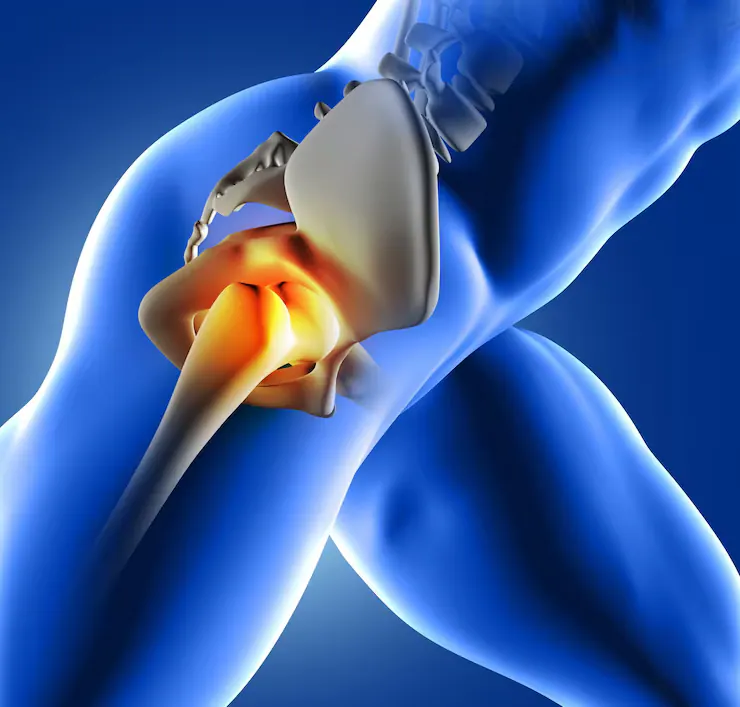
Los Angeles orthopedic specialist evaluating a patient for trusted hip doctors — LAOSS board-certified care across eight LA offices
Live · Now Accepting

Experts in hip care.

Surgical and non-surgical options at LAOSS.

15+
Years caring
Same-day appointments
Often available
★★★★★
4.9 · 7,500+ reviews

Common hip concerns we treat

  • Pain that limits walking, lifting, or sleep
  • Stiffness, swelling, or reduced range of motion
  • Sports injuries — acute or overuse
  • Arthritis or post-traumatic joint changes
  • Conditions other doctors couldn't resolve

What sets LAOSS apart

  • Same- or next-day appointments at eight Los Angeles–area offices
  • On-site imaging; PT coordinated with your in-network provider
  • Conservative-first care, surgery only when needed
  • Board-certified specialists, not generalists
Key takeaways
  • Hip pain ranges from labral tears and impingement to arthritis and avascular necrosis — accurate diagnosis is the first step.
  • Conservative care (injections, PT with your in-network provider, activity changes) helps most early-stage cases.
  • For advanced arthritis, total hip replacement at LAOSS uses modern techniques with same-day discharge available for many patients.
  • Same-day or next-day appointments available for acute hip pain.
Overview

What is hip pain?

Hip pain ranges from sharp groin pain that limits walking to deep aching that wakes you up at night. The hip is a deep ball-and-socket joint, so problems often present as groin, buttock, or outer-thigh pain rather than at the hip itself.

The most common diagnoses we treat at LAOSS are femoroacetabular impingement (FAI), labral tears, hip osteoarthritis, trochanteric bursitis, and tendinopathy of the gluteal tendons. Younger active patients are more likely to have impingement and labral pathology; older patients more often have arthritis.

Most early-stage hip pain improves with conservative care — image-guided injections, physical therapy with your in-network provider, and activity modification. When arthritis becomes the limiting factor, anterior or robotic-assisted total hip replacement is a well-proven option, and many LAOSS patients are home the same day.

Patient education

Watch: Anatomy of the Hip Joint

The hip joint is one of the largest weight-bearing joints in the body. This ball-and-socket joint allows the leg to move and rotate while keeping the body stable and balanced. Let's take a closer look at the main parts of the hip joint's anatomy.

Animations licensed from ViewMedica · Swarm Interactive
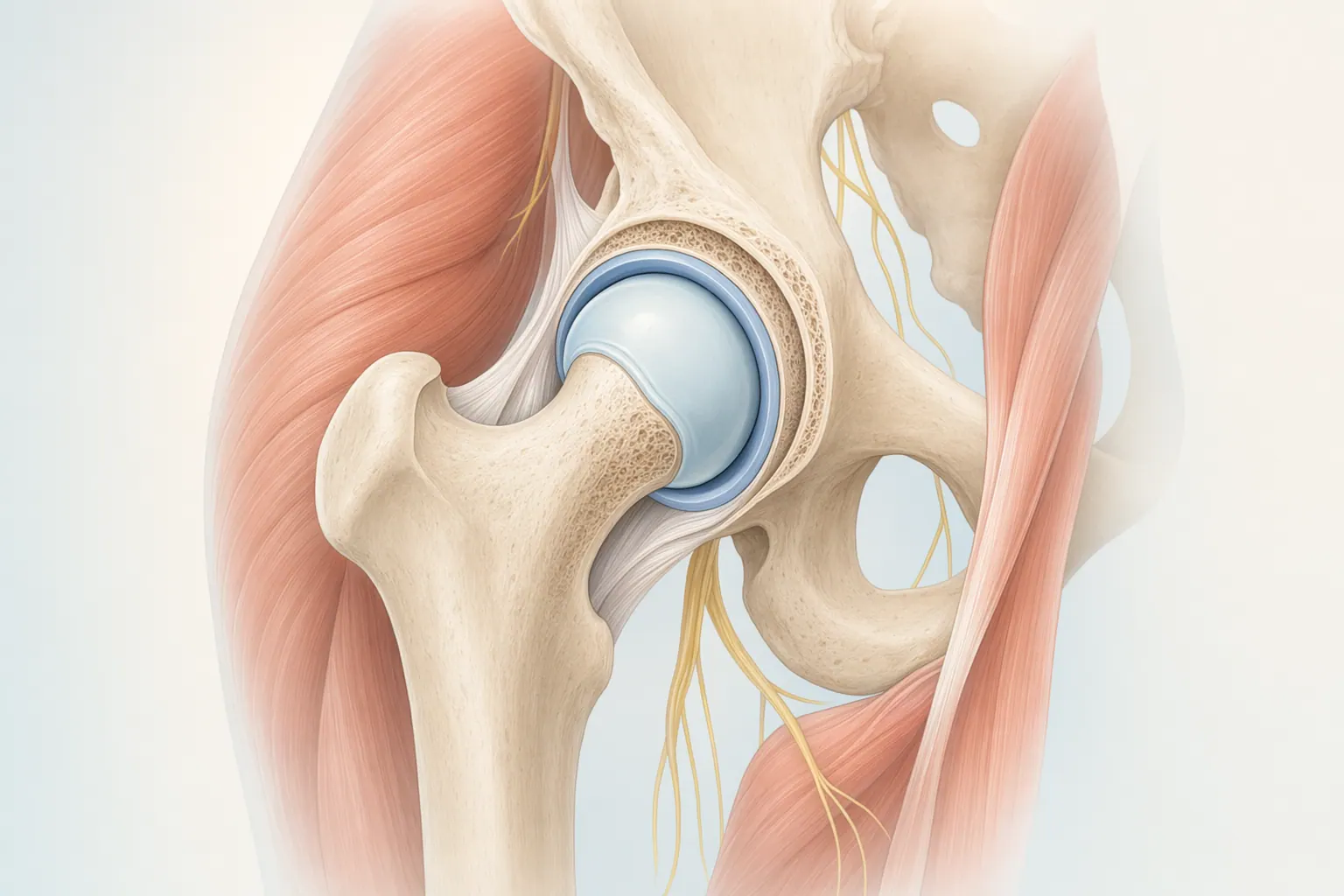
Anatomical illustration of the hip joint showing the femoral head, acetabulum, and surrounding ligaments
Anatomy of the hip — ball-and-socket joint formed by the femoral head and acetabulum.
Anatomy

Inside the hip.

The hip is a deep ball-and-socket joint that bears most of your body weight when you stand, walk, or climb. Cartilage, the labrum, and surrounding muscles allow smooth motion in multiple directions.

Self-orient

When hip pain shows up.

Symptoms

Common symptoms

  • Femoroacetabular impingement (FAI)
  • Hip labral tears
  • Hip instability or subluxation
  • Hip osteoarthritis
  • Rheumatoid arthritis of the hip
  • Post-traumatic arthritis
  • Hip bursitis
  • Tendinitis around the hip joint
Causes

Common causes

  • Nerve compression from disc, joint, or soft-tissue swelling
  • Age-related joint breakdown or post-traumatic arthritis
  • Overuse from running, jumping, or repetitive motion
  • High-impact trauma from accidents, falls, or contact sports
Diagnostics

How We Diagnose Hip Pain and Injuries

Our orthopedic hip specialists are trained to evaluate complex hip problems involving the bones, cartilage, labrum, ligaments, tendons, and surrounding soft tissues. Our approach is designed to be thorough, efficient, and tailored to your specific symptoms and lifestyle.

Here’s what to expect when you come in for a hip evaluation:

Many of our patients receive a diagnosis and treatment plan during their first visit. We’ll walk you through your results in clear, understandable terms and guide you through the next steps so you can feel confident moving forward.

Need expert care fast? Call today to schedule your hip evaluation in Los Angeles.

Treatment options

How We Provide Hip Pain Relief at LAOSS

Our approach starts with understanding your diagnosis and daily needs, then building a plan around you. For most patients, treatment begins with conservative solutions aimed at reducing pain, improving mobility, and slowing joint damage:

Conservative care
Step 1

Conservative care first

Non-surgical options designed to relieve pain, restore movement, and avoid the OR when possible.

  • Steroid Injections
  • Physical Therapy
  • PRP Injections
  • Viscosupplementation (Gel Injections)
Surgical care
When needed

Surgical options when needed

Minimally invasive and reconstructive procedures performed by board-certified orthopedic surgeons.

  • Bracing/Assistive Supports
  • Hip Arthroscopy
  • Labral Repair or Reconstruction
  • Osteotomy (Realignment Procedures)
  • Hip Replacement (Partial or Total)
  • Fracture Repair & Fixation
Surgeon expertise

Why experience matters.

Why experience matters

Hip care is highly technique-dependent. Volume, training, and judgment together determine the outcome you actually feel six months later.

  • Precise diagnosis from imaging and exam
  • Conservative-first care that avoids unnecessary surgery
  • Surgical technique refined over thousands of cases
  • On-site imaging + coordinated PT through your in-network provider

The LAOSS approach

Our hip specialists move stepwise — start with the least-invasive option that fits your situation, escalate only when it doesn't.

  • Same-day imaging at most offices
  • PT coordinated in your insurance network
  • Board-certified surgeons performing the procedures themselves
  • Direct access to your specialist between visits
Candidacy

Am I a candidate?

If most of these match your situation, an evaluation with a hip specialist is the next step.

You may be

You may be a candidate if

These signs typically point toward an in-person evaluation with a hip specialist.

  • Pain or stiffness in the hip that lasts more than a few days
  • Swelling, instability, or noticeable change in function
  • Symptoms that limit walking, lifting, sleep, or work
  • Previous treatment that didn't fully resolve the problem
  • Imaging or exam findings that suggest an underlying issue
Evaluation

What evaluation includes

Your first visit is built to give you an answer the same day, not just another referral.

  • Detailed history — onset, mechanism, what makes it better or worse
  • Hands-on exam focused on the affected joint or region
  • On-site imaging at most offices (X-ray, ultrasound)
  • Clear plan with options ranging from conservative to surgical
  • Same-day or next-day scheduling for any follow-up tests
ImportantSeek urgent evaluation for sudden severe pain, numbness, progressive weakness, loss of bowel or bladder control, or any sign of infection (fever, increasing redness or swelling).
Recovery

Your hip recovery roadmap.

Recovery is rarely a straight line — but a clear plan with measurable milestones makes the path predictable.

01Days 0–14

Right after care

In the first two weeks we focus on protecting the hip, calming inflammation, and restoring basic motion.

  • Activity modification with clear do/don't guidance
  • Ice, elevation, and pain control as needed
  • Gentle range-of-motion within safe limits
  • Follow-up scheduled to track healing
02Weeks 2–8

Rehabilitation

Targeted physical therapy rebuilds strength, mobility, and confidence in the hip.

  • Progressive strengthening and neuromuscular work
  • Manual therapy and soft-tissue treatment
  • Sport- or job-specific movement re-training
  • Coordinated PT through your in-network provider
03Months 2+

Long-term care

Once function is restored, the focus shifts to keeping you there — and catching any recurrence early.

  • Return-to-activity plan with measured benchmarks
  • Home program tailored to your sport or job
  • Maintenance visits or imaging if symptoms change
  • Direct line back to your specialist if needed
Risks & considerations

What to weigh before you decide.

We talk through the risks and benefits with every patient — informed consent is a conversation, not a form.

General

General considerations

Every orthopedic intervention carries a small set of standard risks. We screen, prepare, and monitor for these on every patient.

  • Infection (rare with modern technique and prophylaxis)
  • Bleeding or bruising at the treatment site
  • Reaction to anesthesia or medications
  • Need for additional procedures in some cases
Specific

Hip-specific considerations

Some risks are tied to the structures we're treating in the hip. We discuss these in detail at your visit so you can weigh them against the benefits.

  • Temporary stiffness or weakness during recovery
  • Incomplete pain relief in a small percentage of cases
  • Nerve or vessel irritation near the treatment area
  • Need for follow-up therapy to fully restore function
Your care team

Meet the Hip Specialists at LAOSS

At LAOSS, our hip care team is led by experienced orthopedic surgeons dedicated to helping patients overcome hip pain and restore mobility. Together, they bring advanced training, proven surgical skill, and a patient-first approach to every diagnosis and treatment plan, providing compassionate, accessible care for the Greater Los Angeles community.

Patient reviews

What patients say about us.

★★★★★4.97,500+ Google reviews
5 stars. Got in same day for a soccer injury, X-ray right there in the office, had a plan before I left. Couldn't ask for more.
Diego Martinez
Boyle Heights, CA · 22 April 2025
Explore related care

Find care by body area.

Jump to a nearby condition page and compare treatment paths across the body.

FAQ

Common hip questions

  • A clicking or popping sound in the hip, especially when walking, climbing stairs, or standing up, can result from tendons or muscles moving over the joint, labral tears, or hip impingement. While it’s often harmless, persistent clicking with pain or stiffness may signal an underlying issue. A hip specialist can provide clarity and personalized treatment.
  • Yes, many patients with hip arthritis find relief without surgery. Non-surgical treatments like physical therapy, steroid or gel injections, and assistive supports can reduce pain and improve mobility. At LAOSS, our hip specialists tailor care to your needs, focusing on conservative options first and recommending surgery only if necessary.
  • Hip bursitis is best treated by an orthopedic doctor, a specialist trained to diagnose and manage joint, muscle, and tendon problems. At LAOSS, our Los Angeles-area hip specialists offer both non-surgical and minimally invasive treatments, including injections and physical therapy, to relieve pain and restore mobility.
  • Not always. Nighttime hip pain doesn’t automatically mean you need a hip replacement. It may be related to arthritis, bursitis, or another condition that responds well to non-surgical care like injections or physical therapy. An orthopedic hip specialist can evaluate your symptoms, identify the cause, and recommend the most appropriate treatment plan.
Ready when you are

Don't wait on pain.

Book a visit with a hip specialist at any of our eight Los Angeles–area offices.

Booking now
21 specialists · 8 offices
Greater Los Angeles
On-site X-raySame visit
Most insurers acceptedIn-network
Call usBook online