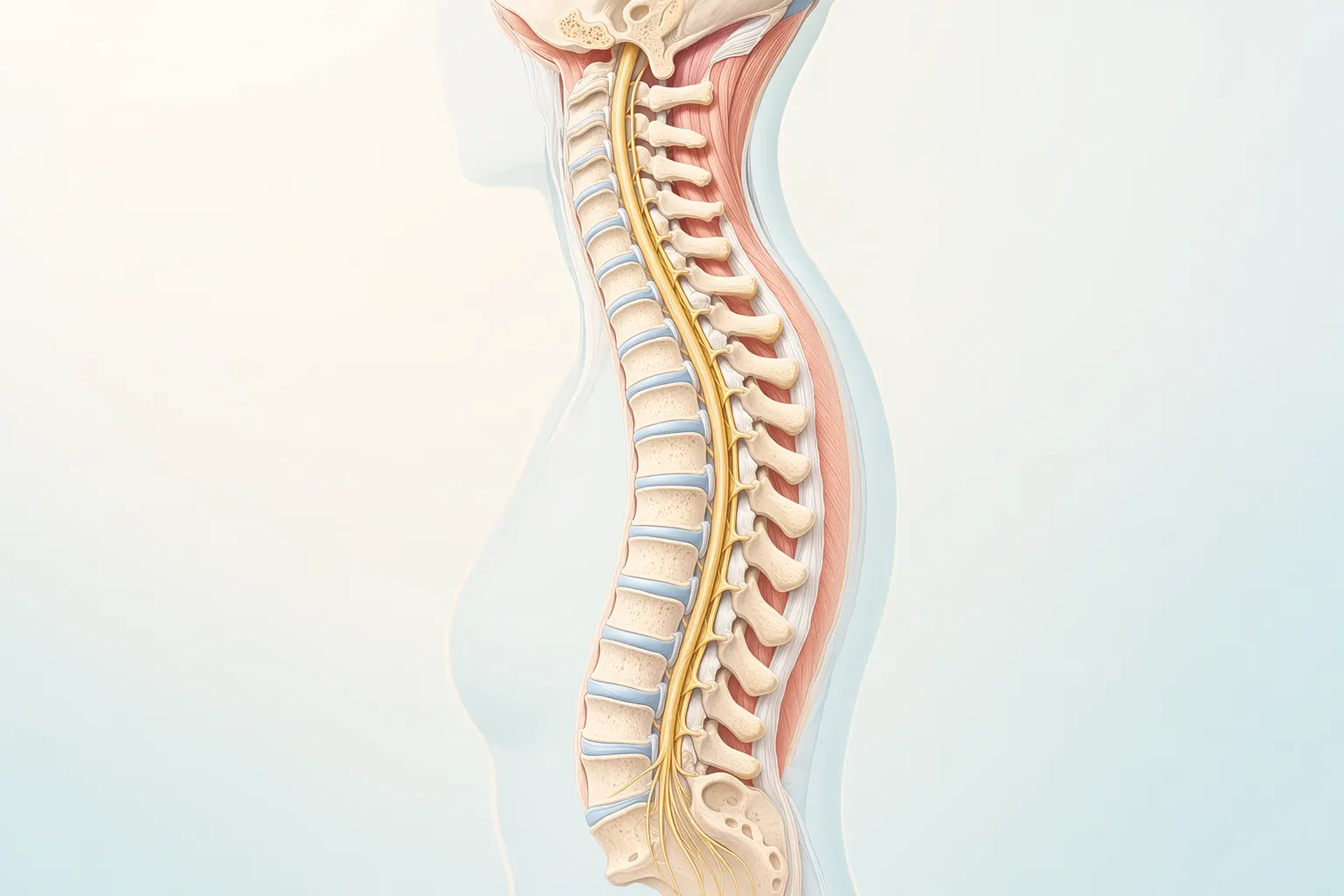
Sciatica isn't a diagnosis on its own — it's a symptom of an underlying problem in the lower spine. The sciatic nerve is the longest nerve in the body. It's actually a bundle of nerve roots that exit the lumbar spine at the L4, L5, and S1 levels, merge in the pelvis, and travel down through the buttock, the back of the thigh, the calf, and into the foot. When any of those roots get pinched or irritated where they leave the spine, you feel it everywhere that nerve travels.
Most commonly, the culprit is a lumbar disc herniation — the soft inner gel of a spinal disc pushes out through a tear in the tough outer wall and presses on a nerve root. Other common causes include spinal stenosis (narrowing of the canal where the nerves live, often age-related), spondylolisthesis (one vertebra slipping forward on the one below), and occasionally piriformis syndrome, where a muscle deep in the buttock irritates the nerve below the spine.
The good news: most sciatica gets better. In study after study, roughly 80–90% of patients with a herniated disc and sciatic pain improve within 6 to 12 weeks with conservative care — physical therapy, anti-inflammatories, posture changes, and time. Our job at LAOSS is to confirm what's actually causing your pain, get you on the right non-surgical track quickly, and recognize the smaller subset of patients who genuinely need a procedure to recover.