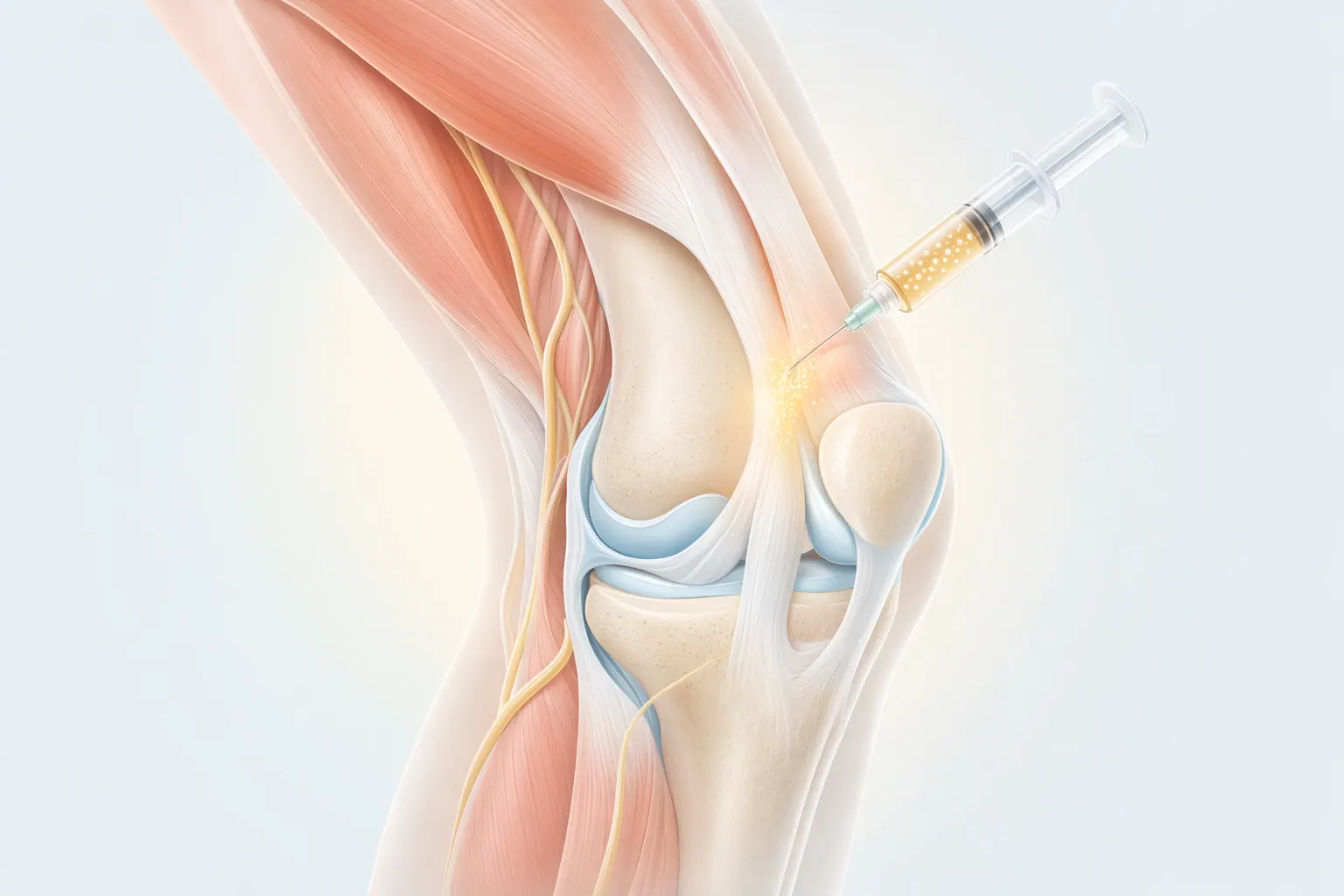
Regenerative medicine is an umbrella category of orthopedic treatments that use biologic material — your own platelets, growth factors, or bone marrow cells — to stimulate healing in damaged tissue. The goal is to help you delay or avoid surgery, preserve your native joint, and get back to activity.
The main therapies in this category are PRP (platelet-rich plasma), BMAC (bone marrow aspirate concentrate, sometimes marketed as "stem cell"), prolotherapy, and amniotic-derived products. They're most commonly used for chronic tendinopathy, mild-to-moderate osteoarthritis, partial tendon or ligament tears, and soft-tissue injuries that haven't responded to rest, PT, or activity modification.
We'll say this plainly: the evidence varies a lot by therapy and condition. PRP has reasonable evidence for tennis elbow, patellar tendinopathy, and mild knee OA. BMAC and "stem cell" therapies have more limited high-quality evidence in orthopedics today and are generally not FDA-approved for these uses. Most regenerative therapies are also not covered by insurance. Our job is to tell you when biologics are a sensible option for your case — and when they're not.