Los Angeles Orthopedic
Foot & Ankle · Procedures

Endoscopic Plantar Fasciotomy (EPF) heel pain relief

Endoscopic plantar fasciotomy is a minimally invasive procedure that releases part of a tight, painful plantar fascia through a small camera-guided incision in the heel. At LAOSS, our board-certified foot and ankle specialists reserve it for chronic heel pain that has not responded to months of dedicated non-surgical care, performed as an outpatient surgery across our eight Los Angeles-area offices.
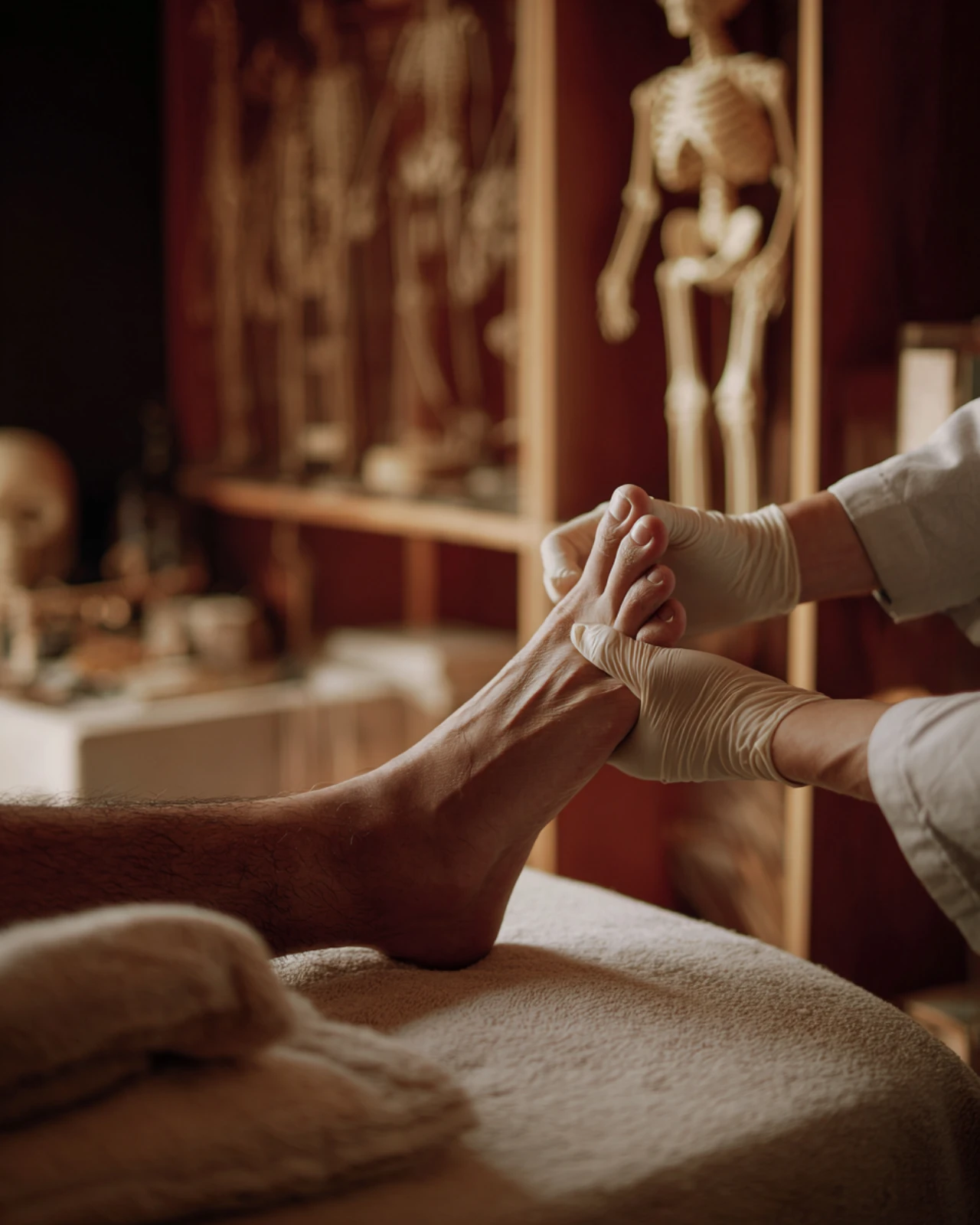
Los Angeles orthopedic specialist evaluating a patient for endoscopic plantar fasciotomy (epf) — LAOSS board-certified care across eight LA offices
Live · Now Accepting

Experts in foot & ankle care.

Surgical and non-surgical options at LAOSS.

15+
Years caring
Same-day appointments
Often available
★★★★★
4.9 · 7,500+ reviews

Common foot & ankle concerns we treat

  • Pain that limits walking, standing, or sleep
  • Stiffness, swelling, or reduced range of motion
  • Sports injuries — acute or overuse
  • Arthritis or post-traumatic joint changes
  • Conditions other doctors couldn’t resolve

What sets LAOSS apart

  • Same- or next-day appointments at eight Los Angeles–area offices
  • On-site imaging; PT coordinated with your in-network provider
  • Conservative-first care, surgery only when needed
  • Board-certified specialists, not generalists
Key takeaways
  • EPF is a minimally invasive surgery for chronic plantar fasciitis that releases tension in the plantar fascia through one or two small heel incisions.
  • It is only considered after 6 to 12 months of conservative care (stretching, orthotics, injections, shockwave) has failed to relieve heel pain.
  • The surgeon releases only a portion of the fascia under camera guidance to protect the arch, and most patients go home the same day.
  • Recovery usually means a surgical shoe or boot for the first week or two, with a gradual return to normal walking and activity over several weeks.
Overview

What is endoscopic plantar fasciotomy (epf)?

Endoscopic plantar fasciotomy (EPF) is a small, camera-guided surgery used to treat chronic plantar fasciitis — stubborn pain on the bottom of the heel that has not improved despite months of non-surgical treatment. The plantar fascia is a thick band of tissue that runs from your heel bone to the base of your toes and supports your arch. When it becomes chronically inflamed and tight, it can cause sharp, deep heel pain, especially with your first steps in the morning.

During the procedure, the surgeon releases a portion of the plantar fascia near its attachment on the heel bone. Relieving that tension takes the constant pulling stress off the painful tissue and allows it to heal. Because the surgeon works through tiny incisions using an endoscope (a small camera) rather than opening the heel, EPF generally means less soft-tissue trauma, smaller scars, and a quicker return to activity than traditional open heel surgery.

It is important to be honest about who this helps. The large majority of plantar fasciitis cases get better without any surgery at all. EPF is a step we consider only when well-documented conservative care has genuinely failed and your pain is interfering with daily life. We never lead with surgery.

Patient education

Watch: Endoscopic Plantar Fasciotomy (EPF)

This procedure relieves the pain of chronic plantar fasciitis. This condition is an inflammation of the plantar fascia, a thick band of connective tissue that stretches across the sole of the foot. This procedure may be performed with local or regional anesthesia and with sedation.

Animations licensed from ViewMedica · Swarm Interactive
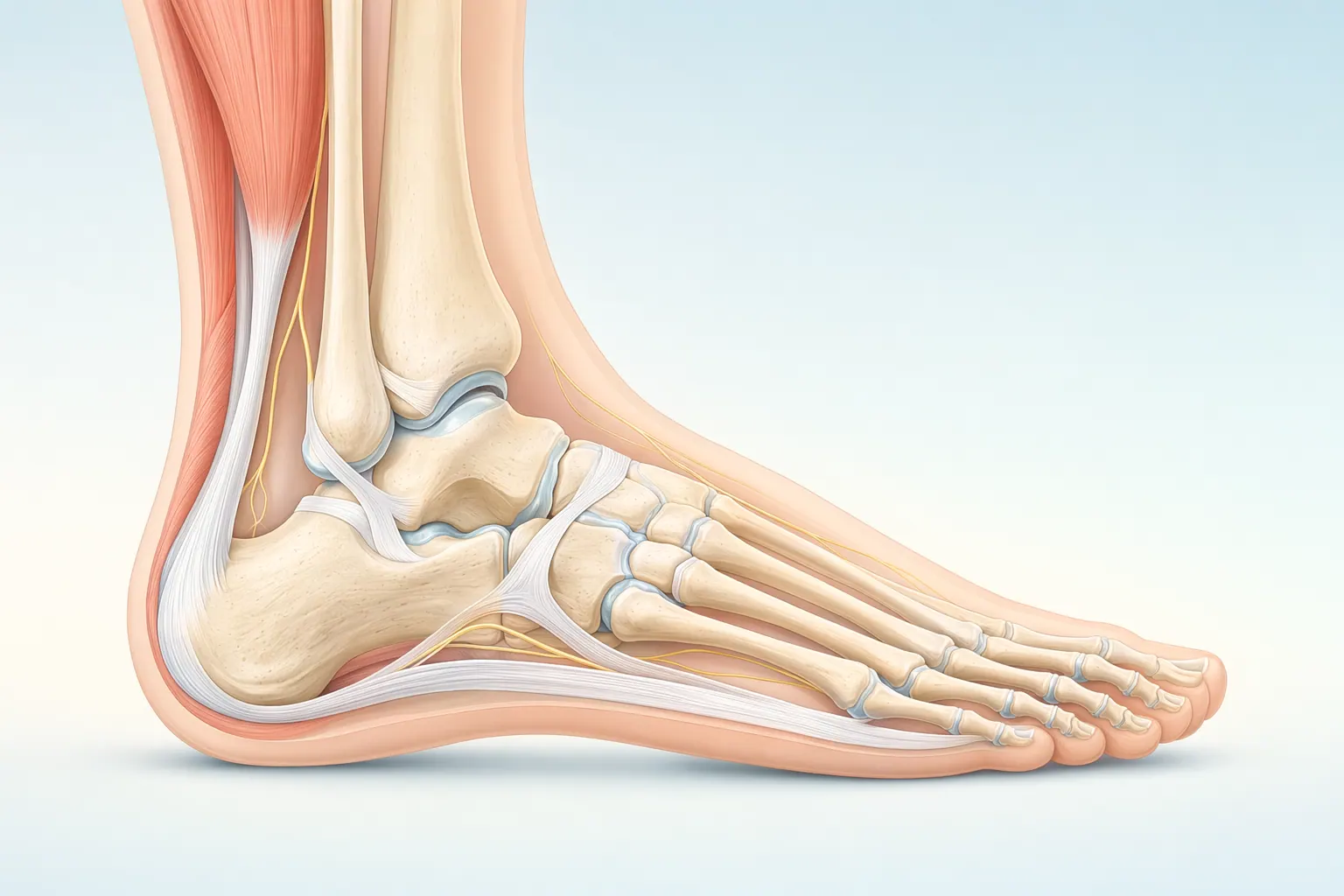
Anatomical illustration of the foot and ankle showing the tibia, talus, calcaneus, and plantar fascia
Anatomy of the foot & ankle — tibia, talus, calcaneus, metatarsals, and the plantar fascia.
Anatomy

Inside the foot & ankle.

The foot and ankle have 26 bones, more than 30 joints, and over 100 ligaments and tendons. The plantar fascia spans the bottom of the foot, the Achilles tendon anchors the calf to the heel, and the ankle is a hinge that handles every step you take. Most foot and ankle problems trace back to overload, alignment, or footwear that doesn’t match the way your foot is built.

How it works

How endoscopic plantar fasciotomy is performed

EPF is an outpatient procedure, meaning you go home the same day. It is usually done under local or regional anesthesia with light sedation, so you are comfortable but do not need a long general anesthetic.

  • Small portal incisions. The surgeon makes one or two tiny incisions (typically around a quarter-inch) on the inner side of the heel, near where the plantar fascia attaches to the heel bone.
  • Camera guidance. A thin endoscope is passed through one portal so the surgeon can see the underside of the plantar fascia clearly on a monitor, while a small specialized blade is introduced through the other.
  • Partial release. Only a portion of the fascia — usually the inner (medial) band — is divided. Releasing just part of it relieves the painful tension while protecting your arch from collapsing or overloading the outer foot.
  • Closure. The small incisions are closed with a stitch or two and dressed. The whole procedure typically takes well under an hour.

You will go home in a surgical shoe or walking boot the same day, usually with instructions to limit how much you are on your feet for the first several days.

Surgeon expertise

Why experience matters.

Why experience matters

Foot & Ankle care is highly technique-dependent. Volume, training, and judgment together determine the outcome you actually feel six months later.

  • Precise diagnosis from imaging and exam
  • Conservative-first care that avoids unnecessary surgery
  • Surgical technique refined over thousands of cases
  • On-site imaging + coordinated PT through your in-network provider

The LAOSS approach

Our foot & ankle specialists move stepwise — start with the least-invasive option that fits your situation, escalate only when it doesn't.

  • Same-day imaging at most offices
  • PT coordinated in your insurance network
  • Board-certified surgeons performing the procedures themselves
  • Direct access to your specialist between visits
Candidacy

Am I a candidate?

If most of these match your situation, an evaluation with a foot & ankle specialist is the next step.

You may be

You may be a candidate if

These signs typically point toward an in-person evaluation with a foot & ankle specialist.

  • You have had heel pain consistent with plantar fasciitis for at least 6 to 12 months that limits walking, work, or sleep.
  • You have completed a genuine course of conservative care — stretching, orthotics, night splints, anti-inflammatories, and often injections or shockwave therapy — without lasting relief.
  • Imaging and exam confirm the pain is coming from the plantar fascia and not another cause such as a stress fracture or nerve entrapment.
  • Your pain is focused at the inner heel where the plantar fascia attaches, rather than diffuse across the whole foot.
  • You are healthy enough for a short outpatient procedure and able to follow a protected weight-bearing and rehab plan afterward.
Evaluation

What evaluation includes

Your first visit is built to give you an answer the same day, not just another referral.

  • Detailed history — onset, mechanism, what makes it better or worse
  • Hands-on exam focused on the affected joint or region
  • On-site imaging at most offices (X-ray, ultrasound)
  • Clear plan with options ranging from conservative to surgical
  • Same-day or next-day scheduling for any follow-up tests
ImportantSeek urgent evaluation for sudden severe pain, an open wound or exposed bone, foot or ankle deformity after trauma, loss of sensation, or any sign of infection (fever, spreading redness, or swelling).
Recovery

Your foot & ankle recovery roadmap.

Recovery is rarely a straight line — but a clear plan with measurable milestones makes the path predictable.

01Days 0–14

Right after care

In the first two weeks we focus on protecting the foot & ankle, calming inflammation, and restoring basic motion.

  • Activity modification with clear do/don’t guidance
  • Ice, elevation, and pain control as needed
  • Gentle range-of-motion within safe limits
  • Follow-up scheduled to track healing
02Weeks 2–8

Rehabilitation

Targeted physical therapy rebuilds strength, mobility, and confidence in the foot & ankle.

  • Progressive strengthening and neuromuscular work
  • Manual therapy and soft-tissue treatment
  • Sport- or job-specific movement re-training
  • Coordinated PT through your in-network provider
03Months 2+

Long-term care

Once function is restored, the focus shifts to keeping you there — and catching any recurrence early.

  • Return-to-activity plan with measured benchmarks
  • Home program tailored to your sport or job
  • Maintenance visits or imaging if symptoms change
  • Direct line back to your specialist if needed
Risks & considerations

What to weigh before you decide.

We talk through the risks and benefits with every patient — informed consent is a conversation, not a form.

General

General considerations

Every orthopedic intervention carries a small set of standard risks. We screen, prepare, and monitor for these on every patient.

  • Infection (rare with modern technique and prophylaxis)
  • Bleeding or bruising at the treatment site
  • Reaction to anesthesia or medications
  • Need for additional procedures in some cases
Specific

Foot & Ankle-specific considerations

Some risks are tied to the structures we're treating in the foot & ankle. We discuss these in detail at your visit so you can weigh them against the benefits.

  • Temporary stiffness or weakness during recovery
  • Incomplete pain relief in a small percentage of cases
  • Nerve or vessel irritation near the treatment area
  • Need for follow-up therapy to fully restore function
Your care team

Meet our foot & ankle surgeons in the Greater Los Angeles area

At LAOSS, our foot & ankle specialists combine advanced surgical expertise with a patient-first approach. From minimally invasive arthroscopic techniques to reconstruction, fracture care, and arthritis management, our physicians bring decades of experience to every case. Trusted across Los Angeles, our team is dedicated to restoring mobility, relieving pain, and helping you return to the activities you love.

Specialists

Meet your foot & ankle specialists.

4 providers
About this care

Recovery, results, and what to weigh

The first week or two. Most patients use a stiff-soled surgical shoe or walking boot and keep weight on the heel limited at first, with elevation and ice to manage swelling. Stitches typically come out around 10 to 14 days. Pain at the surgical site is usually manageable and improves steadily.

Getting back to normal. As the incisions heal, you transition into supportive regular shoes — often with an orthotic — and gradually increase walking. Many patients return to desk work within a week or two and to more demanding activity over the following weeks. A guided stretching and calf-flexibility program is an important part of a durable result, and we coordinate physical therapy through your in-network provider when it is helpful.

Honest expectations. EPF relieves heel pain for many people who have exhausted conservative options, but results are not guaranteed and pain relief can be gradual rather than immediate. Risks we discuss with every patient include incomplete pain relief, temporary numbness or irritation of nearby nerves, change in arch mechanics if too much fascia is released, and the small standard risks of any surgery such as infection. Because conservative care resolves the vast majority of plantar fasciitis, we make sure you have truly given it a fair trial before recommending surgery.

Patient reviews

What patients say about us.

★★★★★4.97,500+ Google reviews
Wonderful staff. The MA was so kind to my elderly mom and the doctor explained everything twice so she’d remember. Felt like we were treated like family.
Patricia Aguilar
Cerritos, CA · 6 January 2025
Explore related care

Find care by body area.

Jump to a nearby condition page and compare treatment paths across the body.

FAQ

Common endoscopic plantar fasciotomy (epf) questions

  • EPF uses one or two tiny incisions and a small camera to release the fascia from inside, while open surgery uses a larger incision to expose it directly. The endoscopic approach generally means less scarring, less soft-tissue disruption, and a faster return to activity.
  • Most patients bear weight in a surgical shoe or boot right away and transition to supportive regular shoes within one to two weeks. A comfortable return to longer walking and most activity typically takes several weeks, with calf stretching and orthotics supporting the result.
  • The surgeon releases only a portion of the fascia — usually the inner band — specifically to relieve tension while preserving arch support. Over-releasing can change foot mechanics, which is why a partial, camera-guided release by an experienced foot and ankle specialist matters.
  • Usually not. The large majority of plantar fasciitis resolves with stretching, orthotics, injections, and time, and we always exhaust those options first. EPF is reserved for chronic heel pain that has not responded to many months of dedicated conservative care.
Ready when you are

Don’t wait on pain.

Book a visit with a foot & ankle specialist at any of our eight Los Angeles–area offices.

Booking now
21 specialists · 8 offices
Greater Los Angeles
On-site X-raySame visit
Most insurers acceptedIn-network
Call usBook online