Common foot & ankle concerns we treat
- Pain that limits walking, standing, or sleep
- Stiffness, swelling, or reduced range of motion
- Sports injuries — acute or overuse
- Arthritis or post-traumatic joint changes
- Conditions other doctors couldn’t resolve
Tarsal tunnel syndrome is compression of the posterior tibial nerve as it passes through a tight channel behind the inner ankle bone, producing burning, tingling, or numbness on the bottom of the foot. Same-day or next-week evaluations across eight LA-area offices.

Surgical and non-surgical options at LAOSS.
Tarsal tunnel syndrome is a nerve being squeezed in a tight space — the foot-and-ankle counterpart to carpal tunnel in the wrist. The tarsal tunnel is a narrow passageway behind the bony bump on the inside of your ankle (the medial malleolus), roofed by a band of tissue called the flexor retinaculum. The posterior tibial nerve runs through this tunnel and then branches to supply sensation to the sole of your foot and toes. When anything crowds that space, the nerve gets pinched and complains.\n\nUnlike a simple ache, the symptoms are neurologic: burning, tingling, electric or shock-like pain, and numbness on the bottom of the foot — often worse with standing and activity, and sometimes worse at night. Because the nerve splits into branches, symptoms can be patchy and confusing, which is exactly why a careful exam matters. Conditions like plantar fasciitis, a stress fracture, or a low-back nerve problem can feel similar, so part of our job is telling them apart.\n\nMost patients improve with conservative care started early — bracing or orthotics to take pressure off the nerve, nerve-glide and stretching therapy, anti-inflammatories, and addressing the underlying driver. Below we walk through the anatomy, the symptoms and causes we see most, how we pin down the diagnosis, and the full range of treatment options from simplest to most involved.
This condition, also called TTS, affects the tibial nerve in the ankle. This nerve is a branch of the sciatic nerve. It passes from the leg down to the foot. Just below the bony bump on the inner side of the ankle, it passes through a small space called the tarsal tunnel. TTS is a compression of the nerve within this tunnel.
Animations licensed from ViewMedica · Swarm Interactive
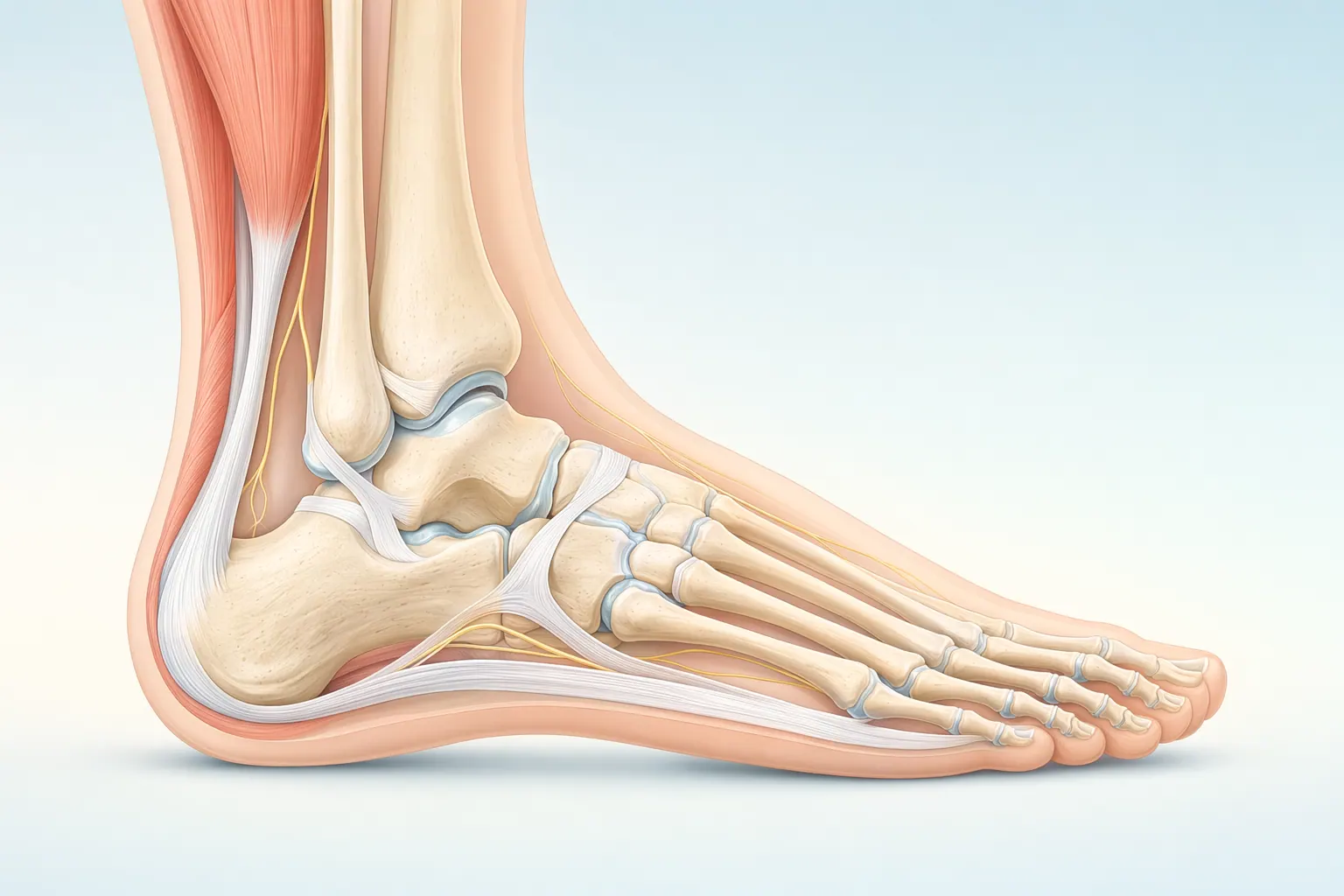
The foot and ankle have 26 bones, more than 30 joints, and over 100 ligaments and tendons. The plantar fascia spans the bottom of the foot, the Achilles tendon anchors the calf to the heel, and the ankle is a hinge that handles every step you take. Most foot and ankle problems trace back to overload, alignment, or footwear that doesn’t match the way your foot is built.
You want answers, fast — and we’re built to give them. Most patients leave their first LAOSS visit with a clear diagnosis and a written plan, not another referral chain.
Here’s what your initial visit for tarsal tunnel syndrome typically looks like:
Schedule your evaluation with a trusted Greater Los Angeles orthopedic expert today.
Once we’ve confirmed the diagnosis, the next step is matching the right treatment to your situation. We start with the least-invasive option that fits — and escalate only when it doesn’t.
Non-surgical options designed to relieve pain, restore movement, and avoid the OR when possible.
Procedures performed by board-certified foot & ankle surgeons when conservative care isn’t enough.
Foot & Ankle care is highly technique-dependent. Volume, training, and judgment together determine the outcome you actually feel six months later.
Our foot & ankle specialists move stepwise — start with the least-invasive option that fits your situation, escalate only when it doesn't.
If most of these match your situation, an evaluation with a foot & ankle specialist is the next step.
These signs typically point toward an in-person evaluation with a foot & ankle specialist.
Your first visit is built to give you an answer the same day, not just another referral.
Recovery is rarely a straight line — but a clear plan with measurable milestones makes the path predictable.
In the first two weeks we focus on protecting the foot & ankle, calming inflammation, and restoring basic motion.
Targeted physical therapy rebuilds strength, mobility, and confidence in the foot & ankle.
Once function is restored, the focus shifts to keeping you there — and catching any recurrence early.
We talk through the risks and benefits with every patient — informed consent is a conversation, not a form.
Every orthopedic intervention carries a small set of standard risks. We screen, prepare, and monitor for these on every patient.
Some risks are tied to the structures we're treating in the foot & ankle. We discuss these in detail at your visit so you can weigh them against the benefits.
At LAOSS, our foot & ankle specialists combine advanced surgical expertise with a patient-first approach. From minimally invasive arthroscopic techniques to reconstruction, fracture care, and arthritis management, our physicians bring decades of experience to every case. Trusted across Los Angeles, our team is dedicated to restoring mobility, relieving pain, and helping you return to the activities you love.
Burning, tingling foot pain is exhausting — and easy to chase down the wrong path when it gets blamed on plantar fasciitis or "just getting older." At LAOSS, our board-certified foot & ankle specialists know tarsal tunnel syndrome can mimic several other problems, so we take the time to find the real source before treating it. With same- or next-day appointments at eight Los Angeles–area offices and on-site imaging, you won't wait weeks for an answer.\n\nWe believe in conservative-first care. For most patients, the right combination of orthotics, nerve-focused therapy, anti-inflammatories, and addressing the underlying cause quiets the nerve without surgery. When a clear structural cause is crowding the nerve or symptoms won't let up, our surgeons perform tarsal tunnel release themselves and walk you through every step of recovery. Either way, you'll leave your first visit with a clear diagnosis and a plan in plain English.
Book a visit with a foot & ankle specialist at any of our eight Los Angeles–area offices.