Los Angeles Orthopedic

Trusted Bunion Specialists in Los Angeles

When your favorite shoes stop fitting and that bony bump on your big toe starts barking back, it's time to see someone who treats bunions every day. We diagnose quickly and build a plan you can actually live with.

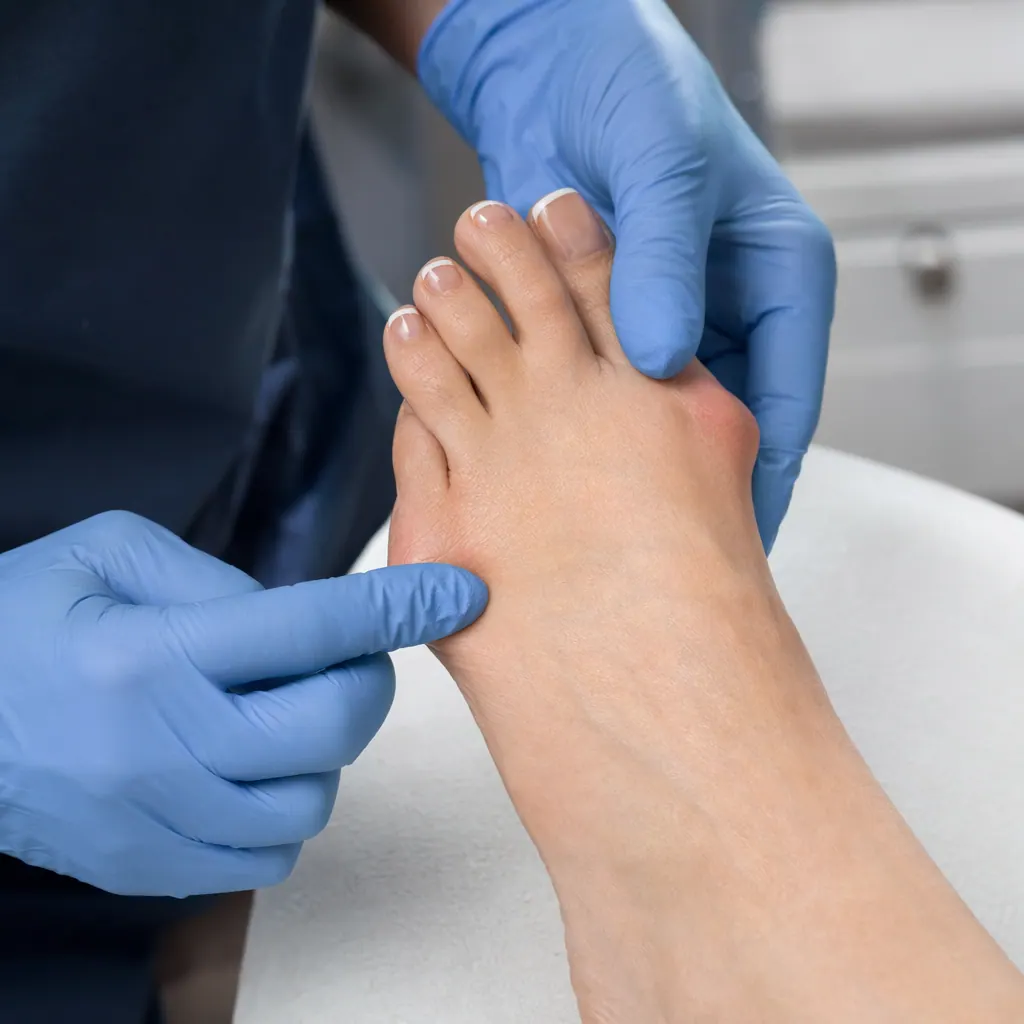
Los Angeles podiatry specialist evaluating a patient for bunion care — LAOSS board-certified foot and ankle care across eight LA offices
Live · Now Accepting

Experts in bunion care.

Conservative care first, Lapiplasty when surgery is the answer.

15+
Years caring
Same-day appointments
Often available
★★★★★
4.9 · 7,500+ reviews

Common bunion concerns we treat

  • A visible bump on the side of the big toe joint
  • Pain or burning that gets worse in tight shoes
  • Redness, swelling, or calluses over the bump
  • Big toe drifting in toward the second toe
  • Bunions that have failed previous conservative care

What sets LAOSS apart

  • Same- or next-day appointments at eight Los Angeles–area offices
  • On-site standing X-rays for true weight-bearing alignment
  • Conservative-first care, surgery only when warranted
  • Board-certified foot & ankle specialists, not generalists
Key takeaways
  • A bunion (hallux valgus) is a structural shift of the first toe joint — it's not a growth that can be filed down or rubbed away.
  • Most LAOSS bunion patients start with conservative care: wider shoes, custom orthotics, toe spacers, padding, and anti-inflammatories.
  • When pain limits activity despite conservative care, modern corrective surgery (Lapiplasty, scarf osteotomy, or traditional bunionectomy) is highly effective.
  • Same-day or next-day appointments available at all eight LAOSS offices — most patients leave the first visit with a clear plan.
Overview

What is a bunion?

A bunion — known medically as hallux valgus — is a bony bump that forms on the inside of the foot at the base of the big toe. Despite how it looks, a bunion isn't really a growth of new bone. It's a structural shift: the first metatarsal drifts outward while the big toe leans in toward the second toe, and the joint between them becomes prominent. Over time, the soft tissues stretch, the joint capsule thickens, and the deformity gradually becomes more rigid.

Bunions are far more common in women than in men, and genetics is the single biggest risk factor we see. If your mother or grandmother had bunions, your odds are meaningfully higher. Narrow, pointed, or high-heeled shoes don't usually create a bunion from nothing — but they absolutely accelerate one that's already brewing, and they make every existing bunion hurt more.

At LAOSS, the most common scenarios we treat are: early bunions that ache after a long day, moderate bunions that have started to limit shoe choice and activity, and advanced bunions with stiffness, hammertoe of the second toe, or pain that won't quiet down even in sneakers. The treatment path depends on where you sit on that spectrum — which is why we start with a proper exam and weight-bearing X-rays, not assumptions.

Most of our bunion patients improve substantially with conservative care: shoe changes, orthotics, padding, toe spacers, and targeted anti-inflammatories. When pain still limits how you live, modern corrective surgery — including Lapiplasty 3D Bunion Correction, scarf osteotomy, and Lapidus procedures — addresses the underlying alignment rather than just shaving down the bump.

Patient education

Watch: Anatomy of a Bunion

A bunion is a deformity that affects the joint at the base of the big toe. It is a bony bump beneath the skin on the inner side of the foot. A bunion starts small, but over time it can grow to become very large. Bunions are more common in women.

Animations licensed from ViewMedica · Swarm Interactive

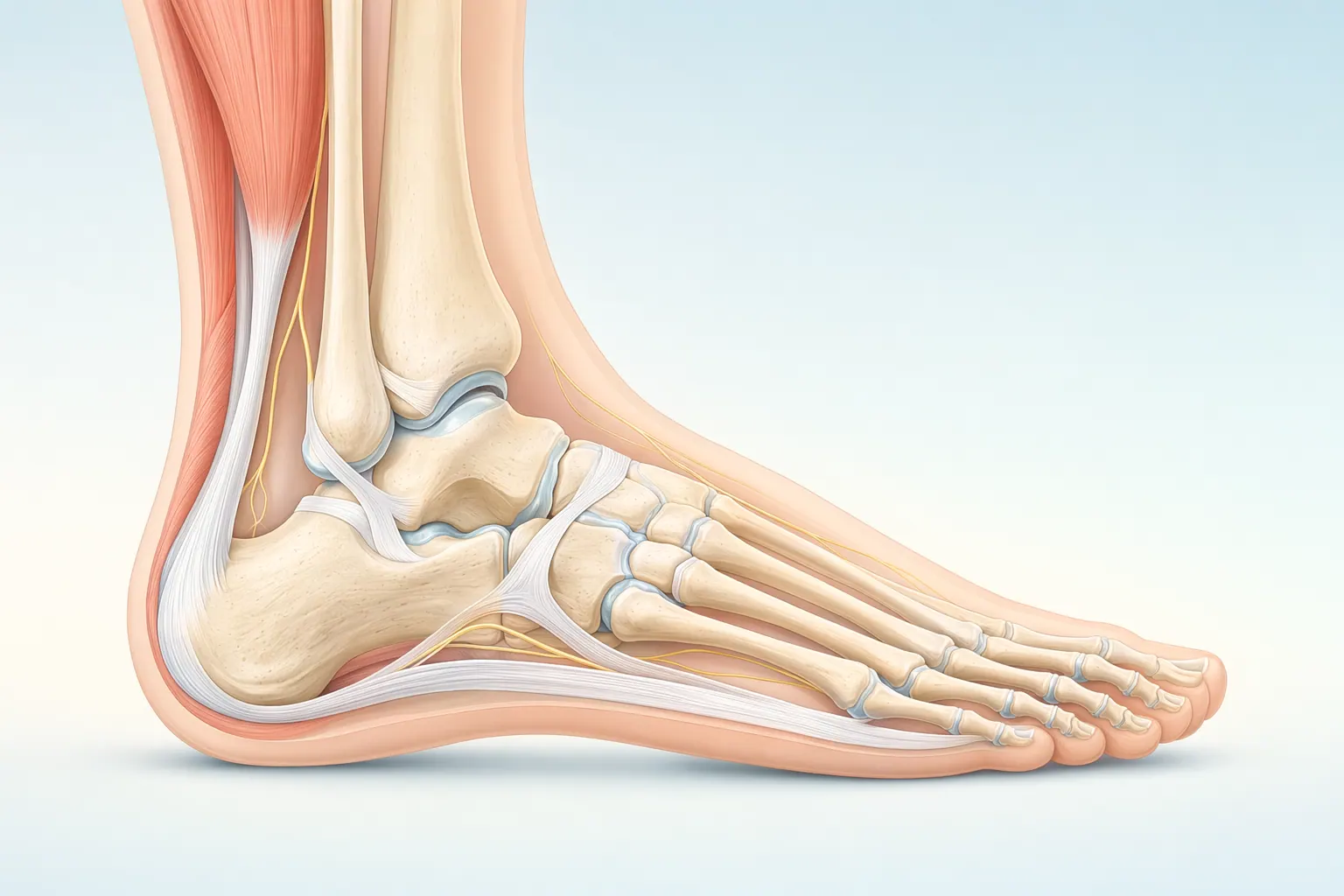
Anatomical illustration of a bunion showing the first metatarsophalangeal joint, deviated big toe, and the prominent bony bump
Anatomy of a bunion — the first metatarsal drifts outward while the proximal phalanx of the big toe leans inward, creating the visible bump at the MTP joint.
Anatomy

Inside the bunion.

The bump you see and feel on the side of your foot isn't extra bone — it's the head of the first metatarsal, exposed because the toe above it has shifted out of line. The further out of alignment the joint sits, the harder it is for the surrounding tendons, ligaments, and joint capsule to keep the toe tracking straight. Left untreated, bunions tend to slowly worsen.

Self-orient

When a bunion starts to bother you.

Symptoms

Common symptoms

  • A visible bony bump on the inside of the foot at the big toe joint
  • Pain, soreness, or burning at the bump — especially in tight shoes
  • Redness or swelling over the joint after a long day
  • Big toe drifting in toward (or under) the second toe
  • Calluses or corns where toes rub each other or the shoe
  • Stiffness or reduced motion in the big toe joint
  • Hammertoe forming on the second toe from the pressure
  • Numbness or tingling along the inside of the big toe
Causes

Common causes

  • Family history — the most common single risk factor for hallux valgus
  • Years of narrow, pointed, or high-heeled shoes that crowd the toes
  • Foot biomechanics: flat feet, hypermobility, or pronation
  • Connective tissue laxity (more common in women)
  • Repetitive forefoot loading from running, dance, or standing work
  • Inflammatory arthritis affecting the first MTP joint
  • Prior foot injury that changed alignment
  • Age-related changes in tendon and ligament support
Diagnostics

How we diagnose bunions.

Bunions are one of the more visually obvious orthopedic problems — but how a bunion looks is only part of the story. Two patients can have nearly identical bumps; one is barely symptomatic, the other can't get through a shift at work. The job of the exam isn't to confirm what you can already see in the mirror. It's to figure out how much the deformity is contributing to your pain, how rigid the joint has become, and what's likely to happen if we do nothing.

At LAOSS, your first visit is built to give you answers the same day. We start with a focused history — when the bump first showed up, what shoes you live in, how the pain has changed over months or years, what activities it's started taking from you. Family history matters: a bunion that started at 25 in someone whose mother and aunt had surgery is a different conversation than a bunion that crept in at 60.

The physical exam looks at the whole foot, not just the bump. We check the mobility of the first MTP joint, the alignment and flexibility of the second toe, the shape of your arch, and how your foot loads when you stand and walk. Calluses tell us where pressure is actually going.

Standing X-rays are critical for bunions — a film taken lying down underestimates the deformity. We measure the hallux valgus angle (between the big toe and the first metatarsal) and the intermetatarsal angle (between the first and second metatarsals). Those two numbers, plus your symptoms and activity goals, determine whether you're a candidate for shoe changes and orthotics, a minimally invasive correction, or a more substantial procedure like Lapiplasty.

Most patients leave the first visit with a diagnosis, an explanation of their imaging, and a written plan.

Treatment options

Bunion treatments performed by our doctors.

Bunion care at LAOSS starts with the least-invasive option that can realistically get you back to comfortable walking, standing, and the shoes you want to wear. Many patients never need surgery. For those who do, modern corrective procedures — including Lapiplasty — address the underlying alignment rather than just trimming the bump.

Conservative care
Step 1

Conservative care first

Non-surgical options designed to offload the joint, calm inflammation, and slow progression. For mild-to-moderate bunions, this is often enough.

  • Wider, lower-heeled footwear with a roomy toe box
  • Custom orthotics to control pronation and arch collapse
  • Toe spacers and bunion sleeves for comfort
  • Targeted padding to offload the bump
  • NSAIDs and topical anti-inflammatories
  • Physical therapy for foot intrinsic strengthening
  • Activity modification and load management
Surgical care
When needed

Surgical correction when needed

When conservative care has been honestly tried and pain still limits your life, modern bunion surgery realigns the joint at its source.

  • Lapiplasty 3D Bunion Correction (triplanar Lapidus)
  • Traditional Lapidus procedure (first TMT fusion)
  • Scarf osteotomy for moderate deformity
  • Chevron / Akin osteotomy for milder cases
  • Minimally invasive (MIS) bunion correction
  • Concurrent hammertoe correction when present
  • Revision bunion surgery for prior recurrence
Surgeon expertise

Why experience matters.

Why experience matters

Bunion surgery is among the most technique-sensitive procedures in foot & ankle work. The same X-ray in the hands of two surgeons can lead to two very different operations — and two very different outcomes a year later.

  • Matching the right procedure to the actual deformity
  • Correcting in three planes, not just side-to-side
  • Recognizing when a Lapidus is needed vs. an osteotomy
  • Lower recurrence rates with experienced surgeons

The LAOSS approach

Our podiatry team treats bunions every week. We start conservatively, image properly, and only recommend surgery when it's the right answer — not the default one.

  • Standing X-rays on-site at most offices
  • Conservative-first, with honest expectations on results
  • Board-certified foot & ankle specialists performing the procedures
  • Direct access to your specialist between visits
Candidacy

Am I a candidate?

If most of these match your situation, an evaluation with one of our bunion specialists is the right next step.

You may be

You may be a candidate if

These signs typically point toward an in-person evaluation with a foot & ankle specialist.

  • Bunion pain that limits walking, standing, or exercise
  • Visible deformity that's gotten worse over months or years
  • Difficulty finding shoes that don't aggravate the bump
  • Conservative care (shoes, orthotics, padding) hasn't been enough
  • Second toe is starting to ride up or develop a hammertoe
  • Numbness or burning at the bump after activity
Evaluation

What evaluation includes

Your first visit is built to give you an answer the same day, not just another referral.

  • Detailed history — onset, shoes, family history, activity goals
  • Hands-on foot exam, gait check, and joint mobility testing
  • On-site weight-bearing X-rays with formal angle measurements
  • Clear plan with options ranging from shoes & orthotics to surgery
  • Same-day or next-day scheduling for any follow-up
ImportantSeek urgent evaluation for sudden severe foot pain with redness and warmth (possible infection or gout flare), an open wound near the bunion that won't heal, or sudden loss of sensation in the toe.
Recovery

Your bunion recovery roadmap.

Bunion recovery has changed dramatically in the last decade. Modern fixation lets most patients put weight on the foot far sooner than the old rule of "six weeks of crutches." Timelines below are typical for Lapiplasty and similar fixed-plate procedures — your specialist will tailor yours.

01Weeks 0–2

Right after surgery

Early recovery focuses on protecting the correction, controlling swelling, and getting you moving safely in a surgical boot.

  • Weight-bearing in a surgical boot, often starting within days
  • Elevation and icing to control swelling
  • Stitches typically removed around two weeks
  • Short follow-up visit to confirm healing on X-ray
02Weeks 2–8

Boot to shoe

The foot transitions out of the boot and into a supportive shoe as bone healing progresses on imaging.

  • Gradual transition out of the boot into an athletic shoe
  • Range-of-motion work for the big toe joint
  • Physical therapy if stiffness or gait changes persist
  • Most patients return to desk work within 1–2 weeks
03Months 2–6+

Back to your life

Once bone healing is solid, the focus shifts to rebuilding strength, returning to impact activity, and protecting the correction long-term.

  • Walking distance and standing tolerance return to baseline
  • Gradual return to running, hiking, and impact sports
  • Final swelling typically resolves over 3–6 months
  • Continued orthotic use if biomechanics drove the bunion
Risks & considerations

What to weigh before you decide.

We talk through the risks and benefits with every patient — informed consent is a conversation, not a form.

General

General considerations

Every foot surgery carries a small set of standard risks. We screen, prepare, and monitor for these on every patient.

  • Infection (rare with modern technique and prophylaxis)
  • Bleeding or bruising at the surgical site
  • Reaction to anesthesia or pain medications
  • Slower-than-expected healing in smokers and diabetics
Specific

Bunion-specific considerations

Some risks are tied specifically to bunion correction. We discuss these openly so you can weigh them against the benefits.

  • Recurrence — lower with Lapiplasty/Lapidus than older techniques
  • Stiffness of the big toe joint during recovery
  • Numbness near the incision that usually fades
  • Delayed bone union in a small percentage of cases
  • Need for hardware removal if it becomes prominent
Your care team

Meet the bunion specialists at LAOSS.

At LAOSS, bunion care is led by board-certified podiatric foot & ankle specialists who treat hallux valgus every single week. From your first visit through any conservative care, surgery, and recovery, the same specialist stays with you. We focus on accurate diagnosis, realistic expectations, and the right procedure for your foot — not a one-size-fits-all approach. Whether you're hoping to avoid surgery or you're already past that point, our team will walk you through every option and the trade-offs of each.

Patient reviews

What patients say about us.

★★★★★4.97,500+ Google reviews
I put off doing anything about my bunion for a decade. Dr. Wang walked me through every option, no pressure. Ended up doing Lapiplasty and I'm back in normal sneakers — wish I'd done it sooner.
Diana Petrosyan
Glendale, CA · 12 March 2025
Explore related care

Find care by body area.

Jump to a nearby condition page and compare treatment paths across the body.

FAQ

Common bunion questions

  • In most people, yes — bunions are progressive deformities. The rate varies enormously: some patients are stable for decades, others see meaningful change in a few years. The single biggest predictor isn't shoes; it's family history and underlying biomechanics. Conservative care (wider shoes, orthotics, padding) won't reverse a bunion, but it can slow progression and dramatically reduce pain. Worsening alignment alone isn't a reason for surgery — pain and lost function are.
  • Most bunions don't require surgery. The honest threshold for surgery is when pain and lost function aren't acceptable to you despite a real trial of conservative care — wider shoes, custom orthotics, toe spacers, padding, and anti-inflammatories. If you've genuinely tried those and still can't get through a workday or do the activities you want, surgery becomes a reasonable conversation. We do not recommend surgery for cosmetic reasons or for an asymptomatic bunion.
  • Traditional bunion surgery (osteotomy) cuts the metatarsal bone and shifts it sideways to narrow the foot. Lapiplasty 3D Bunion Correction is a triplanar procedure: it corrects the underlying joint instability at the base of the first metatarsal and addresses the deformity in three dimensions, not just side-to-side. Studies show lower recurrence rates and faster return to weight-bearing compared to many traditional techniques. It isn't right for every bunion — your specialist will tell you honestly whether you're a candidate.
  • With modern fixation techniques like Lapiplasty, most patients start weight-bearing in a surgical boot within days of surgery. Transition out of the boot typically happens around 6–8 weeks. Return to sneakers and desk work is usually 1–2 weeks. Running and impact sports come back gradually over 3–6 months. Final swelling can take 6 months to fully resolve. Older techniques and more complex deformities take longer.
  • Recurrence is the honest weakness of bunion surgery. Older techniques had recurrence rates as high as 30%. Modern triplanar correction (Lapiplasty/Lapidus) has substantially reduced that, but no procedure is recurrence-proof — especially if the underlying biomechanics that caused the bunion aren't addressed. Wearing reasonable shoes and continuing to use orthotics after surgery meaningfully reduces recurrence risk.
  • Many people do, especially in early stages. The key is footwear with a wide, anatomic toe box, plus orthotics to control pronation if your foot rolls in. Some patients find toe spacers helpful during longer runs. If the bunion is painful enough that you're changing how you run — shortening your stride, landing differently — that's a sign to be evaluated, because compensation patterns can lead to knee and hip pain over time.
  • Shoes alone almost never *create* a bunion in someone who isn't predisposed. Genetics and biomechanics are the real drivers. That said, narrow, pointed, or high-heeled shoes absolutely accelerate an existing bunion and make every bunion hurt more. If you're seeing one start to form, switching to a wide-toe-box shoe now is the single best thing you can do.
  • Toe spacers and night splints can make a bunion feel better and may slow soft-tissue progression, but no over-the-counter device will straighten a bony deformity. Once the metatarsal has shifted, mechanical correction requires surgery. Spacers and splints are still worth using for comfort and to delay or avoid surgery — just don't expect them to reverse what's already there.
Ready when you are

Don't wait on bunion pain.

Book a visit with a bunion specialist at any of our eight Los Angeles–area offices. Most patients leave the first visit with a clear plan.

Booking now
21 specialists · 8 offices
Greater Los Angeles
On-site X-raySame visit
Most insurers acceptedIn-network
Call usBook online