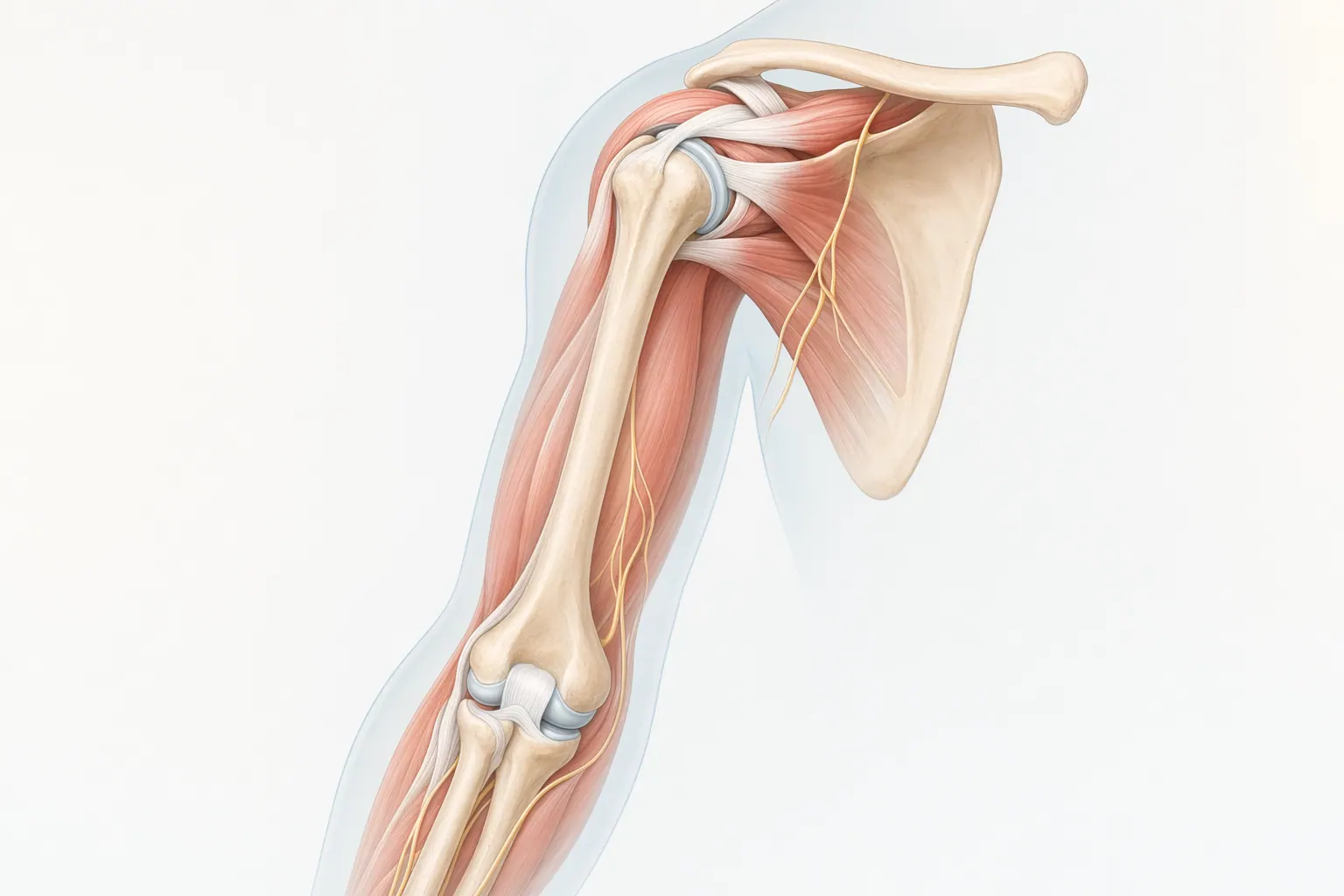
Biceps tendinitis is inflammation or partial tearing of the long head of the biceps where it attaches in the shoulder; complete rupture produces a characteristic "Popeye" deformity. Symptoms can develop gradually or after a specific injury, so early evaluation matters when function starts to decline.
Most patients with biceps tendinitis / tear improve with conservative care — targeted physical therapy, image-guided injections, bracing or supportive footwear when relevant, and activity modification. When conservative care isn't enough or imaging shows structural injury that won't heal on its own, our specialists offer the next-step procedures discussed below.
Below, we walk through the anatomy involved, the symptoms and causes we most often see, how we diagnose biceps tendinitis / tear, and the full range of treatment options — from the simplest to the most involved.