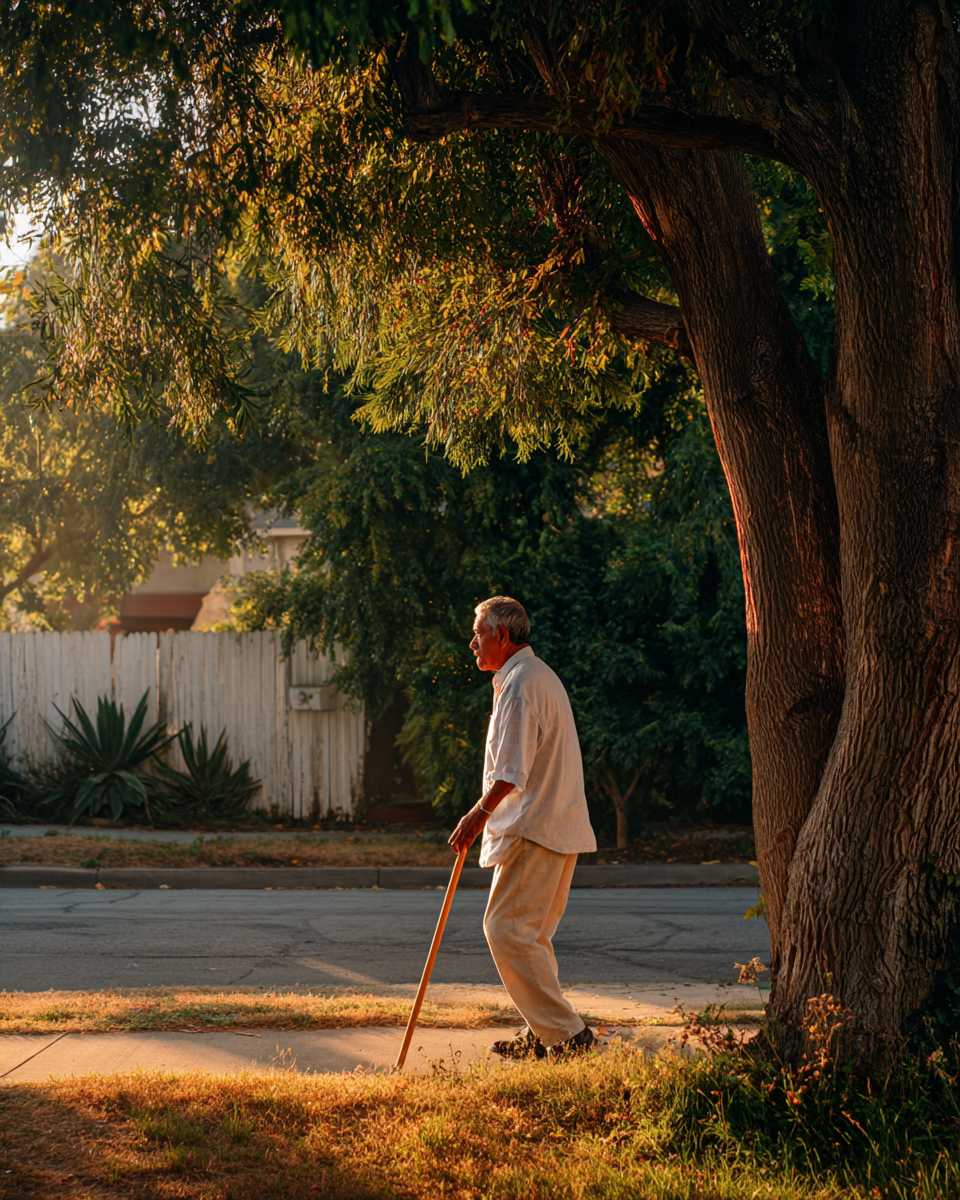
By the time he scheduled his first visit at LAOSS, our patient had been running for nearly three decades. He had a closet full of finisher medals from half-marathons, a regular Saturday-morning training group, and a knee that had quietly started complaining about every one of those miles. The pain was deep and medial — inside the joint — and it was worst the morning after a long run. It felt fine, mostly, on rest days. He told us he'd been managing with ibuprofen, ice, and "just slowing down," but the slowing down kept needing to be more.
His first imaging — taken at an urgent care eight months earlier — had shown what the records called "mild osteoarthritis." By the time we saw him on weight-bearing X-rays, the medial joint space had narrowed further and the subchondral bone was starting to look the part. Clinically, he had a small effusion, a clear varus alignment, and reproducible joint-line pain. The history, the exam, and the imaging all said the same thing — early-to-moderate knee OA, asymmetric on the medial side, in someone whose joint had given him decades of high-impact loading and was finally asking to renegotiate.