Los Angeles Orthopedic

Orthopedic Trauma Treatment in Greater Los Angeles

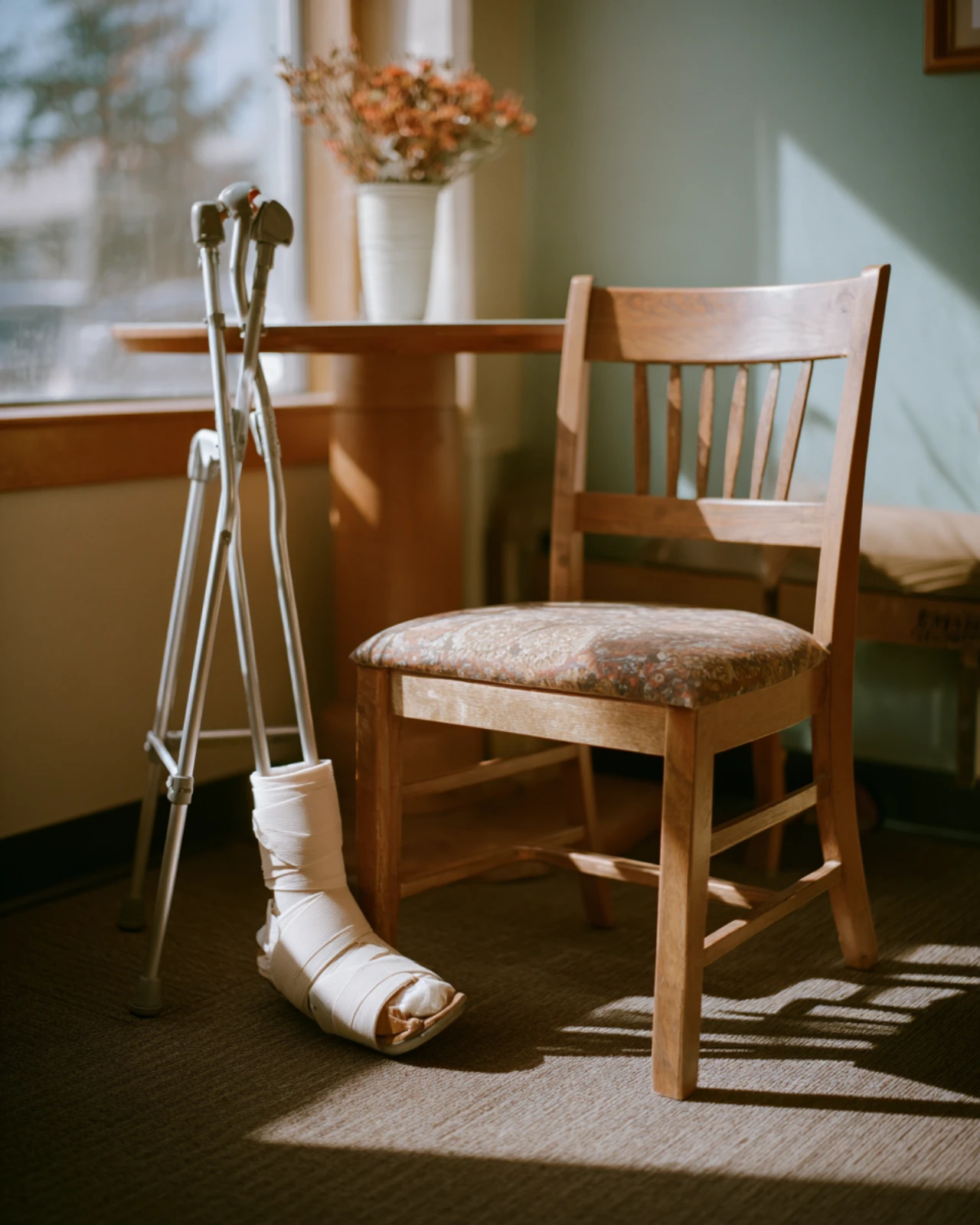
Orthopedic trauma refers to sudden injuries to the bones, joints, or soft tissues — often caused by falls, accidents, or high-impact events. These injuries can be painful, frightening, and disruptive to your life.

Orthopedic Trauma Treatment at LAOSS orthopedic clinic in Los Angeles — board-certified specialists, same-day appointments
Live · Now Accepting

Experts in orthopedic trauma care.

Surgical and non-surgical options at LAOSS.

15+
Years caring
Same-day appointments
Often available
★★★★★
4.9 · 7,500+ reviews

Common orthopedic trauma concerns we treat

  • Pain that limits walking, lifting, or sleep
  • Stiffness, swelling, or reduced range of motion
  • Sports injuries — acute or overuse
  • Arthritis or post-traumatic joint changes
  • Conditions other doctors couldn't resolve

What sets LAOSS apart

  • Same- or next-day appointments at eight Los Angeles–area offices
  • On-site imaging; PT coordinated with your in-network provider
  • Conservative-first care, surgery only when needed
  • Board-certified specialists, not generalists
Key takeaways
  • Fracture care, soft-tissue injury repair, and post-trauma reconstruction by board-certified specialists.
  • On-site X-ray and same-visit casting/splinting when appropriate.
  • Coordinated post-op PT with your in-network provider.
  • Same-day evaluations for acute trauma — call (323) 264-7600.
Overview

What is orthopedic trauma care?

Orthopedic trauma care covers sudden, high-impact injuries to bones, joints, and soft tissues — fractures, dislocations, complex breaks, open injuries, and the multi-system injuries that come from falls, motor-vehicle accidents, or sports collisions.

At LAOSS, our trauma team is board-certified and fellowship-trained in orthopedic trauma. We see acute injuries the same day at our East LA office, with on-site X-ray, immediate stabilization (casting, splinting, bracing), and a clear surgical-or-not decision before you leave your first visit. When surgery is needed, your LAOSS trauma surgeon performs it at a partner hospital and follows you through recovery.

Patient education

Watch: Hip Fracture

This is a break of the upper part of your femur. The femur is the long bone in your upper leg. At the top of the femur is the "head." This is the ball that fits into your hip socket. A hip fracture may happen at the "neck" of the femur (the thin portion of bone under the head). Fractures may also happen below the neck.

Animations licensed from ViewMedica · Swarm Interactive

About this care

Preventing Orthopedic Trauma

Preventing orthopedic trauma isn’t just about avoiding accidents; it’s about building lifelong habits that support strong bones, steady movement, and everyday safety. Our team at Los Angeles Orthopedic Surgery Specialists believes in empowering you with clear, practical guidance to protect yourself and reduce the risk of injury.

Here are five simple strategies you can start using today:

These preventative steps not only support your mobility and independence but may also reduce the need for future orthopedic trauma care. At LAOSS, we’re here to support you in staying healthy, strong, and safe every step of the way.

About this care

When To Seek Orthopedic Trauma Treatment

If you’re unsure whether your condition needs orthopedic attention, here’s a simple guide to help you decide. Prompt evaluation can prevent long-term complications and get you on the road to recovery sooner.

Seek an orthopedic trauma evaluation if you experience:

If you’re experiencing any of these symptoms, give us a call or schedule an appointment online. Most patients do not need a referral to see an orthopedic trauma specialist, unless required by your insurance plan. If you’re unsure, our staff will gladly help you navigate the process and get the right paperwork in place.

Note: If you have a life-threatening injury, open fracture, or are in severe distress, go directly to the nearest emergency room.

About this care

Orthopedic Trauma Surgery & Care With LAOSS

When you come to LAOSS after a traumatic injury, we understand you may be anxious, in pain, or unsure about your next steps. Our goal is to provide fast answers, effective treatment, and a clear path forward, all with compassionate care and clear communication.

Many patients ask: “Will I need surgery, or can my injury be treated non-surgically?”

Every injury is different, but we always begin with a conservative-first approach. Most fractures and soft-tissue injuries don’t require surgery and can heal successfully with careful, non-invasive treatment.

Here’s what’s involved in non-surgical treatment, and how we determine if you might need surgery:

Non-Surgical Treatment

  • Casting or splinting to stabilize a fracture
  • Bracing and immobilization for joint or soft-tissue injuries
  • Guided healing with regular follow-ups
  • Physical therapy for strength and function
About this care

Surgical Treatment

We use on-site digital imaging during your visit to assess your injury right away. Every decision is made with your long-term recovery in mind, and if surgery is needed, our board-certified, fellowship-trained orthopedic trauma team leads your care with deep expertise and precision.

What Can I Expect During My Visit?

Here’s what your trauma visit will look like at LAOSS from check-in to next steps: With a supportive staff and a consistent care team that stays with you throughout recovery, we are committed to making trauma care as smooth, clear, and comfortable as possible.

  • Arrival & Check-In: Our front desk team welcomes you and gathers your injury details and health history.
  • On-site Imaging: We perform X-rays or other imaging right in the office to evaluate the injury quickly and accurately.
  • Specialist Evaluation: You’ll meet with our orthopedic trauma provider, who will explain your injury in clear, simple terms.
  • Immediate Stabilization: If needed, we’ll provide a splint or cast during the same visit to start your healing immediately.
  • Diagnosis & Treatment Plan: We review your results, outline your treatment options, and answer any questions you have.
  • Next Steps & Follow-Up: You’ll leave with a clear plan, including follow-up visits, activity guidelines, and, if needed, a referral for physical therapy with a provider in your insurance network.
About this care

Meet the LAOSS orthopedic trauma team

At LAOSS, your trauma care is led by board-certified, fellowship-trained orthopedic surgeons who handle complex fractures and acute musculoskeletal injuries every day. That includes multi-trauma fractures, open fractures, pelvic and acetabular injuries, intra-articular fractures, and revision of failed prior fixation.

Our trauma team operates across all eight Los Angeles–area LAOSS offices. You can be seen the same day for an acute injury — most patients leave their first visit with an imaging-confirmed diagnosis and a clear plan for stabilization, surgical fixation if indicated, and recovery.

Why patients trust LAOSS for orthopedic trauma

Decades of combined surgical experience, in-house imaging, and direct coordination with hospital trauma services when emergency intervention is required.

About this care

Get Expert Orthopedic Trauma Care When You Need It Most

When you’re dealing with a fracture, dislocation, or other orthopedic injury, you deserve care that’s fast, focused, and personal. Our trauma team at Los Angeles Orthopedic Surgery Specialists combines fellowship-trained expertise with an individualized approach to help you heal safely without unnecessary delays or procedures.

With several locations across Greater Los Angeles for trauma care, we offer the convenience and responsiveness you won’t find in larger hospital systems. Most non-emergency trauma patients can be seen the same day or within 24 to 48 hours, and our integrated care model ensures continuity from your first visit through rehabilitation.

Whether you’re seeing us following an emergency hospital visit or needing timely care following an accident, our team is here to guide your recovery with clarity, compassion, and expertise.

Insurance We Accept

Surgeon expertise

Why experience matters.

Why experience matters

Orthopedic Trauma care is highly technique-dependent. Volume, training, and judgment together determine the outcome you actually feel six months later.

  • Precise diagnosis from imaging and exam
  • Conservative-first care that avoids unnecessary surgery
  • Surgical technique refined over thousands of cases
  • On-site imaging + coordinated PT through your in-network provider

The LAOSS approach

Our orthopedic trauma specialists move stepwise — start with the least-invasive option that fits your situation, escalate only when it doesn't.

  • Same-day imaging at most offices
  • PT coordinated in your insurance network
  • Board-certified surgeons performing the procedures themselves
  • Direct access to your specialist between visits
Candidacy

Am I a candidate?

If most of these match your situation, an evaluation with a orthopedic trauma specialist is the next step.

You may be

You may be a candidate if

These signs typically point toward an in-person evaluation with a orthopedic trauma specialist.

  • Pain or stiffness in the orthopedic trauma that lasts more than a few days
  • Swelling, instability, or noticeable change in function
  • Symptoms that limit walking, lifting, sleep, or work
  • Previous treatment that didn't fully resolve the problem
  • Imaging or exam findings that suggest an underlying issue
Evaluation

What evaluation includes

Your first visit is built to give you an answer the same day, not just another referral.

  • Detailed history — onset, mechanism, what makes it better or worse
  • Hands-on exam focused on the affected joint or region
  • On-site imaging at most offices (X-ray, ultrasound)
  • Clear plan with options ranging from conservative to surgical
  • Same-day or next-day scheduling for any follow-up tests
ImportantSeek urgent evaluation for sudden severe pain, numbness, progressive weakness, loss of bowel or bladder control, or any sign of infection (fever, increasing redness or swelling).
Recovery

Your trauma recovery roadmap.

Recovery is rarely a straight line — but a clear plan with measurable milestones makes the path predictable.

01Days 0–14

Right after care

In the first two weeks we focus on protecting the orthopedic trauma, calming inflammation, and restoring basic motion.

  • Activity modification with clear do/don't guidance
  • Ice, elevation, and pain control as needed
  • Gentle range-of-motion within safe limits
  • Follow-up scheduled to track healing
02Weeks 2–8

Rehabilitation

Targeted physical therapy rebuilds strength, mobility, and confidence in the orthopedic trauma.

  • Progressive strengthening and neuromuscular work
  • Manual therapy and soft-tissue treatment
  • Sport- or job-specific movement re-training
  • Coordinated PT through your in-network provider
03Months 2+

Long-term care

Once function is restored, the focus shifts to keeping you there — and catching any recurrence early.

  • Return-to-activity plan with measured benchmarks
  • Home program tailored to your sport or job
  • Maintenance visits or imaging if symptoms change
  • Direct line back to your specialist if needed
Risks & considerations

What to weigh before you decide.

We talk through the risks and benefits with every patient — informed consent is a conversation, not a form.

General

General considerations

Every orthopedic intervention carries a small set of standard risks. We screen, prepare, and monitor for these on every patient.

  • Infection (rare with modern technique and prophylaxis)
  • Bleeding or bruising at the treatment site
  • Reaction to anesthesia or medications
  • Need for additional procedures in some cases
Specific

Orthopedic Trauma-specific considerations

Some risks are tied to the structures we're treating in the orthopedic trauma. We discuss these in detail at your visit so you can weigh them against the benefits.

  • Temporary stiffness or weakness during recovery
  • Incomplete pain relief in a small percentage of cases
  • Nerve or vessel irritation near the treatment area
  • Need for follow-up therapy to fully restore function
Patient reviews

What patients say about us.

★★★★★4.97,500+ Google reviews
Dr. Pelton is the best. He listens, takes his time, and actually explains things in a way I can understand. Highly recommend.
Marisol Hernandez
East LA, CA · 12 March 2025
Explore related care

Find care by body area.

Jump to a nearby condition page and compare treatment paths across the body.

FAQ

Orthopedic Trauma FAQs: Your Most Important Questions Answered

  • Orthopedic trauma care is for sudden injuries like fractures or dislocations that need expert evaluation. Your first visit with us includes onsite imaging, a specialist exam, and immediate stabilization if needed. We prioritize patients based on injury severity and often offer same-day or next-day appointments, ensuring you get the right care when you need it.
  • Before your visit, bring a photo ID, insurance card, any medical records, and previous X-rays if available. If your mobility is limited or you’re in pain, consider having someone drive you. Trauma appointment intake is similar to standard appointments, but our team is prepared to assist with urgent needs and limited mobility to make your visit as smooth as possible.
  • After an accident, many patients can be seen the same day or within 24 to 48 hours, depending on the location and severity of their injury. Call ahead to confirm availability, but note that we prioritize urgent cases. During your visit, we offer in-office X-rays, splinting, casting, and expert evaluation, so you get the care you need quickly and comfortably, all in one place.
  • We provide orthopedic trauma care at our Tarzana and Los Angeles East Los Angeles locations. For most fractures or joint injuries, call us for a same-day or next-day appointment. However, if you have head trauma, uncontrolled bleeding, or loss of consciousness, go directly to the emergency room. Once stabilized, LAOSS can take over your care and recovery.
  • Most orthopedic trauma injuries are covered by insurance. PPO patients can come in directly; HMO patients need a referral from their primary care physician (PCP) before being seen — though for urgent injuries we can often help expedite that. We accept many insurance types, offer self-pay discounts, and accept FSA/HSA account payments. Either way, we sort by severity and work quickly to get acute injuries seen as soon as possible.
Ready when you are

Don't wait on pain.

Book a visit with a orthopedic trauma specialist at any of our eight Los Angeles–area offices.

Booking now
21 specialists · 8 offices
Greater Los Angeles
On-site X-raySame visit
Most insurers acceptedIn-network
Call usBook online