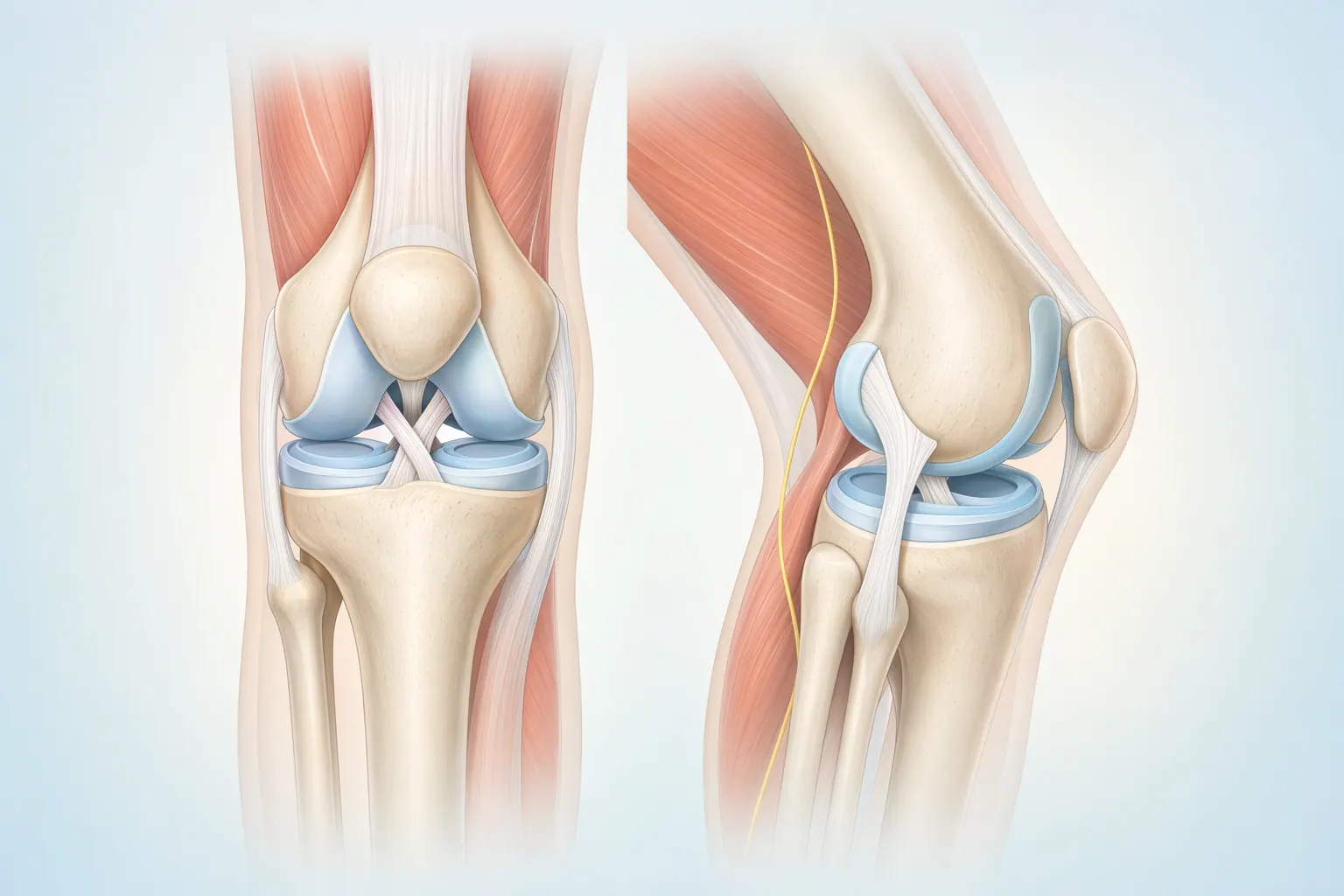
A good meniscus exam usually tells us most of what we need to know before any imaging. Your specialist will ask exactly how it happened — was there a twist, a pop, a fall? Did the knee swell that night or the next morning? Does it lock, catch, or give way? — and then walk you through a focused physical exam.
We palpate the joint line for tenderness, check for an effusion (fluid in the joint), and run provocative tests like McMurray's and Thessaly that load and rotate the knee to reproduce a tear's signature catching or pain. These tests, combined with your story, identify a meniscus tear with surprising accuracy.
From there, on-site weight-bearing X-rays at most of our LA offices rule out arthritis, loose bodies, or fractures. X-ray doesn't show the meniscus itself — it's cartilage, not bone — but it shows everything around it that might be contributing to your pain.
When we need to confirm tear type, size, and location, MRI is the gold standard. We order MRI selectively — not on every patient — because for many degenerative tears, the MRI finding doesn't change the treatment plan. If you do need imaging, we coordinate it through your in-network provider so cost stays predictable. Most patients leave their first visit with a diagnosis, a plan, and a clear sense of next steps.