Los Angeles Orthopedic

Endoscopic vs Open Carpal Tunnel Release

Both work. Both have ~95% success rates relieving the numbness and night-time symptoms of carpal tunnel. The real difference is recovery — endoscopic patients are usually typing again in 1–2 weeks; open patients in 3–4. Here's the honest comparison, from the LAOSS hand surgeons who perform both.

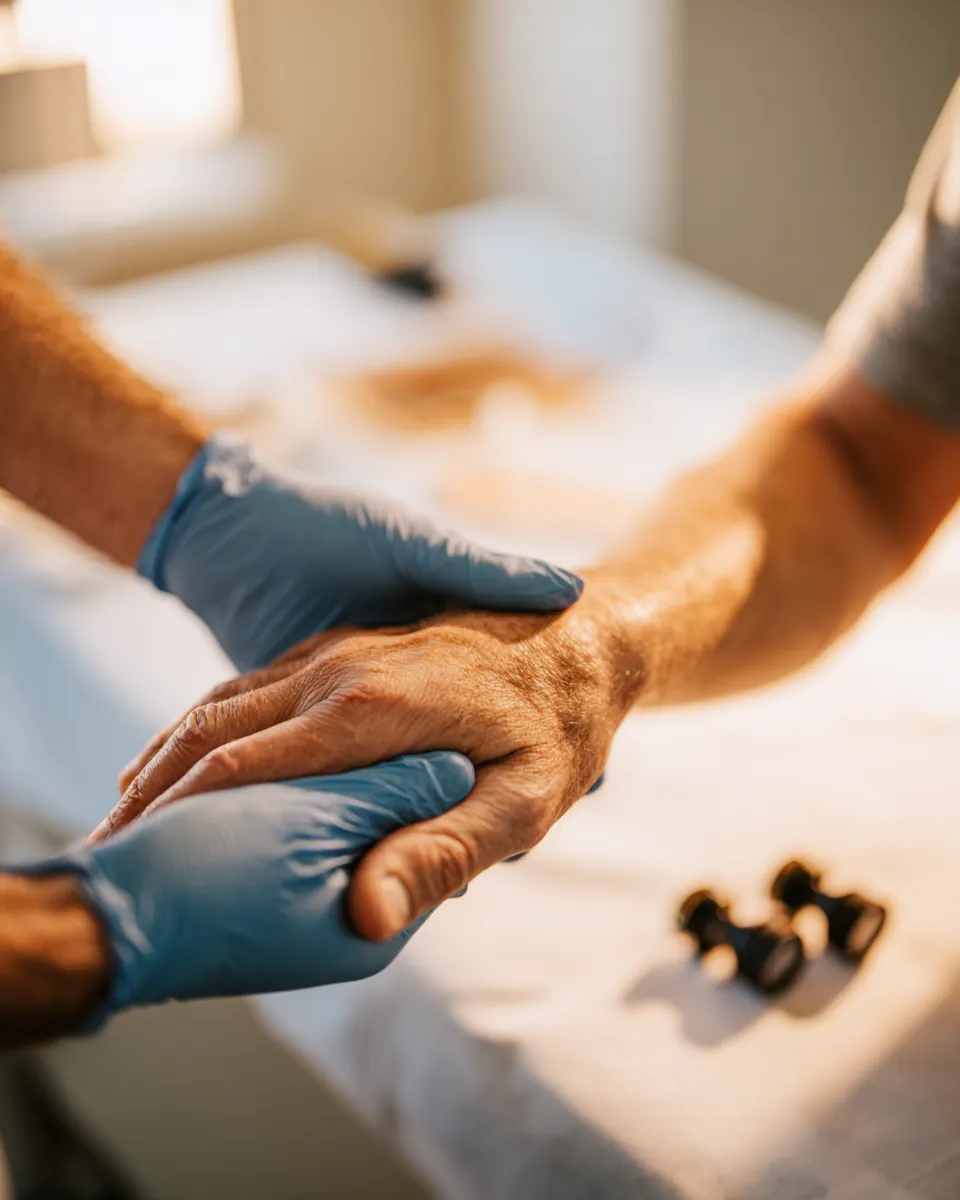
LAOSS hand surgeon comparing endoscopic and open carpal tunnel release techniques — Los Angeles orthopedic specialists across eight offices
Live · Now Accepting

Two techniques. Same outcome.

LAOSS hand surgeons offer both endoscopic and open release — often wide-awake.

15+
Years caring
Same-day appointments
Often available
★★★★★
4.9 · 7,500+ reviews

What this comparison covers

  • How each technique actually works (incision, visualization, blade path)
  • Recovery timelines — typing, driving, gripping, lifting
  • Scar, cosmesis, and palmar tenderness
  • When open is the right call (revision, atypical anatomy, masses)
  • Wide-awake (WALANT) availability for both techniques

What sets LAOSS apart

  • Hand surgeons who perform both endoscopic and open release routinely
  • WALANT — local anesthesia only, no IV, drive yourself home
  • Same- or next-day evaluation at eight LA offices
  • Honest technique recommendation based on your anatomy, not ours
Key takeaways
  • Endoscopic carpal tunnel release (ECTR) and open carpal tunnel release (OCTR) have essentially the same long-term success rate — about 95% for relief of nerve symptoms.
  • Endoscopic patients return to typing and light work in 1–2 weeks; open patients in 3–4 weeks because the palmar incision is tender longer.
  • Open is the gold standard for revision surgery, unusual anatomy, masses in the tunnel, or when the surgeon needs full direct visualization.
  • Both techniques can be done wide-awake (WALANT) at LAOSS — local anesthesia only, no IV, home within an hour.
Overview

Endoscopic vs open carpal tunnel release — the honest comparison

If you've been told you need carpal tunnel surgery and you're trying to choose between endoscopic carpal tunnel release (ECTR) and open carpal tunnel release (OCTR), the most important thing to know up front is this: both procedures work, and both have about a 95% success rate for relieving the nerve symptoms that brought you in. Long-term, the relief of numbness, tingling, and night-time waking is essentially the same.

What differs is how you feel the first month. Endoscopic release uses a small incision at the wrist (about 1 cm) and a tiny endoscope to cut the transverse carpal ligament from inside the tunnel. Open release uses a 2–3 cm incision in the palm and divides the same ligament under direct vision. The endoscopic incision sits in a wrist crease where the skin is forgiving; the open incision sits in the palm where you bear weight every time you grip something.

That single anatomic fact is why endoscopic patients are usually back to typing in 1–2 weeks and open patients in 3–4 weeks. It's not that one technique is 'better' — it's that the palm is one of the hardest places on the body to put an incision, and palmar tenderness (sometimes called pillar pain) takes time to resolve.

Both techniques are performed at LAOSS by fellowship-trained hand and wrist surgeons — Dr. Brent Pickrell and Dr. Menyoli Malafa, supported by hand & wrist PAs Elizabeth Lee and Whitty Lee. Both can be done wide-awake (WALANT) — local anesthesia only, no IV, no sedation, drive yourself home within an hour. The decision between the two is mostly about your anatomy, the surgeon's experience, your recovery preference, and whether you have any of the specific factors below that push toward open.


Patient education

Watch: Carpal Tunnel Release

This outpatient procedure is used to treat carpal tunnel syndrome, a condition that develops from compression of the median nerve in the wrist. Symptoms of carpal tunnel syndrome can include numbness, tingling and a loss of muscle control in the hand.

Animations licensed from ViewMedica · Swarm Interactive

Anatomical illustration of the wrist showing the carpal tunnel, transverse carpal ligament, median nerve, and flexor tendons — the structures involved in endoscopic and open release
The transverse carpal ligament forms the roof of the tunnel — both endoscopic and open release divide this same ligament; the difference is whether the blade approaches it from inside the tunnel (endoscopic) or from above through the palm (open).
Anatomy

Inside the carpal tunnel.

Both endoscopic and open carpal tunnel release have the same anatomic goal: completely divide the transverse carpal ligament so the median nerve has room to breathe. Endoscopic technique enters through a small wrist crease incision and cuts the ligament from below using a blade attached to an endoscope. Open technique uses a longer palmar incision and divides the ligament under direct vision. Either way, the ligament does not need to be 'reattached' — once released, the carpal tunnel simply enlarges and the nerve decompresses.

Self-orient

When release surgery is the right next step.

Symptoms

Common symptoms

  • Constant numbness in the thumb, index, or middle finger (no longer just at night)
  • Grip weakness — dropping cups, struggling to open jars or pinch coins
  • Night symptoms that keep waking you despite a fitted neutral wrist splint
  • Symptoms that returned after a corticosteroid injection wore off
  • EMG/NCS showing moderate or severe median nerve damage at the wrist
  • Visible thinning (atrophy) of the thumb-pad muscles
  • Symptoms interfering with your job, driving, or sleep
Causes

Common causes

  • Failure of conservative care — splinting, NSAIDs, ergonomic changes, injection
  • Progression on serial nerve testing (the nerve is getting worse, not stable)
  • Long-standing CTS where waiting longer risks permanent nerve damage
  • Recurrent CTS after a prior incomplete release (typically open revision)
  • Workers' compensation cases with documented occupational nerve damage
Decision framework

How LAOSS hand surgeons choose between endoscopic and open

We start every comparison conversation with the same disclosure: neither technique is 'better' in the way patients sometimes hope. The peer-reviewed data is consistent across hundreds of studies — long-term symptom relief is roughly equivalent. What pushes us toward one or the other is a small set of specific factors.

Endoscopic is usually preferred when:

  • You need to be back at a keyboard or phone fast — sales, IT, healthcare charting, customer service
  • Cosmesis matters to you (musicians, performers, people who shake hands professionally)
  • Your anatomy is typical and your imaging is clean
  • You're having both hands done at separate sittings and want shorter total downtime
  • You're doing this awake (WALANT) and want the smallest incision experience

Open is usually preferred when:

  • This is a revision — a previous release that didn't fully relieve the nerve or has recurred
  • Your imaging or exam suggests atypical anatomy — an unusually positioned motor branch, a persistent median artery, or a mass (ganglion, lipoma) inside the tunnel
  • You have a history of wrist fracture, trauma, or hardware that has changed the geometry of the tunnel
  • The surgeon judges that full direct visualization is safer than working through a small portal in your case
  • You prefer the most established, longest-tracked technique and recovery speed isn't your top priority

Honest note about surgeon preference: Some surgeons do only endoscopic, some do only open, and a smaller group (like our LAOSS hand team) does both routinely. If you're being told one technique is the only option, it's worth asking whether that's about your anatomy or about what that particular surgeon performs. Both are valid answers — but you deserve to know which it is.

How each technique works

Endoscopic vs open — what happens in the OR

Both procedures take about 10–15 minutes of surgical time once the local anesthetic is in. The visible difference is the incision; the invisible difference is how the surgeon reaches and divides the transverse carpal ligament.

Conservative care
Step 1

Endoscopic (ECTR) — single or dual portal

A ~1 cm incision is made in a wrist crease just proximal to the carpal tunnel. A small endoscope is introduced into the tunnel, lighting and visualizing the underside of the transverse carpal ligament. A retractable blade attached to the endoscope cuts the ligament from inside the tunnel.

  • Single-portal (Agee) — one wrist-crease incision, most common in the U.S.
  • Dual-portal (Chow) — second small incision in the palm; used by some surgeons
  • Visualization is from inside the tunnel looking up at the ligament
  • Skin closure with 1–2 stitches or a steri-strip; small, well-hidden scar
  • Soft dressing only — no plaster splint or cast required
  • Faster return to typing, driving, and light work — usually 1–2 weeks
  • Slightly higher cost; learning-curve dependent on surgeon experience
Surgical care
When needed

Open (OCTR) — direct visualization

A 2–3 cm incision is made along the palm, in line with the radial border of the ring finger. The skin, fat, and palmar fascia are opened, and the transverse carpal ligament is divided under direct view from above.

  • Single 2–3 cm palmar incision — the classic, longest-tracked technique
  • Direct visualization of the median nerve and motor branch throughout
  • Best option for revision, atypical anatomy, or masses inside the tunnel
  • Skin closure with 4–6 stitches; scar in the palm heals well but is visible
  • Soft dressing or short splint for 1–2 weeks at surgeon preference
  • Palmar tenderness (pillar pain) is the rate-limiting step — 4–8 weeks
  • Lower cost; equipment is standard; available at every surgical center
Recovery comparison

Recovery timeline — endoscopic vs open

This is where the techniques actually differ. Both end up in the same place around three months out — but the path there feels different. These are typical milestones at LAOSS; your surgeon will personalize them based on your job and anatomy.

01Days 0–7

Right after surgery

Both techniques are outpatient; both allow finger motion from day one. Endoscopic patients usually feel less palmar tenderness in week one.

  • Endoscopic: soft dressing only, off in 3–5 days; pinch grip OK by day 5
  • Open: soft dressing or short splint; palm tender to direct pressure
  • Both: full finger motion starting day one (no immobilization of fingers)
  • Both: hand elevated above the heart when resting; ice as needed
  • Both: drive within a few days if the non-operated hand can manage gear and wheel
02Weeks 1–4

Return to typing and work

This is the most visible window of difference. Endoscopic patients are usually back to a keyboard within 1–2 weeks. Open patients can type at 2–3 weeks but palmar tenderness limits sustained gripping until ~4 weeks.

  • Endoscopic: typing and phone use comfortable by week 1–2
  • Open: typing comfortable by week 2–3; palm sore with sustained grip
  • Both: light driving usually resumed within 7–10 days
  • Both: avoid push-ups, deadlifts, and forceful gripping for 4–6 weeks
  • Both: hand therapy if grip is slow to return or scar is sensitive
03Months 2+

Long-term outcome

By 3 months the two techniques converge. Nerve relief, grip strength, and patient satisfaction scores are essentially equivalent in the published literature.

  • Both: night-time numbness gone within days for most patients
  • Both: full grip strength returns by 6–12 weeks
  • Both: ~95% success at relieving nerve symptoms long-term
  • Both: recurrence under 5% when the ligament is completely divided
  • Long-standing severe CTS may have residual numbness regardless of technique
Scarring & cosmesis

What the scar actually looks like.

The visible scar is one of the most common reasons patients lean toward endoscopic — but the long-term cosmetic difference is smaller than most expect.

Endoscopic

Endoscopic scar

The endoscopic incision sits in a natural skin crease at the wrist. By 3 months it's usually a faint horizontal line that most people can't find without being shown.

  • ~1 cm incision in a wrist flexion crease
  • Closed with 1–2 stitches or a steri-strip
  • Faint and well-hidden by 3 months in most patients
  • Minimal scar tenderness because it's not in a weight-bearing area
  • Often the preferred choice for musicians, performers, and patients in client-facing roles
Open

Open scar

The open incision sits in the palm, in line with the ring finger. It heals well — but the palm is a weight-bearing surface, so the scar can be tender to direct pressure for several weeks.

  • 2–3 cm incision in the palm
  • Closed with 4–6 stitches, removed at 10–14 days
  • Visible but typically fades to a fine pale line by 6–12 months
  • Scar massage at 3–4 weeks helps soften and desensitize the area
  • Pillar pain — tenderness on the sides of the palm — usually resolves by 8 weeks
Technical considerations

What surgeons weigh under the hood.

These are the technical factors hand surgeons think about when choosing a technique. Most patients don't need to know all of this — but if you've been told one option only, this is the level of detail to discuss at your second-opinion visit.

Endoscopic

Why endoscopic can be technically harder

Endoscopic release is unforgiving of anatomic variation. The surgeon is working through a small portal with limited side-to-side visualization, which is fast and elegant in typical anatomy and problematic in atypical anatomy.

  • Higher risk of incomplete release if the ligament's distal edge is missed
  • Recurrent or persistent median artery can obscure the working field
  • Anomalous motor-branch positions are harder to identify endoscopically
  • Significant learning curve — outcomes improve with surgeon volume
  • Not recommended for revision cases or scarred prior surgical fields
Open

Why open is the safer default for hard cases

Open release gives the surgeon the full visual field. Anything unusual — a mass, a variant nerve branch, scar tissue from a prior surgery — can be identified and protected before the blade comes out.

  • Direct visualization of the median nerve and motor branch throughout
  • Gold standard for revision carpal tunnel release
  • Necessary when imaging shows a ganglion, lipoma, or other mass in the tunnel
  • Preferred after wrist fracture or hardware that changes tunnel geometry
  • Lower technical risk in patients with prior wrist surgery or trauma
Candidacy

Which technique fits your situation?

If most of these match your situation, mention them at your evaluation — they're the factors that move the needle in the technique decision.

Endoscopic

You may lean endoscopic if

These factors typically support an endoscopic carpal tunnel release.

  • First-time release with no prior wrist surgery
  • Typical clinical and imaging picture (no mass, no variant anatomy)
  • Desk- or screen-based job and a fast return-to-work need
  • Cosmetic concern about a visible palmar scar
  • Preference for wide-awake (WALANT) with the smallest incision experience
  • Bilateral CTS being staged a few weeks apart
Open

You may lean open if

These factors typically push the decision toward open release.

  • Revision after a prior incomplete or recurrent release
  • Imaging suggests a mass (ganglion, lipoma) inside the carpal tunnel
  • History of distal radius fracture, prior wrist surgery, or hardware
  • Significant anatomic variation noted on prior imaging or surgery
  • Manual labor where palmar tenderness will limit you anyway during recovery
  • Patient or surgeon preference for the most established technique
ImportantSeek urgent evaluation for sudden severe hand pain after trauma, complete loss of sensation, rapidly progressive weakness, visible thumb-muscle wasting, or any sign of infection (fever, increasing redness or swelling).
Risks & considerations

Risk profiles — endoscopic vs open.

Overall complication rates are low for both techniques and similar in the published data. The risk profiles differ slightly in pattern, not in magnitude.

Endoscopic

Endoscopic risk profile

Endoscopic risks are tied to working through a small portal with indirect visualization.

  • Incomplete release if the distal edge of the ligament is missed
  • Transient nerve irritation more common in the early postoperative weeks
  • Rare injury to the median nerve or its motor branch in atypical anatomy
  • Slightly higher revision rate in some series (technique-dependent)
  • Equipment failure (rare) requiring conversion to open mid-procedure
Open

Open risk profile

Open risks are tied to the larger palmar incision and the structures crossed on the way in.

  • Pillar pain — palm tenderness lasting 4–8 weeks (common, self-resolving)
  • Scar tenderness or hypersensitivity at the palmar incision
  • Temporary grip weakness during the first 4–6 weeks
  • Wound healing issues are uncommon but more visible than endoscopic
  • Slower return to typing, driving, and gripping than endoscopic
Your care team

Meet the LAOSS Hand & Wrist Team

Carpal tunnel release is one of the most common procedures in hand surgery — which means the gap between an average outcome and a great one comes down to technique selection, anatomic judgment, and surgeon volume. At LAOSS, both endoscopic and open carpal tunnel release are performed by fellowship-trained hand and upper-extremity surgeons — Dr. Brent Pickrell and Dr. Menyoli Malafa — supported by hand & wrist PAs Elizabeth Lee and Whitty Lee.

Because our hand team performs both techniques routinely, the recommendation you get is based on your anatomy and your situation, not on what your surgeon happens to offer. Many of our releases — endoscopic and open — are done wide-awake (WALANT): local anesthesia only, no IV, no general anesthesia, no breathing tube, no sedative. You eat normally beforehand, you talk through the case with the surgeon as it's happening, and most patients drive themselves home within an hour.

Patient reviews

What patients say about us.

★★★★★4.97,500+ Google reviews
Dr. Malafa walked me through endoscopic vs open in a way that actually made sense. We did endoscopic, wide-awake. I was back at my keyboard in 9 days. Mind blown.
Tiffany Nguyen
Sherman Oaks, CA · 3 March 2025
Explore related care

Find care by body area.

Jump to a nearby condition page and compare treatment paths across the body.

FAQ

Endoscopic vs open carpal tunnel release — patient questions

  • This is the single biggest practical difference between the two techniques. After endoscopic release, most LAOSS patients are using their phone within a day or two and back to comfortable typing at a keyboard within 1–2 weeks. After open release, phone use and light typing are usually fine at 2–3 weeks, but sustained typing through a full work day is more comfortable at 3–4 weeks because the palmar incision is tender to direct contact with a keyboard, mouse, or trackpad. Either way, full unrestricted use — including heavy gripping, push-ups, and manual labor — is generally cleared at 4–6 weeks for both techniques.
  • Usually not. With a complete release of the transverse carpal ligament — endoscopic or open — long-term recurrence is uncommon, under 5% in most published series. Night-time numbness typically clears within days of surgery for the vast majority of patients. The harder honest answer: if you waited a long time to be seen and the nerve has been compressed for years, some baseline numbness can persist even after a successful release. The thumb-pad muscles can shrink (atrophy) in long-standing CTS, and that recovery is slower and sometimes incomplete. The technique does not change this — the duration of nerve compression before surgery does.
  • Because the palm is a weight-bearing surface. Every time you grip a steering wheel, lift a grocery bag, or push up from a chair, you load the exact spot where the open incision was made. The body heals scar tissue there well, but the scar passes through the palmar fascia — a dense, mechanically loaded layer — and it takes time for that tissue to remodel. The phenomenon is well-described and has a name: pillar pain. It's not a complication; it's a feature of operating in the palm. Most patients are mostly past it by 6–8 weeks. Scar massage, hand therapy, and time are the treatments.
  • Endoscopic scars are very subtle — a ~1 cm line in a natural wrist crease that most people can't find without being shown by 3 months. Open scars are visible because they sit on the palm, but they fade to a fine pale line by 6–12 months in most patients. If cosmesis is a major priority — for musicians, performers, people in client-facing professional roles — that's a legitimate vote for endoscopic. For most patients, the long-term cosmetic difference is smaller than expected; the bigger real-world difference is the early recovery period, not the final scar.
  • It depends on your situation. For patients who live alone, work with their hands, or care for very young children, we usually stage the two sides — typically 4–6 weeks apart — so one hand is always available for daily life. For retired patients, those with strong help at home, or patients having both hands done endoscopically wide-awake (where recovery is fast), bilateral same-day release is reasonable. Open bilateral same-day is harder logistically because of the palmar tenderness on both sides at once. We talk through your specific situation at the evaluation and let you decide.
  • Not in the way patients often hope. Long-term, the published data is remarkably consistent: endoscopic and open carpal tunnel release have essentially the same success rate (~95%) for relieving nerve symptoms. They have the same recurrence rate, the same patient-satisfaction scores at one year, and the same final grip strength. Where endoscopic genuinely wins is the first month — faster return to typing, less palmar tenderness, smaller scar. Where open genuinely wins is in revision cases, atypical anatomy, and any time direct visualization matters. 'Better' depends on which window of recovery and which anatomic situation you're asking about.
  • Two real reasons. First, the endoscopic equipment and the learning curve are non-trivial — outcomes improve significantly with surgeon volume, and a surgeon who does a handful of endoscopic releases a year may legitimately get safer, more predictable results sticking to open. Second, some hand surgeons have a strong belief in direct visualization for every case and choose open as a matter of principle. Both are defensible positions. The thing to watch out for is being told 'this technique is just better' without context — that's usually a clue you're getting the surgeon's preference rather than a recommendation based on your anatomy. At LAOSS, both techniques are routine for the hand team, so the recommendation you get is anatomic, not preferential.
  • Most patients are driving short distances within a few days for both techniques, and back to normal driving by 7–10 days. The honest gating factors aren't the carpal tunnel itself — they're (1) whether you're still taking any narcotic pain medicine (don't drive on it), and (2) whether you can comfortably grip a steering wheel and handle an emergency maneuver with the operated hand. Endoscopic patients usually meet both criteria faster. If you have an automatic transmission and the unaffected hand is your shifting/wheel-control hand, you can often drive sooner. We confirm driving clearance at your one-week follow-up.
Ready when you are

Get the honest recommendation.

Book a same-day visit with a LAOSS hand specialist who performs both endoscopic and open carpal tunnel release — and get the technique that fits your anatomy, not theirs.

Booking now
21 specialists · 8 offices
Greater Los Angeles
On-site X-raySame visit
Most insurers acceptedIn-network
Call usBook online