Los Angeles Orthopedic
Patient case study · Osgood-Schlatter

How Dr. Sugi treated a 14-year-old's knee pain without surgery.

A 14-year-old basketball player came to LAOSS Pediatric Orthopedics with anterior knee pain that lit up every time he jumped for a rebound. The diagnosis was Osgood-Schlatter disease — and the answer was rest, ice, a patellar tendon strap, and targeted PT. Full return to sport at four months. No surgery.

Osgood-Schlatter disease patient case study — LAOSS pediatric orthopedics, conservative care for a 14-year-old basketball player
Patient case study

Conservative care, full recovery.

Pediatric ortho approach to growth-plate-related anterior knee pain.

4 mo
Full return to sport
Treating surgeon
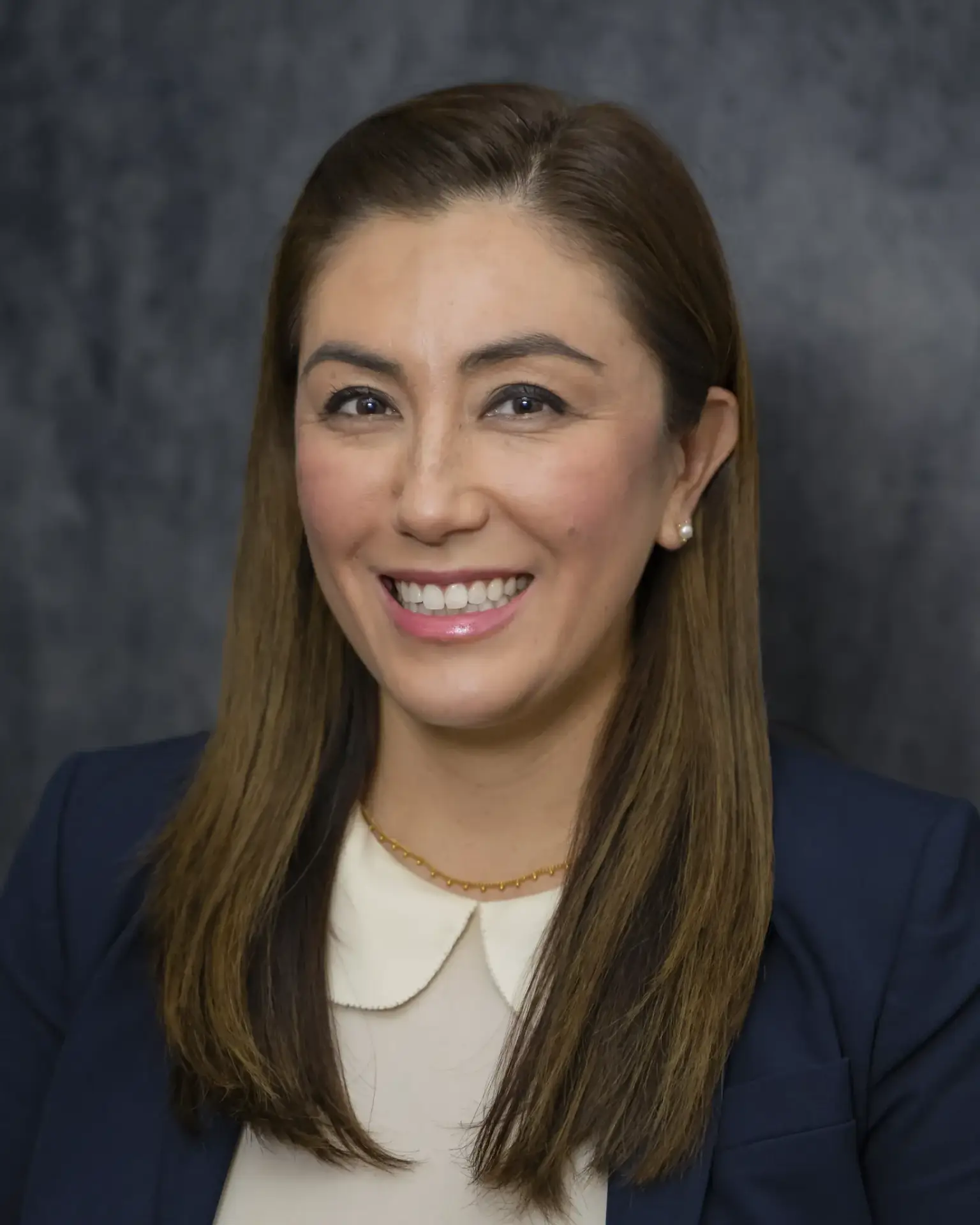
Dr. Michelle Sugi
★★★★★
Non-operative
Case snapshot
  • Chief complaint — Active 14-year-old club basketball player with anterior knee pain centered on the tibial tubercle (the bump just below the kneecap). Worse with jumping, running, and kneeling. No history of trauma.
  • Treatment path — Diagnosed clinically and confirmed on plain films. Treated with a structured rest-and-ice phase, a patellar tendon strap during activity, and 8 weeks of targeted physical therapy focused on quad flexibility and hip-girdle strength. No injections, no surgery.
  • Recovery — Returned to pain-free practice at week 10, full game play at month 4.
  • Outcome — Excellent. No persistent functional limitation. Family aware that the tibial tubercle bump may persist into adulthood as a cosmetic finding.
  • Honest caveat — Not every Osgood-Schlatter case responds this fast. Some kids need longer rest, repeated activity modification, or a season off. This patient was on the more responsive end of the curve.
The presenting problem

A bump that hurt when he jumped.

Our patient was a 14-year-old club basketball player in the middle of a growth spurt. He came to the LAOSS pediatric orthopedic clinic in Valencia with about six weeks of right-knee pain that he could point to with one finger — directly on the tibial tubercle, the bony bump on the front of the shin just below the kneecap. The pain was worst when he jumped for rebounds, ran sprints, or knelt to tie a shoe. He had no recent trauma, no swelling, no instability, and no night pain.

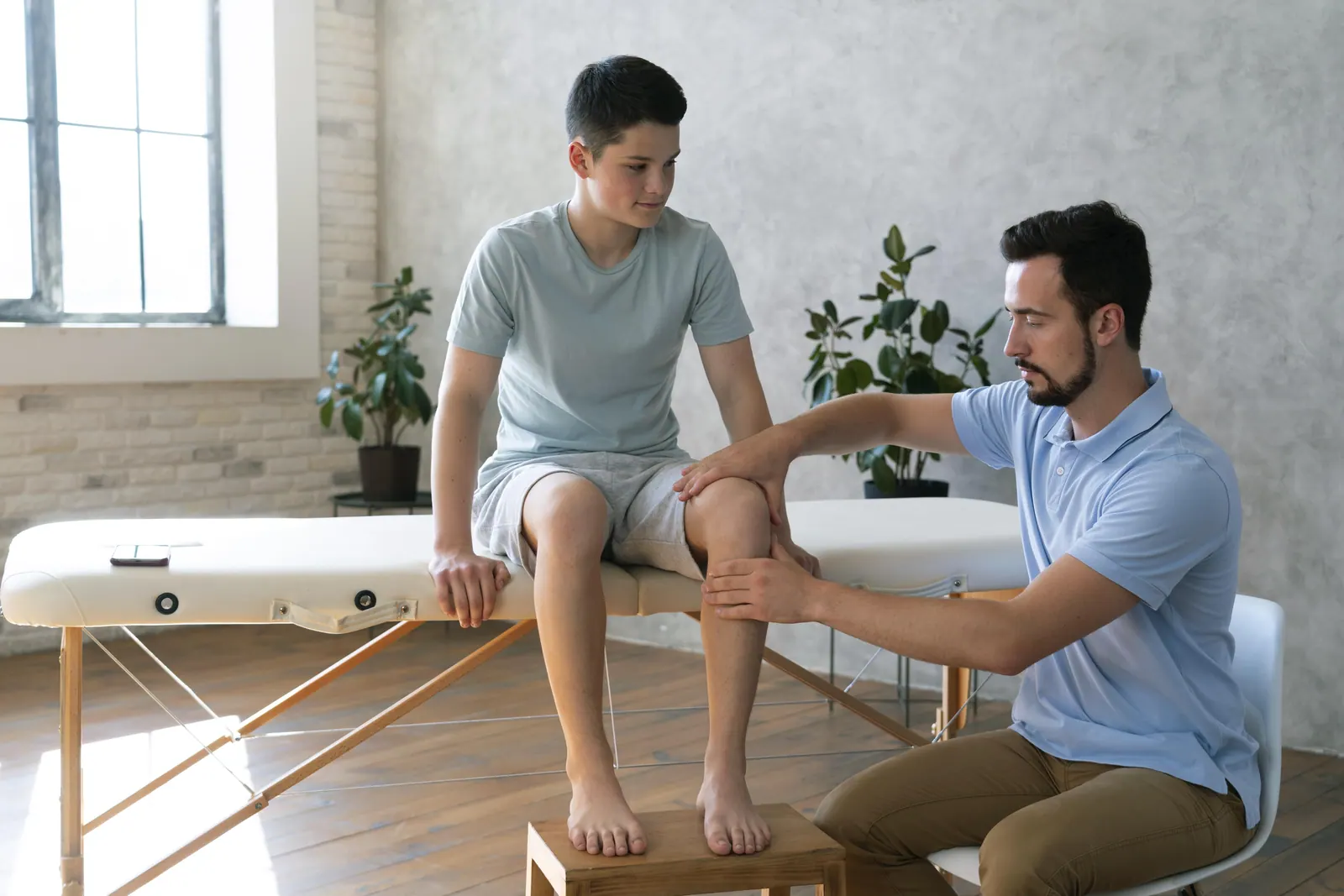
On exam, the tibial tubercle was visibly more prominent on the affected side than on the other knee, and it was tender to direct pressure. His quadriceps muscles were notably tight on the popliteal angle test — common in growing athletes whose bones are outrunning their muscles. We took weight-bearing X-rays to rule out the more concerning differentials (a tubercle avulsion fracture, an osteochondral injury, a bone tumor — the last is rare but worth ruling out in a kid with focal bony pain). The films showed mild fragmentation of the tibial tubercle apophysis consistent with Osgood-Schlatter disease and nothing else. The diagnosis was clinical and the imaging supported it.

What conservative care looked like

The plan that almost always works — done well.

Osgood-Schlatter disease is a self-limited condition driven by repeated tugging of the patellar tendon on a growth plate that hasn't finished maturing. There is no surgical fix that does anything an honest conservative plan won't do better, and the surgical options that exist carry their own trade-offs. We laid out a four-piece plan: a controlled rest phase, ice and activity modification, a patellar tendon strap during activity once he returned, and 8 weeks of structured pediatric physical therapy.

The rest phase was the part most kids skip. We asked him to step off basketball entirely for two weeks. No pickup games. No lay-ups in the driveway. After that, he started a graded return — stationary cycling, then light jogging, then sport-specific drills — with a strap during anything weight-bearing. The PT was the other piece almost everyone underdoses: quad and hamstring stretching, hip-girdle strengthening (glute medius, in particular), and core work that took load off the front of the knee. Parents asked about ibuprofen; we used it sparingly, around games or PT sessions, but did not standardize it.

We also had the long-term conversation honestly. Osgood-Schlatter resolves when the growth plate matures. In some kids, the bony bump on the front of the shin remains as a permanent cosmetic finding — it does not affect function, and it does not predict knee problems in adulthood. He and his parents understood this before we started.

Why we chose this path

Why pure conservative care was the right call.

Surgery has essentially no role in primary Osgood-Schlatter disease in a growing athlete. The handful of indications for surgical intervention — most commonly removal of a persistent ossicle in an adult who never fully grew out of the condition — sit on the far side of skeletal maturity and a year or two of failed conservative care. We do not steroid-inject these knees in adolescents because corticosteroid around an immature growth plate carries risks we are not willing to accept for a condition that almost always resolves on its own.

The right call here was to do conservative care thoroughly, to set expectations realistically, and to have a family that understood the timeline. We had all three.

Recovery milestones

His return-to-play roadmap.

Pediatric recovery looks different from adult recovery — and Osgood-Schlatter recovery is a patience game. These were his milestones.

01Week 1

Calm it down

Two-week step-back from basketball entirely. Ice 3 times a day. Started PT in week 2.

  • No basketball, jumping, or sprinting
  • Stationary cycling allowed for conditioning
  • Ice 15 minutes, 3 times a day
  • Education for family on the diagnosis
02Month 1

Rebuild and return slowly

Structured pediatric PT 1 to 2 times a week. Patellar tendon strap introduced for activity.

  • Light jogging at week 4
  • Sport-specific drills with strap at week 6
  • Quad flexibility goal reached at week 6
  • Pain-free at rest by week 4
03Month 6

Full play, no flares

Full return to club basketball at the four-month mark. No recurrence at the six-month follow-up.

  • Cleared for full practice at week 10
  • Cleared for full games at month 4
  • Continued strap use as needed during games
  • Quad flexibility maintained through season
Honest caveats

What we tell every Osgood-Schlatter family.

This case went well — about as well as Osgood-Schlatter cases go — and we want to be careful about implying that's the norm. Some kids respond more slowly. Some need to step away from a competitive season entirely. Some come back fast, flare again, and need a second longer rest phase. The condition has a published average duration of 12 to 24 months from onset to full resolution, and 'full resolution' in this case means full pain-free function, not a flat tibia. The bump on the front of the shin almost always persists into adulthood as a cosmetic finding. It is not a problem. It does not predict knee trouble down the road. We tell families that at the first visit so it is not a surprise at the last one.

Treating surgeon

Meet your pediatric orthopedic specialist.

FAQ

Honest questions parents ask.

  • The bony bump on the front of the shin often stays as a permanent finding into adulthood — it is the residue of the growth-plate inflammation that drove the symptoms. It is cosmetic, not functional. It does not cause knee problems later and does not need to be removed. About 10 percent of patients end up with an ossicle (a small fragment of bone) inside the tendon that persists into adulthood and occasionally causes symptoms — and a fraction of those, much later, may benefit from a minor surgical removal. The bump itself is a non-issue.
  • Almost never. The vast majority of kids with Osgood-Schlatter can stay in their sport with smart load management — a real rest phase early, activity modification through the worst of it, and a strap during games. Quitting is rarely the right answer, and 'pushing through' without modification is also rarely the right answer. There is a middle path, and a pediatric ortho clinic is built around finding it.
  • Usually no. Osgood-Schlatter is a clinical diagnosis confirmed by plain films. MRI is reserved for atypical presentations — pain at rest, swelling, suspected tubercle avulsion, suspicion of a tumor, or symptoms that don't resolve over many months on a faithful conservative plan. Ordering MRI on every adolescent with anterior knee pain is low-value medicine.
  • We don't use corticosteroid injections at the tibial tubercle in skeletally immature patients. Steroid near an open growth plate carries risks we don't think are warranted for a condition that almost always resolves on its own.
  • Yes — that is the single most important thing for families to know. Osgood-Schlatter resolves when the growth plate at the tibial tubercle closes, which happens during normal skeletal maturation. The average duration from onset to full resolution is 12 to 24 months, and the symptoms almost always fully clear. The job in the meantime is to keep him active, comfortable, and in love with his sport.
Anterior knee pain in a growing athlete?

Start with a conversation.

Pediatric orthopedics is its own specialty for a reason. Book a visit with Dr. Sugi to make sure your child is getting the right diagnosis — and the right plan.

Booking now
21 specialists · 8 offices
Greater Los Angeles
On-site X-raySame visit
Most insurers acceptedIn-network

Composite case based on common LAOSS treatment outcomes. Anonymized for patient privacy.

Call usBook online