Los Angeles Orthopedic
Patient case study · ACL reconstruction

How Dr. Stepanyan got a weekend soccer player back on the pitch.

A 38-year-old recreational midfielder felt the pop everyone dreads. MRI confirmed a complete ACL tear and a small medial meniscus tear. Here's the full path from ER visit to a bone-patellar-tendon-bone autograft reconstruction, the kneeling discomfort that surprised him, and the return-to-sport testing that cleared him for games at ten months.

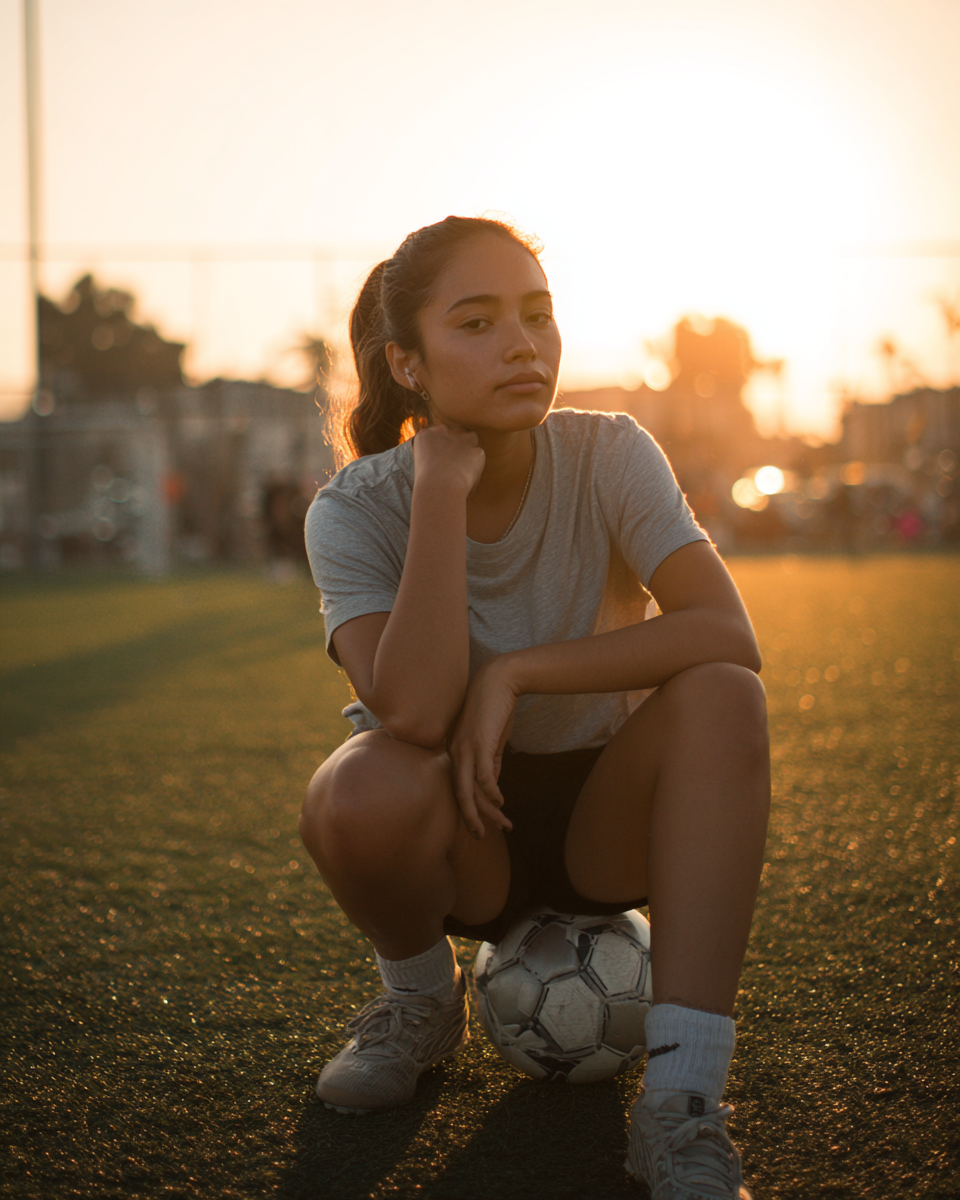
ACL reconstruction patient case study — LAOSS sports medicine bone-patellar-tendon-bone autograft and meniscus repair
Patient case study

BPTB autograft + meniscus repair.

Sports-medicine return-to-play protocol with strength and hop-test gating.

10 mo
Cleared for games
Treating surgeon
Dr. Hayk Stepanyan
★★★★★
BPTB ACL recon
Case snapshot
  • Chief complaint — Recreational soccer player in his late thirties planted, twisted, and heard a pop. Knee swelled to a softball within four hours and felt unstable on every pivot.
  • Treatment path — Same-week MRI confirmed a complete ACL tear plus a small medial meniscus tear. Three weeks of prehab to restore extension and quad activation, then a bone-patellar-tendon-bone (BPTB) autograft ACL reconstruction with concurrent meniscus repair.
  • Recovery — Crutches for two weeks, brace locked at first, off pain meds within a week, stationary cycling at month two, straight-line jogging at month five, sport-specific drills at month seven.
  • Outcome — Returned to recreational soccer at ten months, gated by quad strength symmetry within 92 percent and clean hop-test progression. No re-tears at one-year follow-up.
  • Honest caveat — Kneeling discomfort at the patellar tendon harvest site persisted for roughly three months after surgery. This is typical for BPTB grafts and was discussed before he ever chose the graft.
The presenting problem

A pop, a swell, and an MRI.

Our patient was a recreational midfielder in an over-30 league he had played in for nearly a decade. He came to the LAOSS Glendale office the morning after an ER visit. The history was as classic as ACL histories get — a planted right foot, a twisting torso, a noise everyone in the area heard, and a knee that swelled visibly within an hour. The ER had taken plain films (negative for fracture), put him in a brace, and told him to follow up with sports medicine.

In clinic we saw a moderate effusion, a positive Lachman with a soft endpoint, and tenderness along the medial joint line. We ordered an MRI through our same-week imaging partner. It came back with a complete mid-substance ACL tear, a non-displaced longitudinal tear of the medial meniscus in the red-red zone, and a small bone bruise pattern on the lateral femoral condyle and posterior tibial plateau — the classic 'kissing contusions' that almost every ACL injury leaves behind. The exam, the story, and the scan all agreed. He needed reconstruction.

What we did before the operating room

Three weeks of prehab made surgery better.

We did not race him to the OR. The published data on ACL reconstruction are clear: knees that go into surgery swollen, stiff, and quad-shutdown come out of surgery slower and stiffer than knees that go in calm and active. We held the surgery for three weeks of prehab — daily passive extension drills, quad re-education, patellar mobility work, and a gradual return to weight-bearing without the brace locked. He left every PT visit with a measured extension goal and a graded plan to hit it.

We also used those three weeks for the conversation that often gets skipped — graft choice. We laid out the trade-offs of bone-patellar-tendon-bone (BPTB) autograft, hamstring autograft, and quadriceps tendon autograft. Given his age, his activity demand, and his willingness to accept the trade we'll discuss in a minute, he chose BPTB. That was an informed choice — it was not made for him.

Why we chose this graft

Why BPTB autograft was the right call for him.

BPTB autograft remains the workhorse for cutting and pivoting athletes for a reason — it offers bone-to-bone healing on both ends of the graft, it has the longest track record in the literature, and re-tear rates in the published data are at least as good as the alternatives for active patients in their twenties and thirties. The concurrent meniscus tear was repairable (red-red zone, longitudinal pattern), so we planned a repair rather than a partial meniscectomy — a meniscus saved at thirty-eight is meniscus that protects the joint at fifty-eight.

The trade we discussed openly was the harvest site. Taking the central third of the patellar tendon as the graft leaves the front of the knee tender for the first few months. Kneeling on it can be uncomfortable for longer. That is the price of BPTB. He understood it, he weighed it against the other graft options, and he made the call himself.

Recovery milestones

His return-to-sport roadmap.

ACL recovery is a one-year project. These were the milestones that mattered most along the way.

01Week 1

Protect the graft

Outpatient surgery, home the same day with a regional block. Brace locked at full extension for ambulation. Crutches.

  • Touchdown weight-bearing with crutches
  • Full passive extension achieved by day 5
  • Off opioid pain medication by day 4
  • Quad activation drills 4 times a day
02Month 1

Restore motion and gait

Outpatient PT 2 to 3 times a week. Brace unlocked progressively. Weaned off crutches around week 2.

  • Off crutches at week 2
  • Stationary cycling at week 5
  • Knee flexion past 120 degrees by week 6
  • Normal gait without limp by week 4
03Month 6

Earn the clearance

Strength testing, hop testing, and sport-specific progressions. Return-to-sport is earned, not given.

  • Straight-line jogging at month 5
  • Cutting and pivoting drills at month 7
  • Quad symmetry > 90 percent at month 9
  • Cleared for recreational game play at month 10
Honest caveats

The thing we warned him about, and the thing we didn't.

The thing we warned him about: kneeling on the front of the knee — gardening, praying, putting toys away with his daughter — was uncomfortable for the first three months and noticeable for closer to five. This is typical of the BPTB harvest site and is the most common complaint with this graft. He says now, at fourteen months out, the kneeling discomfort is gone and he would make the same graft choice again. The thing we didn't warn him about quite as well: how much patience the middle months would demand. Months three through six are the boring middle of an ACL recovery — past the early wins, before the cutting drills, just grind. He found a virtual support group of other ACL patients his age and credits that for staying compliant with PT through that stretch. We've started telling every patient about it.

FAQ

Honest questions other ACL patients ask.

  • For recreational play, expect somewhere between 9 and 12 months — and the timing is gated by objective strength and hop-test symmetry, not by the calendar. Most patients we see clear at around month 10 the way this patient did. Competitive cutting sports sit at the longer end of that window.
  • For a complete tear in an active patient who wants to return to cutting sports, no — the published data are clear that non-operative management leaves the knee unstable on pivots and increases the risk of subsequent meniscus and cartilage damage. For partial tears or for patients willing to give up cutting sports entirely, structured rehab can work. We never push surgery on a knee that doesn't need it, and we don't undertreat one that does.
  • Going into ACL surgery on a stiff, swollen, quad-shutdown knee meaningfully worsens the recovery. Three weeks of prehab to restore extension, drain effusion, and wake the quads back up makes the post-operative course faster and reduces the risk of arthrofibrosis. The exception is a locked knee from a bucket-handle meniscus — that gets fast-tracked. This patient's meniscus was repairable but not locked, so we had time.
  • No — for almost every BPTB patient, the harvest-site tenderness fades meaningfully by month 3 and is gone by the end of the first year. The data on long-term kneeling discomfort do favor hamstring or quad grafts slightly, which is why graft choice is a conversation, not a default. This patient knew what he was choosing and reports the trade was worth it.
  • Honest answer — ACL injuries do raise the long-term risk of knee arthritis, and that risk is present whether or not you have surgery. The damage often happens at the moment of injury, in the form of the bone bruise and meniscus tear that came along for the ride. What you can control is preserving as much meniscus as possible (which we did here), rebuilding strong quads and hamstrings, and managing weight and impact loading over time.
Considering ACL reconstruction?

Start with a conversation.

If your knee popped, swelled, or feels unstable, we can usually get you in this week. Same-week MRI is available through our imaging partners.

Booking now
21 specialists · 8 offices
Greater Los Angeles
On-site X-raySame visit
Most insurers acceptedIn-network

Composite case based on common LAOSS treatment outcomes. Anonymized for patient privacy.

Call usBook online